Biomethane Could Cover Shipping's 2030 Climate Target
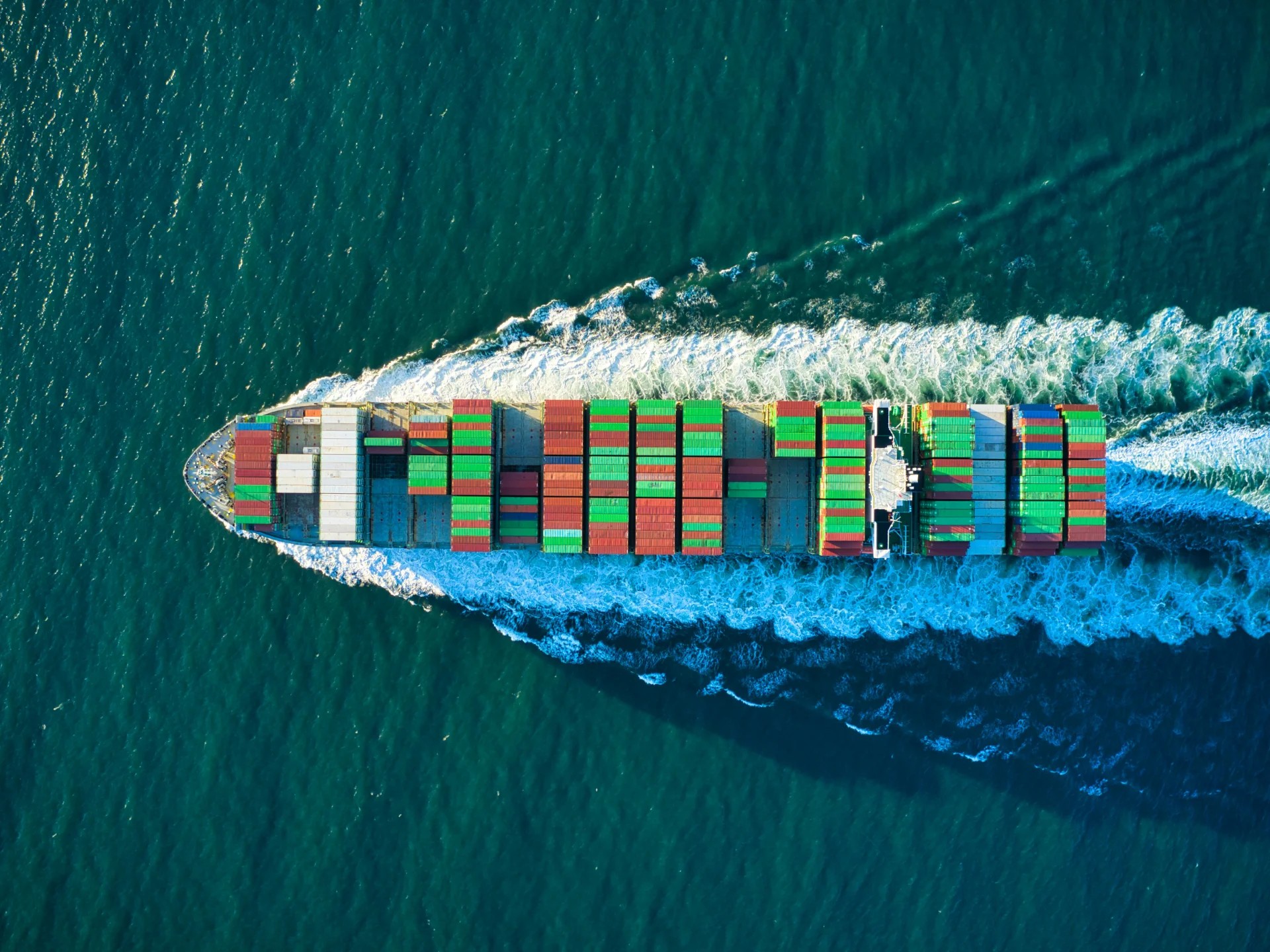
According to a new analysis by the Mærsk Mc-Kinney Møller Center for Zero Carbon Shipping (MMMCZCS), global biomethane production could reach 21 billion m³ by 2030 in a baseline scenario. In theory, this volume could cover around 70% of international shipping's early decarbonisation energy demand. The calculation follows the International Maritime Organization's (IMO) Net-Zero Framework (NZF), which – if finally adopted – would for the first time put a global price on shipping's carbon dioxide emissions. The research makes one thing clear, however: the decisive question is not the volume of feedstock but whether regulation allows biomethane to be counted against actual marine fuel use.
How much demand would the IMO climate framework create?
Member states approved the IMO Net-Zero Framework in April 2025, at the 83rd session of the Marine Environment Protection Committee (MEPC), introducing mandatory emission intensity reductions and a global carbon price for ships above 5,000 tonnes (IMO, 2025).
The framework would take effect from 2028, initially with a price of around $100 per tonne of CO₂ equivalent for ships that miss the emissions target.
Final adoption was postponed by a year in October 2025 because of opposition led by the United States, so member states may decide the framework's fate at the MEPC session in December 2026 (Global Maritime Forum, 2026). The MMMCZCS nevertheless used this framework as its benchmark, and estimates that by 2030 the regulation would create unconstrained demand equivalent to around 30 billion m³ of biomethane if shipping's entire low-emission energy demand were met with biomethane.
Two scenarios, two orders of magnitude
The research sets out two growth paths. In the baseline scenario, regional biomethane production grows by 15% a year, reaching 21 billion m³ by 2030 – that is, 19 million tonnes of low-sulphur fuel oil equivalent (LSFO).
With stronger regulatory support and 38% annual growth, production could rise to as much as 52 billion m³.
Both figures fall well short of the global technical potential indicated by the International Energy Agency (IEA), suggesting that the constraint is not feedstock supply but the shortage of infrastructure, certification and regulatory frameworks.
Mass balancing is the key question
According to the report, the key to using biomethane in shipping could be mass balancing. This is the certification mechanism that would allow the sustainability attributes of biomethane injected into the existing gas grid to be tracked along a certified chain and assigned to marine fuel consumption, even if the ship does not physically bunker biomethane (International Gas Union, 2026).
Without a globally harmonised mass balancing system, shipping could only rely on physically segregated biomethane supply chains, which the analysis says would be hard and costly to scale before 2030.
Regulatory details could therefore have a greater impact on biomethane's actual role in shipping than production capacity itself.
The limits of the fleet and bunkering infrastructure
Beyond theoretical supply, actual use is also limited by the make-up of the fleet. The MMMCZCS estimates that if by 2030 every methane-fuelled container ship ran only on liquefied biomethane (LBM), shipping could take up around 11 million tonnes of LSFO-equivalent biomethane, which would absorb 56% of the 21 billion m³ supply in the 2030 baseline scenario. But fleet investment decisions made today will determine ships' propulsion for decades, so insufficient building of methane-compatible ships and bunkering infrastructure could undermine biomethane's compliance role in the long term, even if the theoretical supply were available.
Already a reality in Europe: the impact of FuelEU Maritime
While the IMO's global framework remains uncertain, in the European Union the FuelEU Maritime regulation has been in force since the start of 2025, requiring ships above 5,000 tonnes calling at EU ports to reduce their emission intensity – by 2% in 2025, rising gradually to 80% by 2050.
According to an analysis by Wood Mackenzie (2025), this regulation is already making shipping the biggest driver of biomethane demand in Europe, and by 2050 it could take up more than half of the continent's expected biomethane production.
The momentum is visible in practice too: at the port of Rotterdam, liquefied biomethane bunkering grew sixfold from 2024 to 2025, from 2,775 m³ to 17,644 m³ (SEA-LNG, 2026), while Europe's biomethane production capacity reached 8.2 billion m³ by mid-2026, growing by 17% a year. Companies such as Gasum and Viking Line are already generating compliance units with ships running on liquefied biomethane (bio-LNG).
Outlook: a narrowing window after 2030
The MMMCZCS positions biomethane not as a final solution but as a bridging fuel for the decade between 2030 and 2040, until e-ammonia and e-methanol also become competitive. Meanwhile, demand generated by the IMO framework grows dramatically: it could reach 100 million tonnes of LSFO equivalent by 2035. As demand rises, competition from road transport, aviation and heating could increasingly limit shipping's access to biomethane. And the framework's own fate is still an open question: the MEPC session in December 2026 will decide whether member states – despite opposition from the United States and several oil- and gas-producing countries – adopt the final version, including carbon pricing.
Theory or practice?
In numbers, then, the picture is impressive: global biomethane production could in theory cover a significant part of shipping's 2030 climate targets. In practice, at least three conditions must be met: the IMO must adopt the net-zero framework with a workable, globally harmonised mass balancing system; the methane-fuelled fleet and bunkering infrastructure must expand fast enough; and shipping must hold its own in the competition with road transport, aviation and heating for the same feedstock.
With the FuelEU Maritime regulation, Europe is already showing what role biomethane could play in maritime transport – the global question is whether the IMO's December decision will steer the rest of the world in a similar direction.
According to an analysis by the Mærsk Mc-Kinney Møller Center for Zero Carbon Shipping (MMMCZCS), global biomethane production could reach 21 billion m³ by 2030 in a baseline scenario, which in theory could cover 70% of international shipping's early decarbonisation energy demand. The calculation follows the IMO Net-Zero Framework (NZF), which would introduce a global carbon price for shipping from 2028, but whose adoption has been postponed to December 2026 because of political opposition. The research finds that the real constraint is not feedstock supply but the lack of mass balancing, the size of the methane-fuelled fleet and bunkering infrastructure: if every methane-compatible container ship used biomethane, it would take up only 56% of supply. The analysis positions biomethane as a bridging fuel between 2030 and 2040, while in Europe the FuelEU Maritime regulation is already creating real demand for marine biomethane, putting shipping at the forefront of the continent's biomethane use.
A new analysis by the Mærsk Mc-Kinney Møller Center for Zero Carbon Shipping (MMMCZCS) finds that global biomethane production could reach 21 billion m³ by 2030 in a baseline scenario, growing by 15% a year, while with stronger regulatory support and 38% annual growth it could rise to as much as 52 billion m³. In theory this could cover around 70% of international shipping's early decarbonisation energy demand, according to a calculation aligned with the International Maritime Organization's (IMO) Net-Zero Framework (NZF), which would introduce mandatory emission intensity reductions and a global carbon price for shipping from 2028 – but whose adoption has been postponed to December 2026 because of political opposition. The report finds that the real constraint is not the volume of feedstock but the lack of mass balancing: without a harmonised certification system, shipping could only rely on physically segregated biomethane supply chains that are hard to scale. The fleet is a constraint too: if every methane-fuelled container ship ran only on liquefied biomethane, it would take up just 56% of the 2030 baseline supply, about 11 million tonnes of LSFO equivalent, while shipbuilding decisions made today will shape the available propulsion capacity for decades. The analysis positions biomethane not as a final solution but as a bridging fuel for the decade between 2030 and 2040, before e-ammonia and e-methanol become competitive, while demand generated by the IMO framework could reach 100 million tonnes of LSFO equivalent by 2035. In Europe the picture is already less theoretical: the FuelEU Maritime regulation has required larger ships to cut emissions since 2025, Wood Mackenzie's analysis suggests that by 2050 shipping could take up more than half of Europe's expected biomethane production, and liquefied biomethane bunkering at the port of Rotterdam grew sixfold in a single year. The next decisive point is the IMO meeting in December 2026, which will decide whether the final framework, including carbon pricing, is adopted.



From 4 November, companies that want to buy biomethane can post their demand on the European Commission's platform and producers can bid from January. Here is what to do now and what the scheme will not give you.

Berlin wants gas and heating oil suppliers to sell a rising share of renewable fuels to households from 2028, but biomethane producers say the draft design favours hydrogen.

W4 relaunches with a new website, an English edition, dedicated series pages and a separate professional hub – the same coverage, with far better tools for reading and finding it.
According to the new national feedstock strategy, the country's dependence on fuel imports could fall by as much as 40% by 2050, while creating a new source of income for agribusinesses.