Australia's $15 Billion Bioenergy Plan
At the end of August, the Australian federal government presented its National Bioenergy Feedstock Strategy, which promises that the sector could grow into a feedstock market worth A$15 billion a year by 2050 (DAFF, 2026). The document also states that a mature domestic bioenergy industry could meet more than 40% of the country's liquid fuel demand, significantly reducing Australia's current import dependence of more than 90%. The strategy was developed in parallel with the national food security strategy (Feeding Australia), signalling that the government is treating agricultural and energy goals within a single framework.
A framework built on five pillars
The strategy identifies five areas of action along which government, industry and supply chain players can jointly build a competitive feedstock sector: improving the availability of market-ready feedstock data, supporting innovation, strengthening regional supply chains, developing credible sustainability and certification schemes, and building industry capacity.
The document does not favour any single type of feedstock, but it highlights that materials already produced and traded in large volumes – such as canola, sugar and tallow – have the most mature technology behind them and can therefore meet short-term demand. In the longer term, bringing in agricultural and forestry residues as well as municipal and industrial organic waste could broaden the feedstock base.
To achieve its goals, the government is providing A$1.1 billion through the Cleaner Fuels Program to encourage domestic production of low carbon liquid fuels (LCLF).
This builds on earlier development funding, including the A$250 million Future Made in Australia Innovation Fund and the A$33.5 million Sustainable Aviation Fuel Funding Initiative. The government is also extending the Guarantee of Origin scheme to low carbon fuels, so that their emissions intensity can be measured and recognised internationally – according to the strategy, credible certification has become almost a prerequisite for a feedstock to create real market value.
Import dependence and energy security
Australia currently consumes around 56 billion litres of liquid fossil fuels a year, more than 90% of which is imported or refined from foreign crude oil.
According to government estimates, the Australian bioenergy sector could replace more than 40% of liquid fuel demand by mid-century.
The strategy treats this as a shared issue of supply security and climate goals: in cutting emissions from hard-to-electrify sectors – aviation, shipping, heavy vehicles and mining – bioenergy emerges as an alternative that will be hard to replace in the medium term.
What government and industry say
Presenting the strategy, Julie Collins, Minister for Agriculture, Fisheries and Forestry, pointed out that Australia is already a major feedstock exporter in the global bioenergy market.
“Australia already produces and exports around $6 billion of high-quality feedstocks each year that support bioenergy production overseas.”
Industry players welcomed the move. According to the CEO of GrainCorp – Australia's leading canola processor and tallow trader – the strategy creates a solid foundation for further investment.
“More than 90 percent of Australia's liquid fuel is imported or derived from imported crude, leaving our economy exposed to global disruption.”
The leadership of GrainGrowers, which represents farmers, also welcomed the document, stressing the importance of grower participation.
“Enabling grower participation must be a central focus of industry development, recognising that long-term success depends on strong grower engagement and confidence.”
GrainCorp is already working with Ampol and IFM Investors on an integrated renewable fuels supply chain, including a planned canola crushing plant and a production unit at Ampol's Lytton refinery in Brisbane. The planned capacity could amount to 750 million litres a year of sustainable aviation fuel (SAF) and renewable diesel from Australian feedstocks.
Biogas in practice: Delorean's Adelaide plant
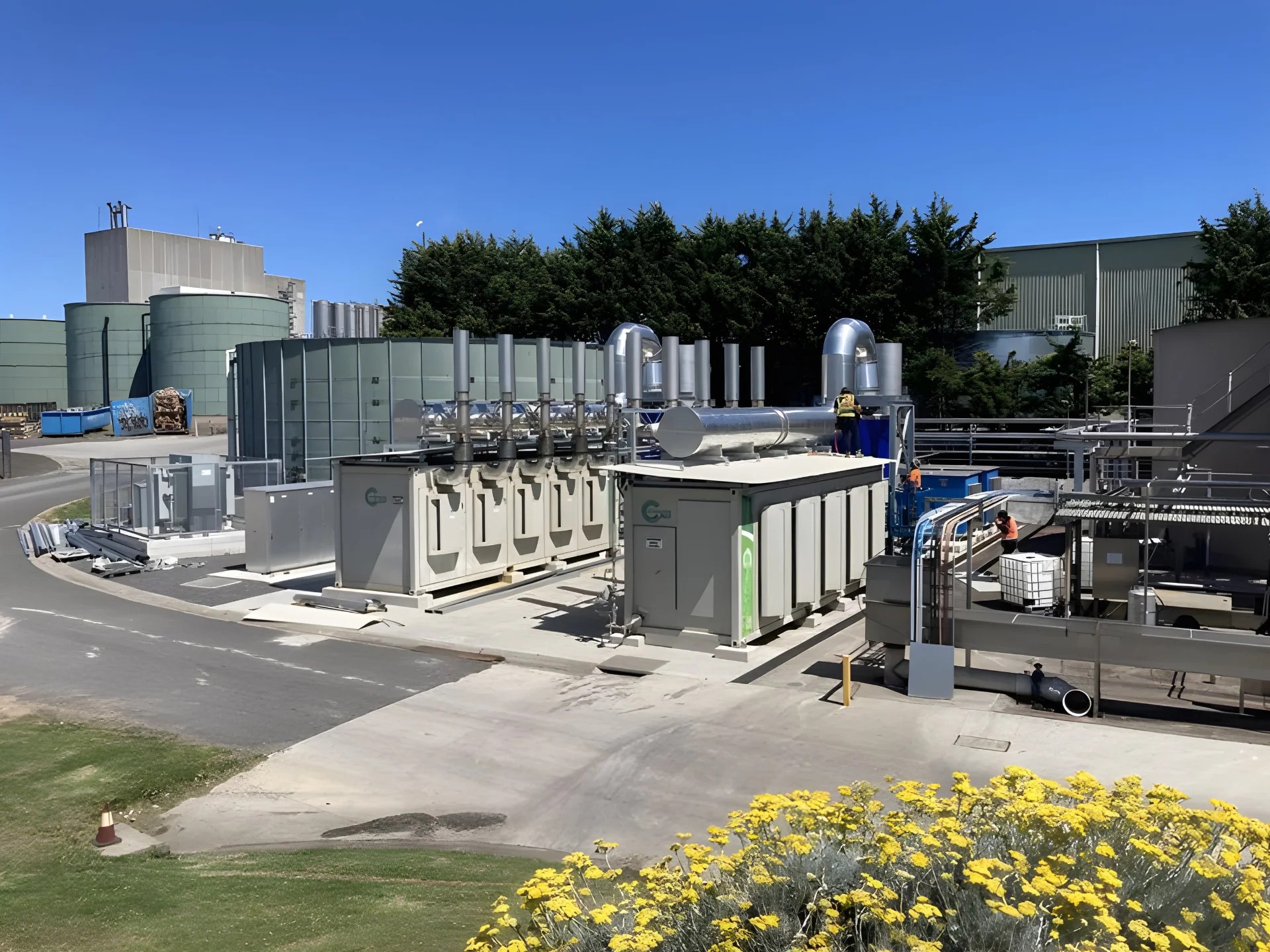
While liquid fuels are at the heart of the strategy, the biogas and biomethane segment could also benefit from the growing feedstock market. Listed company Delorean has been building anaerobic digestion facilities in Australia since 2011 and is now moving to an own-and-operate model to secure long-term, predictable revenue.
The company's first wholly owned plant is being built in Salisbury, Adelaide, and will be completed soon.
The facility will process 70,000 tonnes of organic waste a year from the Adelaide metropolitan area, which is expected to produce 210 terajoules of renewable gas and 6,000 tonnes of food-grade, biogenic liquid carbon dioxide.
The biomethane produced will be fed into Origin Energy's Adelaide gas network under a long-term offtake agreement.
Delorean's development programme spans several Australian states, with government-supported projects also under way in Sydney and Victoria. Since 2014, the company has delivered four industrial-scale facilities to third parties and plans to replicate the own-and-operate model at further sites.
A European perspective
Globally, too, bioenergy is one of the largest renewable energy sources: low carbon liquid fuels and renewable gases produced from agricultural and forestry residues and wood waste account for almost 60% of renewable energy consumption in the European Union. The Australian strategy is particularly notable in this international context: while the EU has been building feedstock supply chains and certification schemes for decades, Australia is now trying to shorten this path with a centrally coordinated model based on cooperation between industry and government. The technology – primarily anaerobic digestion – is already proven and mature in international markets; the real challenge is building reliable, scalable feedstock supply chains.
A complex strategy
Australia's National Bioenergy Feedstock Strategy addresses supply security and decarbonisation goals at the same time: according to the government, the sector could grow into a market worth A$15 billion a year by 2050, while domestic fuel production could meet more than 40% of current demand instead of today's import dependence of over 90%. The strategy's five pillars – data availability, innovation, regional supply chains, certification schemes and capacity building – give the industry a clear framework, welcomed by both agricultural players and processors. Alongside liquid fuels, the biogas and biomethane segment – well illustrated by Delorean's Adelaide plant – could also benefit from the growing feedstock market. The real test, however, is still to come: the strategy will only live up to the hopes placed in it if reliable, large-scale supply chains are actually built on the back of the announced funding.
The Australian federal government has presented its National Bioenergy Feedstock Strategy, according to which the sector could grow into a market worth A$15 billion a year by 2050. The document also states that a mature domestic bioenergy industry could meet more than 40% of Australian liquid fuel demand, reducing the country's current import dependence of over 90%. The strategy rests on five pillars: feedstock data availability, innovation, regional supply chains, certification schemes and industry capacity building. The government is providing A$1.1 billion through the Cleaner Fuels Program and extending the Guarantee of Origin scheme. Minister Julie Collins and GrainCorp's leadership both welcomed the move, which identifies canola, sugar and tallow as the most mature feedstocks. In the biogas segment, Delorean's Adelaide plant shows how organic waste can be turned into renewable gas and an exportable by-product. In the longer term, the strategy could broaden the feedstock base by bringing in agricultural and forestry residues, creating a new source of income for farmers and regional communities.
At the end of August, the Australian federal government presented its National Bioenergy Feedstock Strategy, according to which the sector could grow into a market worth A$15 billion a year by 2050. According to the document, a mature bioenergy industry could meet more than 40% of Australian liquid fuel demand, significantly reducing the country's current import dependence of over 90% – Australia currently consumes 56 billion litres of liquid fossil fuels a year.
The strategy rests on five pillars: improving feedstock data availability, supporting innovation, strengthening regional supply chains, developing credible certification schemes and building industry capacity. The goals are backed by A$1.1 billion of public funding through the Cleaner Fuels Program, complemented by the A$250 million Future Made in Australia Innovation Fund and the A$33.5 million Sustainable Aviation Fuel Funding Initiative. The government is also extending the Guarantee of Origin (GO) scheme to low carbon fuels, which keeps bioenergy in a leading role worldwide: the sector also accounts for almost 60% of the European Union's renewable energy consumption.
According to Agriculture Minister Julie Collins, Australia already exports A$6 billion of feedstock to the global bioenergy market, while the leadership of GrainCorp and GrainGrowers both welcomed the move, which identifies canola, sugar and tallow as the most mature feedstocks. In the biogas segment, listed company Delorean's Adelaide plant illustrates practical application: the facility will produce around 210 terajoules of renewable gas and 6,000 tonnes of liquid carbon dioxide from 70,000 tonnes of organic waste a year, feeding the gas into Origin Energy's network under a long-term contract. The strategy's success depends on whether reliable, large-scale supply chains are actually built on the back of the announced funding.



From 4 November, companies that want to buy biomethane can post their demand on the European Commission's platform and producers can bid from January. Here is what to do now and what the scheme will not give you.

Berlin wants gas and heating oil suppliers to sell a rising share of renewable fuels to households from 2028, but biomethane producers say the draft design favours hydrogen.

W4 relaunches with a new website, an English edition, dedicated series pages and a separate professional hub – the same coverage, with far better tools for reading and finding it.
A new analysis finds that global biomethane production could in theory cover much of international shipping's early decarbonisation energy demand, but regulatory details may decide whether it actually reaches the seas.