Japan–India Biogas Agreement: 1,000 Plants by 2030
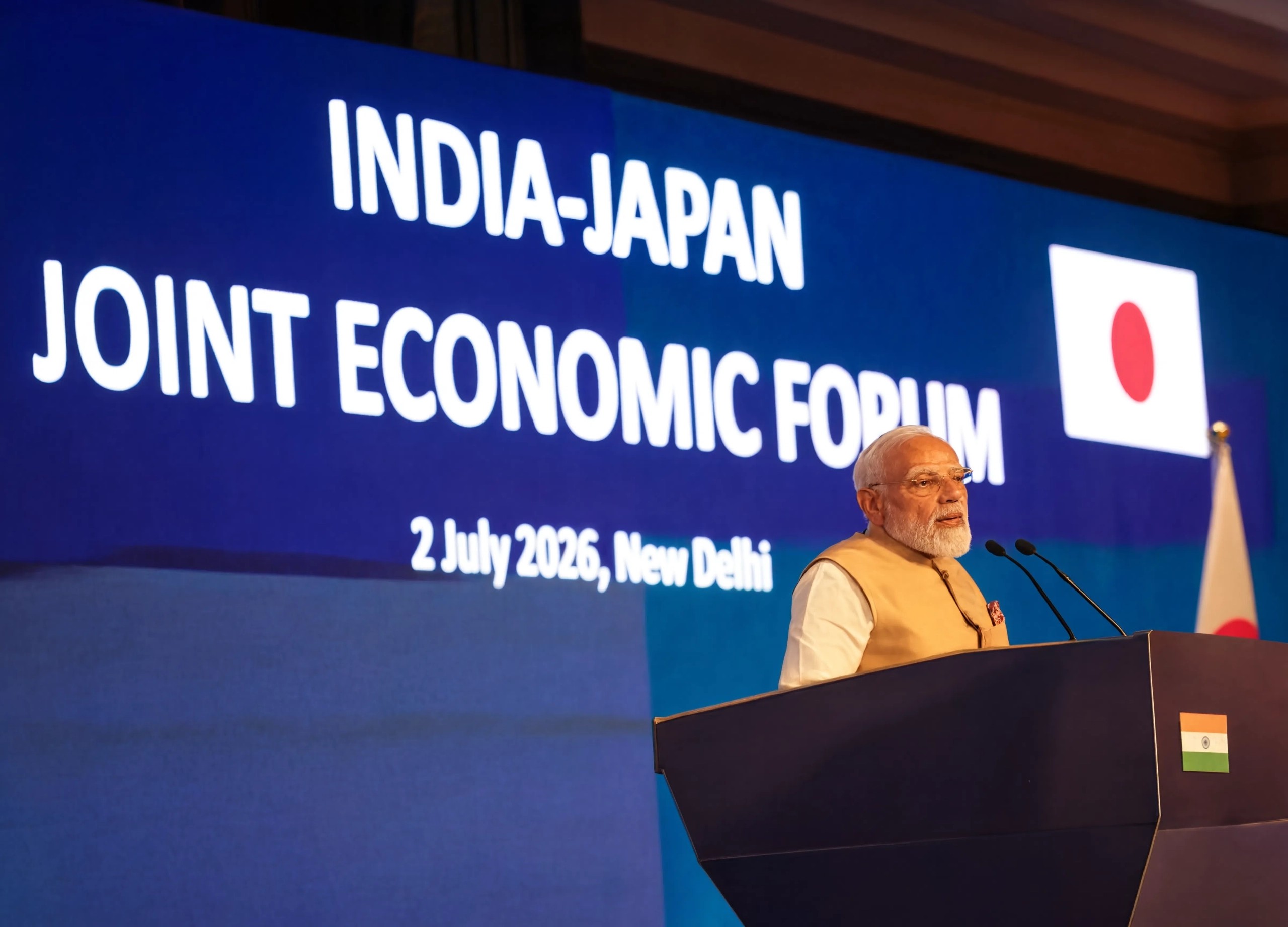
Early this week, India and Japan opened a new chapter in their energy cooperation: at the summit of 1–3 July 2026, the two countries announced the Japan–India Compressed Biogas (CBG) Initiative, which aims to build 1,000 biogas plants in India by 2030 (PMO India, 2026). The project would turn cattle dung, rice straw, sugarcane waste and other agricultural biomass into clean energy, and the two sides also signed a memorandum of intent to jointly develop a market of some 2.5 million CNG vehicles running on compressed biogas (CBG).
What the announcement includes
The initiative was announced by Japanese Prime Minister Sanae Takaichi at the India–Japan Economic Forum during her visit to New Delhi. She said that India's rural areas hold significant untapped biomass resources from which compressed biogas could be produced. Indian Prime Minister Narendra Modi has long championed turning rural resources into energy through cooperatives, which would serve both rural development and India's energy security.
"The initiative aims to see up to 1,000 biogas plants built in India by 2030, creating a market for 2.5 million CNG vehicles running on compressed biogas."
The project runs under the name Japan–India Biogas Initiative and is closely linked to India's own GOBARdhan programme, which also encourages turning organic agricultural waste into energy and compost.
The snail's pace of the SATAT programme
Japan–India cooperation does not come out of nowhere. In October 2018 India launched the SATAT (Sustainable Alternative Towards Affordable Transportation) programme, which aimed to build 5,000 compressed biogas plants producing 15 million tonnes of CBG a year. Under the programme, the state oil companies – IndianOil, BPCL and HPCL – sign long-term offtake contracts with operators, typically for 15 years, and provide state support of up to ₹10 crore per plant (₹4 crore per 4,800 kg of daily capacity).
Implementation, however, has been much slower than planned: by July 2025 only 108 plants had started operating against the target of 5,000, although 1,094 active letters of intent (LOI) were registered in the system.
Despite the delay, the policy environment strengthened significantly in 2025–2026: a mandatory CBG blending requirement came into force – rising gradually from 1% to 5% by 2028–29 – the 2026 budget abolished the excise duty that amounted to double taxation of the biogas component, and the offtake price also rose. There is a strong economic interest behind the tightening: India currently imports about half of its natural gas demand, so expanding domestic CBG production could directly reduce the country's import dependence.
Why now, and why Japan?
The biogas announcement was not a standalone event but part of the wider economic package of the 16th India–Japan summit. The two sides signed a total of around 129 agreements – ranging from artificial intelligence and defence cooperation to critical raw materials – and Japan confirmed its intention to direct ¥10 trillion of investment into India over the next decade.
More than 150 Japanese companies took part, signing cooperation agreements worth around $12.5 billion in total. Bilateral trade between the two countries reached $27.5 billion in fiscal year 2026.
For Japan, biogas cooperation is a logical step for two reasons. First, the country depends almost entirely on imports for oil and gas, so it has been actively seeking diversification with Asian partners for years. Second, the initiative fits a broader pattern in which Tokyo combines India's agricultural and rural resources with Japanese capital and technological experience – as it does with the Mumbai–Ahmedabad high-speed rail line.
Challenges the expansion will face
The target of 1,000 plants far exceeds what the SATAT programme has actually delivered so far, so implementation carries serious risks. According to expert analysis, the main obstacles are organisational rather than technological: collecting and transporting agricultural feedstock – especially rice straw – is logistically difficult, as the material is produced seasonally and in scattered locations (Kulkarni et al., 2025). That is why the government introduced the Biomass Aggregation Machinery (BAM) scheme, which covers half the cost of feedstock collection equipment, up to ₹90 lakh per plant.
Building a market for 2.5 million CNG vehicles is a challenge in its own right: it requires not only expanding the vehicle fleet but also developing the refuelling network and transport infrastructure at the same time. India currently has about 1,500 CNG stations, to which CBG must be delivered from the plants in cylinders or by pipeline.
The Japan–India CBG Initiative tries to turn one of India's largest untapped energy sources – agricultural and livestock waste – into marketable clean energy. The mandatory blending requirement and the end of double taxation introduced in 2025–2026 have fundamentally improved project economics, so Japanese investment and technological support could give the programme a real chance to move faster than before.
India and Japan have launched the Japan–India Compressed Biogas Initiative, aiming to establish 1,000 biogas plants in India by 2030 using cattle dung and agricultural biomass. At their July 2026 summit, the two sides also signed a memorandum of intent to jointly develop a market for 2.5 million CNG vehicles running on compressed biogas. The project builds on India's SATAT programme, launched in 2018 but progressing slowly: it originally targeted 5,000 plants, yet only 108 were operating by mid-2025. Policy changes in 2025–2026 – a mandatory blending requirement and an excise duty exemption – have improved the economics. The biogas plan was part of a wider summit covering 129 agreements, at which Japan pledged ¥10 trillion of investment over the next decade and more than 150 Japanese companies took part.
At their summit in early July 2026, the prime ministers of India and Japan, Narendra Modi and Sanae Takaichi, launched the Japan–India Compressed Biogas (CBG) Initiative. The aim is to build 1,000 biogas plants in India by 2030, producing clean energy from cattle dung, rice straw and other agricultural biomass through cooperative institutions. The two sides also signed a memorandum of intent to jointly build a market for some 2.5 million CNG vehicles running on compressed biogas.
The initiative builds on India's SATAT programme, launched in 2018, which originally aimed for 5,000 biogas plants and 15 million tonnes of CBG production a year. Implementation, however, fell far behind plan: by July 2025 only 108 plants had started operating, although 1,094 active letters of intent were registered. Policy changes in 2025–2026 – including a mandatory blending requirement rising gradually to 5% and an excise duty exemption – have substantially improved project economics.
The biogas agreement was part of the wider 16th India–Japan summit, at which a total of 129 agreements were signed and Japan confirmed its intention to invest ¥10 trillion in India over ten years. More than 150 Japanese companies attended, with a cooperation package worth around $12.5 billion, and bilateral trade reached $27.5 billion in fiscal year 2026. India currently imports about half of its natural gas demand, so the programme's success could directly affect the country's energy dependence.



From 4 November, companies that want to buy biomethane can post their demand on the European Commission's platform and producers can bid from January. Here is what to do now and what the scheme will not give you.

Berlin wants gas and heating oil suppliers to sell a rising share of renewable fuels to households from 2028, but biomethane producers say the draft design favours hydrogen.

W4 relaunches with a new website, an English edition, dedicated series pages and a separate professional hub – the same coverage, with far better tools for reading and finding it.
A new analysis finds that global biomethane production could in theory cover much of international shipping's early decarbonisation energy demand, but regulatory details may decide whether it actually reaches the seas.