Why Is the Hydrogen Powertrain Being Pushed to the Margins?
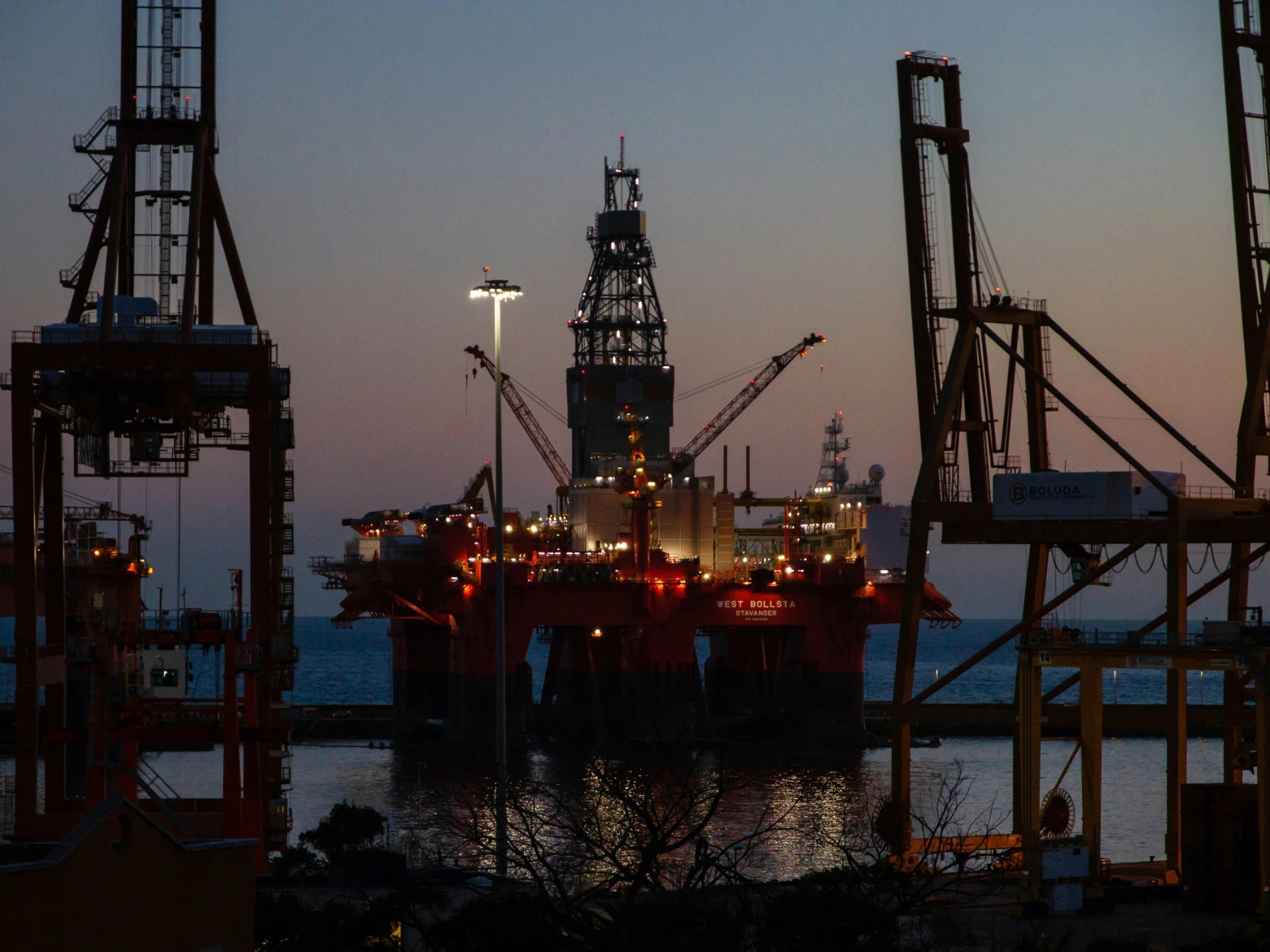
Hydrogen is one of the most talked-about players in energy debate. Strategy documents, EU regulations, oil company press releases and decades of promises from research institutes all suggest that hydrogen is the fuel of the future. Yet in 2024 less than 1% of global hydrogen production was low-emission. The remaining 99% is still fossil-based. This final part of our series does not dissect what hydrogen can do – but what prevents it from becoming a market success and truly becoming what it is advertised as.
The price that decides everything
The most serious, structural obstacle to the hydrogen transition is not technological but economic: green hydrogen currently costs considerably more to produce than the fossil-based version.
According to the IEA's Global Hydrogen Review 2025 (IEA, 2025a), the gap between the production cost of renewable and low-emission hydrogen and the price of fossil-based hydrogen has recently widened further. There are two main reasons: falling natural gas prices on the one hand, and more expensive electrolysers – due to inflation and slower-than-expected industrial roll-out – on the other.
Depending on location and the availability of renewable energy, green hydrogen costs 1.5–7 times as much as grey hydrogen produced by steam reforming.
This cost gap does not just deter investors: according to the IEA, low-emission hydrogen capacity planned for 2030 has shrunk from 49 million tonnes a year to 37 million tonnes a year as a result of a wave of project postponements and cancellations. For announced projects, confirmed offtake agreements cover only 5% of potential 2030 production. This figure alone shows how wide the gap is between publicly presented ambitions and real market commitments.
Support schemes will be needed for longer than previously planned – no longer a matter of debate in the sector, but an accepted fact.
Physics that cannot be avoided – transport and storage
Hydrogen's energy density by weight is outstanding, but by volume it is extremely low. This physical property imposes an engineering and economic burden along the entire supply chain.
Transporting gaseous hydrogen efficiently requires compression to 700 bar, an energy-intensive process that needs special tank infrastructure. Transporting liquid hydrogen, by contrast, requires cooling to –253 °C, which is not only energetically costly but also problematic because of boil-off: part of the cargo simply escapes during transport (Lu et al., 2025).
Pipelines make it cheaper to move larger volumes, but hydrogen's chemical properties pose special challenges here too. It tends to cause so-called hydrogen embrittlement in metal structures: the molecules penetrate the pipe wall material and reduce its mechanical strength. As a result, the existing natural gas network cannot be converted directly to hydrogen without replacing a large share of pipes and fittings (Solomon et al., 2024).
The world's entire hydrogen pipeline network was only about 4,500 km long in 2024 – by comparison, the European natural gas network exceeds 1.5 million km.
Storage is at least as complex. Short-term buffer storage and long-term, seasonal energy storage are technically feasible – but building the necessary capacity and developing and certifying underground caverns or salt caverns is a decades-long infrastructure programme. It means investment needs, permitting processes and supply security risks all piling up at once.
An acute shortage of refuelling stations
One of the most serious and structurally entrenched obstacles to hydrogen-based transport is the classic two-sided market paradox: no refuelling stations get built because there are not enough vehicles; no vehicles sell because there are not enough stations.
The numbers clearly confirm this. At the end of 2024, about 1,160 hydrogen refuelling stations operated worldwide – against nearly 4.5 million charging points for electric vehicles. In the United States, only 54 publicly accessible hydrogen stations were operating, almost all of them in California.
The market's inertia has recently shown up in concrete corporate decisions. Stellantis, for example, shut down its fuel cell development programme in 2024, citing a lack of infrastructure, high costs and insufficient consumer incentives. HYVIA, the joint venture of Renault and Plug Power that aimed to win the market for hydrogen light commercial vehicles, went into compulsory liquidation in February 2025 after failing to find a buyer. High operating and capital costs, low vehicle penetration and a slowly growing refuelling network together made the business unviable.
This spiral will not resolve itself. It would require simultaneous, coordinated intervention on both sides of the market – which presupposes a strong state role and long-term, predictable and stable funding commitments. Neither is currently in place in the EU or elsewhere in the world.
Regulatory lag and a fragile supply chain
The market contradiction is deepened by a fragmented regulatory environment. According to the IEA's Breakthrough Agenda Report 2025 (IEA, 2025b), unclear and often incomplete regulatory frameworks and unprepared infrastructure are among the most frequently identified obstacles for hydrogen projects.
In the EU, developing the certification system and drafting the delegated act took years, and even today it cannot be considered complete as far as mutual recognition schemes are concerned.
Differing national regulations, different permitting procedures and non-harmonised safety rules are a particularly serious obstacle in a sector whose value chain is inherently cross-border.
At the same time, supply chain risks are becoming concentrated. China now controls 60% of global electrolyser manufacturing capacity, a share that has grown steadily in recent years (IEA, 2024). The IEA explicitly draws a parallel with what has already happened in solar and battery manufacturing: the initial development lead of Europe and the US eroded and the entire value chain became concentrated in Chinese hands. The same process is under way for hydrogen – with the difference that now, in the early phase, there would still be a chance to build a different structure.
Hydrogen fuel cell or battery electric drive?
| Criterion | Hydrogen | Electric |
|---|---|---|
| Passenger transport | ||
| Energy efficiency (well to wheel) | ~25–30% | ~77–80% |
| Infrastructure maturity | low | advanced |
| Refuelling/charging time | 3–5 minutes | 20–45 minutes (fast) |
| Running cost per kilometre | high | low |
| Competitiveness in 2030 | weak | strong |
| Heavy freight | ||
| Energy efficiency (well to wheel) | ~25–30% | ~70–75% |
| Range with payload | 700–1,000 km | 300–500 km |
| Downtime for refuelling | 15–20 minutes | 45–90 minutes (fast) |
| Payload lost to battery weight | minimal | significant (1–2 t) |
| Competitiveness in 2030 | medium–strong | medium |
Source: IEA Global Hydrogen Review 2025; S&P Global 2025. Efficiency and cost figures are estimated industry averages.
Green-painted hydrogen – how oil industry interests work
The most disputed – and least publicly visible – obstacle to the hydrogen transition is how oil industry interests operate. This is not a conspiracy theory but a documented, traceable process.
The independent analysis organisation InfluenceMap regularly tracks the climate and energy policy lobbying of large companies. Its latest analysis finds that the fossil fuel industry, heavy industry and the utility sector actively pressed to weaken the EU's delegated act on low-carbon hydrogen (InfluenceMap, 2025). The industry associations FuelsEurope and Fuels Industry UK regularly support the development of renewable fuels on condition that fossil-based products, including hydrogen and LNG, are also included in preferential categories. This seemingly technical debate essentially decides whether fossil-based blue hydrogen gets a green label.
Two real cases illustrate the mechanism
BP's case is the most direct example of how hydrogen announcements become a marketing tool. Between 2020 and 2022 the company announced hydrogen projects in the UK, Oman and Australia that drew wide press coverage – and cancelled them by 2024. In the same year, BP's CEO announced that the company would increase oil production by 2–3% a year until 2027. The communication value of the hydrogen projects – ESG ratings, easing regulatory pressure, maintaining the image of a company in transition – clearly did not match its real capital allocation priorities.
Shell's case is more nuanced but structurally similar. The company has not fully withdrawn its hydrogen programme, but it has scaled it back considerably while paying record dividends and expanding its LNG business. The hydrogen heating programme Shell previously promoted as a way to decarbonise heating in British homes would have served to keep the gas network rather than switch to heat pumps. According to the InfluenceMap analysis cited, 27% of British MPs (and 31% of Labour MPs) still believe hydrogen could play a significant role in the future of home heating – partly as a result of precisely this lobbying (InfluenceMap, n.d.-a).
The pattern is the same in both cases: hydrogen announcements maintain the appearance of commitment to the energy transition towards the public, regulators and investors, while real capital flows into expanding the fossil value chain.
According to an earlier comprehensive InfluenceMap analysis, there is a systematic discrepancy between leading oil companies' climate communications and their actual lobbying (InfluenceMap, n.d.-b).
Where hydrogen does have a future
None of this should be read nihilistically. Hydrogen's role in the energy transition is real – but narrower and more precisely defined than the communications of recent years suggested.
In some industrial segments – steelmaking, ammonia synthesis, chemicals, refining – there is no alternative to hydrogen, or only an extremely capital-intensive one. In these sectors, both the logic and the economic basis for introducing green hydrogen are stronger than in passenger transport. Heavy freight, shipping and aviation are also areas where, because of the limits of electric solutions, hydrogen fuel cells or synthetic fuels could be competitive alternatives.
In passenger cars, the contest with electric drive has been decided over the past five years – infrastructure, economic and efficiency arguments all favour battery solutions in the short and medium term.
A real promise, but a distant future
Using hydrogen is not an empty promise, even if much of the narrative around it is. The real obstacles to the transition are obvious – the persistent cost gap with fossil hydrogen, the lack of transport and storage infrastructure, the two-sided inertia of the market, regulatory fragmentation and the documented interference of oil industry interests in policymaking – and they explain why green hydrogen remained below 1% of global production in 2024.
Hydrogen's energy future is real, but sector-specific and conditional: it belongs where there is no other solution, and where infrastructure investment is built on real demand – not marketing logic. The question is whether the regulatory decisions and capital allocation of the next decade will reinforce this narrower but better-founded path, or further widen the gap between announced intentions and actual progress.
In the longer run, the question of hydrogen in the energy transition cannot be examined without the development of fusion energy either – a technology that reinterprets the energy potential of hydrogen isotopes in an entirely different dimension. W4 will cover this in a detailed future article.
Hydrogen is one of the most cited technologies of the energy transition – but reality paints a different picture. In 2024, less than 1% of global hydrogen production was low-emission; the remaining 99% stayed fossil-based. Green hydrogen costs 1.5–7 times more to produce than the fossil-based version, and the gap has recently widened. Transport requires compression to 700 bar or cooling to –253 °C, and the global hydrogen pipeline network is only 4,500 km long. At the end of 2024, refuelling infrastructure consisted of just 1,160 stations worldwide. Meanwhile oil companies – documented in the cases of BP and Shell – use hydrogen announcements to maintain an image of transition while real capital flows into the fossil value chain. Hydrogen has a future – but it is sector-specific and subject to strong conditions.
Hydrogen is an unavoidable player in energy policy debate – EU strategies, corporate ESG commitments and research institute forecasts all build on it. Reality, however, is far more complex. In 2024, less than 1% of global hydrogen production was low-emission; everything else remained fossil-based, without carbon capture.
The number one obstacle to the transition is economic: green hydrogen costs 1.5–7 times more to produce than the fossil version, and the gap has recently widened further – because of falling natural gas prices and more expensive electrolysers. The physical challenges of transport and storage are a structural problem in themselves: compression to 700 bar or cooling to –253 °C, a global pipeline network of 4,500 km and hydrogen embrittlement as a lasting engineering limit.
Market building is caught in the classic two-sided paradox: no refuelling stations get built without vehicles, and no vehicles sell without stations. At the end of 2024 there were 1,160 hydrogen refuelling stations in the world – against nearly 4.5 million electric charging points. Stellantis has shut down its fuel cell programme, and HYVIA went into compulsory liquidation.
Meanwhile, oil companies' hydrogen strategies demonstrably serve a dual function. In 2024 BP cancelled its hydrogen projects in the UK, Oman and Australia, then announced oil production growth of 2–3% a year. According to InfluenceMap, the industry actively lobbied to weaken EU rules on low-carbon hydrogen.
Hydrogen has a real place in the energy transition – in industry, heavy freight, shipping – but that role is narrower and more conditional than the loud promises of recent years suggested.


The IEA expects the first annual fall in renewable additions in 21 years, the biggest six-year expansion on record, and a grid that is now the main thing standing in the way.


A new report projects data centres' water footprint reaching 9.32 trillion litres by 2030, but the number is only meaningful once you know what it counts, and who is making the case.

From 4 November, companies that want to buy biomethane can post their demand on the European Commission's platform and producers can bid from January. Here is what to do now and what the scheme will not give you.

The Dutch Authority for Digital Infrastructure warns that the shared cloud back ends behind home batteries, inverters and heat pumps could threaten grid stability, a risk EU rules only partly address.