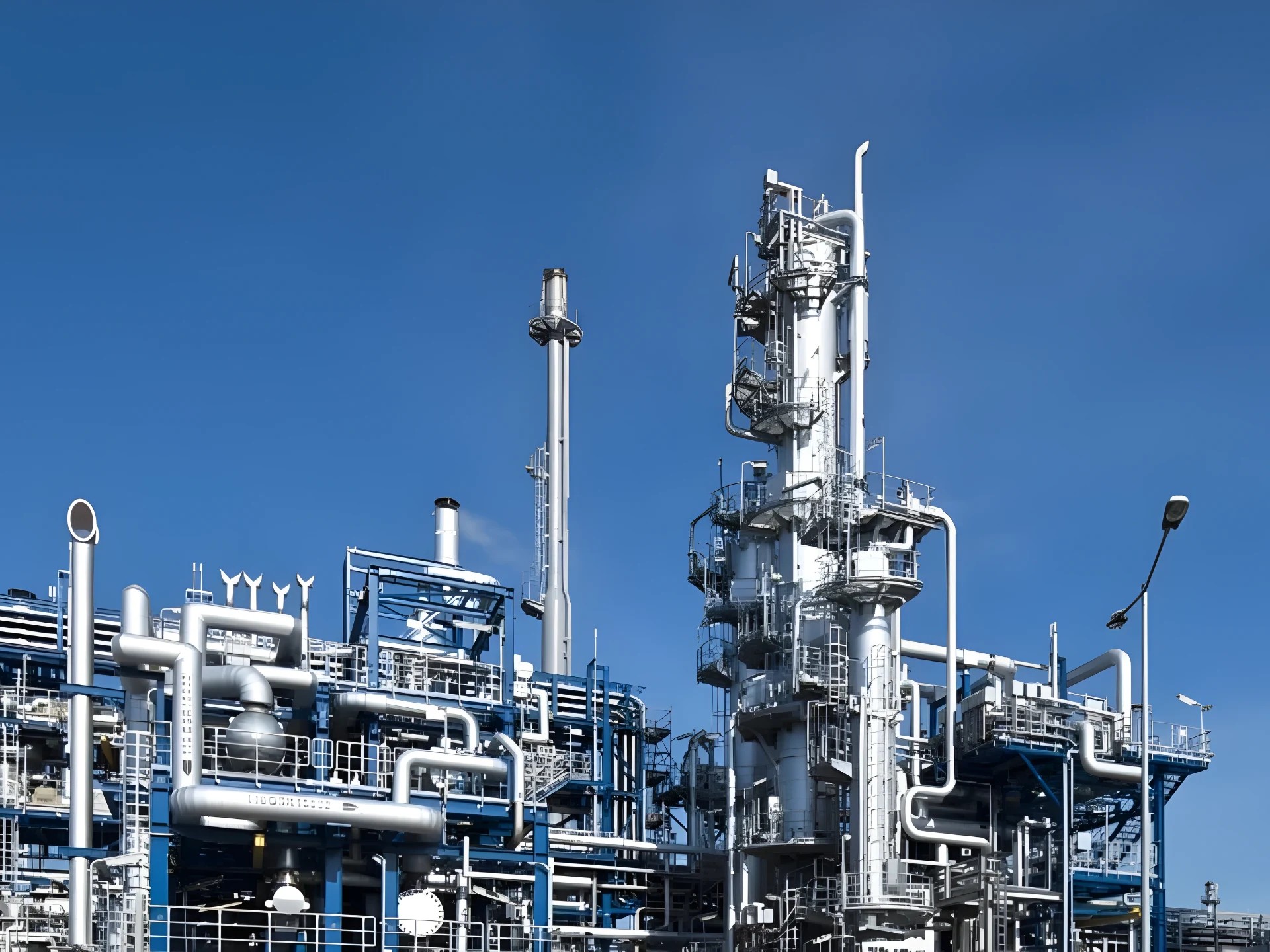
The Age of Hydrogen – Why Now?

This article opens a new four-part series. The series takes you through the whole world of hydrogen: from production technologies and the role of water to its applications, all the way to why this element, which could solve so much, has not yet become part of our everyday lives. The first part introduces hydrogen as a substance and as a strategic issue – where we stand, and why we stand there now.
The first element of the periodic table
Hydrogen is the smallest atom in the universe. It consists of one proton and one electron, and at room temperature it is a colourless, odourless, non-toxic and highly flammable gas. It is more than fourteen times less dense than air and only becomes liquid below –253 °C. These basic physical properties – lightness, energy density and reactivity – make hydrogen at once one of the most promising and one of the most temperamental molecules in energy.
The element itself is not a new discovery. The English scientist Henry Cavendish studied its properties systematically in the 18th century, and Antoine Lavoisier named it: "hydrogène", from the Greek words for "water" and "to give birth", has stuck ever since. Industrial uses were not long in coming: hydrogen balloons flew over Paris as early as 1783, the 1937 Hindenburg disaster burned itself into public memory, and from the 1950s hydrogen became one of the chemical industry's most important raw materials – in ammonia synthesis, refining processes and the food industry.
Today hydrogen is in the spotlight above all as an energy carrier.
Grey, blue, green – and everything in between
Hydrogen in itself is neither "clean" nor "dirty" energy: everything depends on how it is produced. The industry and regulators today use an informal colour-coding system, without which it is hard to make sense of industry news.
Grey hydrogen is the most common: it is produced by steam methane reforming (SMR), with the resulting carbon dioxide released into the atmosphere. According to the IEA (2023), 83% of global hydrogen production fell into this category in 2022 – and the share had not changed significantly by 2024: supply still relies on burning 290 billion m³ of natural gas and 90 million tonnes of coal equivalent.
Blue hydrogen is also fossil-based, but the carbon dioxide produced is captured with carbon capture, utilisation and storage (CCUS) technologies. It requires significant capital and its effectiveness is disputed, but in the short term it could bridge current and future production structures. It holds a particularly strong position in North America, thanks partly to low natural gas prices and partly to existing CCUS infrastructure.
Green hydrogen is the one we hear about most: it is produced by electrolysis powered by renewable energy, splitting water molecules into hydrogen and oxygen. Its direct emissions are zero, and if the electricity comes from renewable sources, the whole chain is practically carbon-neutral. The reality, however, is that in 2024 low-emission hydrogen accounted for less than 1% of total production, according to the IEA (2025).
The spectrum does not end there: turquoise hydrogen is produced by pyrolysis – splitting methane into solid carbon and hydrogen – yellow hydrogen comes from electrolysis using grid electricity with a mixed energy mix, and pink hydrogen is nuclear-based. The diversity has political and economic as well as technological dimensions: the "green" label is now tied to increasingly strict certification requirements on the market, especially under the EU's Renewable Energy Directive (RED III).
Why now?
The strategic interest in hydrogen is neither accidental nor a one-off flare-up. There were "hydrogen waves" in the 1970s, the 1990s and the early 2000s, but each broke on economic reality. The IEA (2025) notes that the sector is now going through the cooling-off of a hype cycle, after a flood of extremely ambitious announcements in 2022–2023.
Even so, according to the Hydrogen Council and McKinsey & Company (2025), 83% of the 70 CEOs surveyed say they see mature clean hydrogen projects progressing, and 74% say their willingness to invest has stayed the same or grown over the past two years. The reason is that three forces are now at work at the same time.
The first is climate commitments. Net-zero targets are pushing more and more sectors towards solutions that cannot be decarbonised directly with electricity: heavy industry, shipping, aviation and long-duration energy storage are all areas where hydrogen potentially has a competitive edge.
The second is energy security. The gas crisis that followed Russia's war against Ukraine showed with unprecedented force how dependence on fossil imports creates serious vulnerability in Europe. Hydrogen – especially if it can be produced from renewable sources – is a promising tool for diversification.
The third is technological maturity. Electrolyser capacity in the renewable segment has grown eightfold since 2021, unit prices are falling, and the IEA expects the production cost of green hydrogen to become competitive with fossil-based solutions in some regions by 2030.
The numbers as they stand
Global hydrogen demand in 2024 amounted to nearly 100 million tonnes – up 2% on the previous year and mainly reflecting traditional uses: refining and chemicals. New applications – transport, energy storage, steelmaking – account for less than 1% of total demand.
On the production side, low-emission capacity reached 1 million tonnes a year by 2025 – of which 300,000 tonnes is renewable and 700,000 tonnes low-carbon. That is a spectacular jump compared with a few years ago, but still negligible in global terms.
At project level, according to the Hydrogen Council, $110 billion of capital stands behind projects that have passed investment decision, with 510 final investment decisions taken. Feasible capacity by 2030 is estimated at 9–14 million tonnes a year – provided that demand is underpinned by policy support.
Supply is almost ready to scale – the question is whether demand can keep pace, and whether it gets the regulatory support it needs.
Mapping the global race
The hydrogen economy has become a geopolitical race. China now accounts for 55% of the world's installed renewable hydrogen capacity, and nearly 60% of electrolyser manufacturing capacity is in Chinese hands. Chinese projects are on average ten to fifteen times larger than their European counterparts.
With $19 billion, Europe ranks third for committed investment, but the EU could account for almost two-thirds of global demand in 2030 if RED III and the Carbon Border Adjustment Mechanism (CBAM) are fully implemented. The continent's strategy relies on imports: smaller local projects will meet direct industrial demand, with the shortfall imported from the Gulf, Chile, Morocco and Australia.
North America leads the world in low-carbon hydrogen: 85% of all committed low-carbon capacity worldwide is in the United States and Canada, made attractive by cheap natural gas, an existing CCUS network and the Inflation Reduction Act's tax credits (45Q, 45V).
India – with cheap renewable energy and a traditional ammonia production base – could become a global exporter of green ammonia. In 2024 India achieved record-low prices in tenders for renewable ammonia under its SIGHT programme.
A thesis by Eszes (2024) notes that on the hydrogen market, large consumers – refineries and chemical companies – operate their own production capacity, and traded volumes are relatively limited. The infrastructure for global hydrogen trade is still emerging: pipelines, liquefaction and shipping terminals – their absence is one of the biggest structural obstacles.
From the Hindenburg to NASA rockets – and beyond
For a long time, hydrogen stood in the shadow of the Hindenburg disaster in the public mind. The accident at Lakehurst on 6 May 1937, in which the hydrogen-filled airship LZ 129 Hindenburg caught fire and 36 people died, shaped public attitudes to the gas for decades – even though later investigations identified the material of the airship's skin as one of the possible causes of ignition. The reality is that hydrogen's safety profile has fundamentally changed.
The same 2024 thesis by Martin Eszes concludes that storing and using hydrogen does not pose significantly greater risks than other widely used liquid or gaseous fuels. If it leaks into the atmosphere, the extremely light gas rises and disperses quickly – unlike petrol vapour, which collects close to the ground.
NASA has used liquid hydrogen as rocket fuel since the 1950s, and fuel cell technology has been developing since William Grove's experiment in 1839. Today's fuel cell electric vehicles – the Hyundai Nexo and Toyota Mirai – continue this line of technology. The global FCEV fleet of nearly 100,000 vehicles is still tiny compared with the billion-plus combustion-engine cars, but buses and trucks are growing dynamically in South Korea and China.
Looking behind the numbers
One of the most important lessons of the hydrogen economy is that quantities cannot be interpreted on their own. Global production of 100 million tonnes is an impressive figure – but if less than 1 million tonnes of it is low-emission, the system is essentially still a subsystem of the fossil energy system.
Yet the conditions for a breakthrough are in place: the technology exists, the appetite for investment is growing and the regulatory framework is taking shape. Under the IEA's 2030 scenario, low-emission production could grow four- to fivefold from today's level to reach 4% of total production. That seems small – but solar power started out in exactly the same way.
The next parts examine the deeper structure of this transformation: how hydrogen is produced today and tomorrow, what it is really good for, and why something that would already be technologically possible is taking so long.
Hydrogen is not a new player on the energy stage, but its role is now truly changing. The molecule that appeared as a gas over glowing metal in Cavendish's laboratory, then lifted airships and caused disasters, has become one of the most seriously considered tools of the energy transition. Global production is close to 100 million tonnes, inflowing capital exceeds $110 billion, and the race is between China, the United States and the EU. The share of green hydrogen is still negligible, but the pace of growth – and the regulatory, investor and industrial intent behind it – already signals that the question is not whether hydrogen will have a role in the energy system. The question is when, to what extent, and who will set the terms.
Next part: how is hydrogen produced?
In the first part we covered the basics of hydrogen and mapped the global race. In the second part we look at production: what is the difference between steam reforming, coal gasification and electrolysis in efficiency, cost and carbon dioxide emissions? Why is electrolysis the key technology for a green future, and what types are there? We pay special attention to the role of water: electrolysis needs not only energy but also water as a raw material – and this seemingly small fact is far from negligible for global water management. We will also discuss the possibility of producing hydrogen from wastewater, which offers a solution to two major challenges at once: clean energy production and the circular logic of water management.
Hydrogen is the simplest and most abundant element in the universe, yet for decades we regarded it merely as an industrial raw material. Today more and more governments, companies and researchers see it as one of the key molecules of the energy transition. Global hydrogen production approached 100 million tonnes in 2024, but less than 1% of it can be considered low-emission – the rest is mainly fossil-based. Even so, the industry is developing at an extraordinary pace: capital invested in clean hydrogen projects exceeded $110 billion by 2025, and more than 1,700 projects have been announced worldwide. The difference between grey, blue and green hydrogen is not just a technological question – it is also a political and economic choice about the future we build.
Hydrogen is the smallest and simplest atom in the universe, yet it plays a remarkably wide range of roles: it is present in water, hydrocarbons and food – and increasingly in energy strategies. Global hydrogen production reached nearly 100 million tonnes in 2024, up 2% on the previous year. But supply comes almost entirely from fossil sources: 83% of production is grey hydrogen, whose production releases large amounts of carbon dioxide into the atmosphere.
Yet the industry is taking a spectacular turn. Capital invested in clean hydrogen projects has grown by more than 50% a year on average since 2020, reaching $110 billion by 2025 across more than 510 projects that have passed final investment decision. The total number of announced projects exceeds 1,700, although many are affected by delays and cancellations.
Several factors underpin hydrogen's strategic importance: climate targets, energy security and geopolitical risks are all pushing the transition in this direction at once. The EU is targeting 40 GW of electrolyser capacity by 2030, and China already accounts for 55% of all operating renewable hydrogen capacity. The race is real and accelerating – but the price of green hydrogen and the state of infrastructure are still serious obstacles.


The IEA expects the first annual fall in renewable additions in 21 years, the biggest six-year expansion on record, and a grid that is now the main thing standing in the way.


A new report projects data centres' water footprint reaching 9.32 trillion litres by 2030, but the number is only meaningful once you know what it counts, and who is making the case.

From 4 November, companies that want to buy biomethane can post their demand on the European Commission's platform and producers can bid from January. Here is what to do now and what the scheme will not give you.

The Dutch Authority for Digital Infrastructure warns that the shared cloud back ends behind home batteries, inverters and heat pumps could threaten grid stability, a risk EU rules only partly address.