AI's Water Demand Could Double by 2030

Headlines about AI's thirst tend to picture a cooling tower beside a drying river. A report published in October by the United Arab Emirates' mission to the United Nations, with analysis by Eurasia Group, offers a bigger number and a different picture: most of the water is used somewhere else (UAE Mission to the UN & Eurasia Group, 2026).
Its headline projection is that the global water footprint of data centres will roughly double in five years. That figure deserves attention, and some care. It depends on what is being counted, and the report comes from the co-host of December's UN Water Conference, which wants the issue on the agenda there.
The number, and what it counts
The report puts data centre electricity use at 448 TWh in 2025, with a water footprint of 4.5 trillion litres. AI-focused facilities account for 93 TWh and 900 billion litres of that. By 2030, it expects electricity use to reach 945 TWh and water use 9.32 trillion litres, with AI responsible for 378 TWh and 3.7 trillion litres. Total water use doubles, and AI's share roughly quadruples.
These totals are not the report's own calculation. They come from a United Nations University study (Aczel et al., 2026), and they include the water tied to generating the electricity. That matters, because other credible estimates are far smaller.
Three estimates of data centres' water use in 2030
The figures measure different things and should not be compared directly
| Estimate | 2030 figure | What it covers |
|---|---|---|
| United Nations University | 9.32 trillion litres | Water footprint, including electricity generation |
| International Energy Agency | about 1.2 trillion litres | Water consumption, up from 560 billion litres in 2023 |
| Rystad Energy | about 644 billion litres | Direct cooling, without efficiency gains; 388 billion litres in its most aggressive water-saving case |
Source: Aczel et al. (2026), via the Crosscurrents report; IEA (2025), via CIWEM; Rystad Energy
The report itself draws the two distinctions that explain most of the gap. Withdrawal is what is taken from a river or aquifer, while consumption is the part not returned. Direct use happens on site, and indirect use is embedded in electricity and manufacturing. Withdrawals stress a local source at once, and consumption removes water from the cycle altogether. A reader should always ask which of the four a figure refers to.
The tower beside the river is the visible part. According to the report, the largest share is at the power plant.
Citing the International Energy Agency, the report says electricity generation accounts for roughly half of water consumption across the data centre value chain, on-site cooling for about 30%, and primary energy supply and manufacturing for the rest. By 2030, water for cooling would nearly triple.
Why efficiency won't settle it
Technology has improved quickly, so why not leave it to the engineers? The report gives two reasons. Cheaper computing tends to invite more use, not less. And every cooling choice is a trade-off. Evaporative cooling uses little energy and a lot of water. Air cooling reverses the balance, and closed-loop liquid cooling sits between the two, with its own concerns about what is in the liquid. Shifting to dry cooling in a water-stressed region can raise electricity demand, and with it the water used at the power plant.
Hence its main point: water, energy and digital infrastructure have to be planned as one system. It stresses the mismatch in timing. Digital build-outs are measured in months, and water and energy infrastructure in decades.
For the same reason, the location matters more than the global total. The report sees the greatest overlap between AI infrastructure and water stress in the Middle East and North Africa, southern Europe, parts of South and East Asia, and a smaller number of other countries, including Mexico, Chile and South Africa.
The local fights are the stronger evidence
The most concrete part of the report is not the projection but the record of what has already happened.
In the United States, it says, nearly $300 billion worth of projects have been delayed or cancelled since 2023, more than 200 of them in all. In the first quarter of 2026 alone, at least 75 projects worth about $130 billion were delayed or blocked. At least 15 states have weighed moratoriums, and roughly 100 localities have adopted their own.
The cases abroad show how such disputes can end:
- Chile. Google's $200 million Cerrillos project in Santiago originally relied on groundwater for cooling. In February 2024, a court partly annulled the permit and ordered the water impacts to be reassessed in the light of climate change. The company redesigned it around air cooling, eliminating operational water use for cooling.
- Malaysia. After Singapore's 2019–2022 moratorium pushed demand to Johor, residents there staged what the report calls Malaysia's first reported data centre protest in February 2026, citing reduced household water pressure among other concerns. Johor has banned the most water-intensive categories, and the developer pledged to use only treated wastewater.
- Ireland. Dublin's data centre demand outran grid capacity. Since 2021, new criteria have limited projects in constrained areas, and a 2025 policy requires large facilities to meet most of their demand with new Irish renewables, and the largest to provide local dispatchable generation or storage.
None of these disputes was only about water. Land, noise, power and fairness all feature. Water, though, is often what turns a planning objection into a political one, and that has practical consequences for developers. Permits can be lost, and designs can change after years of work.
What the report asks for
It closes with five recommendations:
- A global declaration on efficient water use in AI, at the 2026 UN Water Conference in Abu Dhabi.
- Bringing AI infrastructure into national and basin-level water and energy planning.
- Transparent, comparable reporting of direct and indirect water and energy use.
- Promoting low-water, low-energy technologies and circular resource systems.
- Treating water and climate risk as part of corporate strategy, siting and investment.
The third is probably the most useful. Most of the numbers above can't be checked, because operators rarely publish what they use, and indirect use depends on the grid. The first should be read with its sponsor in mind. The UAE and Senegal co-host the conference, and the report's foreword is signed by the UAE's foreign minister, who calls it an invitation to the international community. A voluntary declaration would be the UAE's own proposal at its own conference, in a country that is itself building data centres under severe water constraints. That doesn't make the argument wrong, but it does explain the timing.
What it means for water utilities
We wrote about how data centres compete with public water systems in the spring. Three things stand out now.
Most of a data centre's direct demand falls on a single local source, whatever the global total. A utility asked to supply one should insist on knowing the cooling design, the peak-day demand and what happens in a drought. The Malaysian residents' first complaint was water pressure.
Treated wastewater is becoming part of the deal. The developer in Johor pledged it, and reuse is one of the report's circular systems, which gives wastewater operators something to sell, provided the quality and the contract are right.
Planning is the real lever. Connecting data centres to the grid is already a regulatory question. Water is following the same path, and utilities that wait for a permit application to land will have little say. Those that map their spare capacity, and say publicly where a large new user could and couldn't be served, may find that developers come to them first.
A report from the UAE's mission to the UN, with analysis by Eurasia Group, projects that the global water footprint of data centres will roughly double from 4.5 trillion litres in 2025 to 9.32 trillion in 2030, while AI's share quadruples from 900 billion to 3.7 trillion. Most of that water is used at power plants and chip factories, not at the data centres. The figure is far larger than the IEA's estimate of direct and indirect consumption, because it measures something different. The report's stronger evidence is political: projects are being delayed by local opposition, and permits are being rewritten in Chile, Malaysia and Ireland. Its five recommendations include a voluntary declaration at December's UN Water Conference, co-hosted by the UAE. For water utilities, the practical issue is where the next facility goes and what it draws on.
A report published by the UAE's mission to the UN, with analysis by Eurasia Group, says the global water footprint of data centres will roughly double between 2025 and 2030, from 4.5 trillion to 9.32 trillion litres. The share linked to AI workloads would quadruple, from 900 billion to 3.7 trillion litres, as electricity use nearly doubles to 945 TWh.
Those totals come from a United Nations University study and include water tied to electricity generation. Other estimates count less. The International Energy Agency's figure for data centre water consumption is about 1,200 billion litres by 2030, and Rystad Energy puts direct cooling at about 644 billion litres. They aren't contradictory, but they answer different questions. According to the report, electricity generation accounts for roughly half of water consumption across the value chain, and on-site cooling for about 30%.
Efficiency won't solve the problem alone, the report argues, because every cooling choice trades water against power: evaporative cooling saves energy and uses water, while air cooling does the reverse. The more concrete evidence is local. In the United States, nearly $300 billion of projects have faced delays or cancellations since 2023. In Chile, a court partly annulled a Google permit, leading to a redesign with air cooling; Johor in Malaysia banned the most water-intensive categories; Ireland now requires large facilities to bring new renewables and dispatchable capacity. The report proposes five steps, including transparent reporting and a voluntary declaration at December's UN Water Conference in Abu Dhabi, which the UAE co-hosts. For water utilities, the lesson is to get into siting decisions early.



A study of 10,826 Chinese treatment plants finds that big centralised systems are reaching two limits at once, on easing water scarcity and on paying their way, and that a hybrid model could do the job for up to 37% less.
FAO has published draft principles on who may use water and on what terms, a quiet piece of international work that speaks directly to this year's fights over drought, wells and free irrigation.
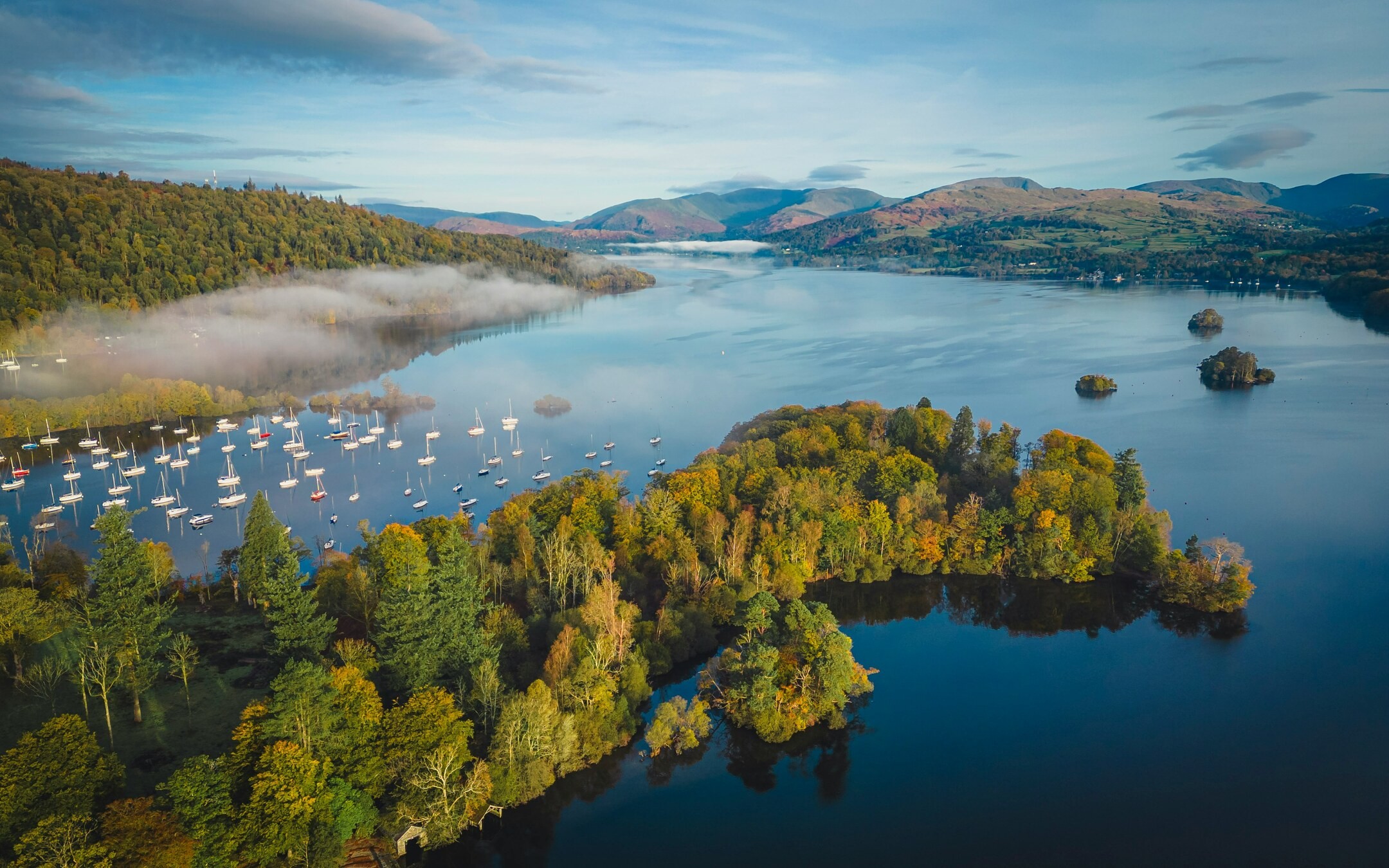
An English coalition has costed what it would take to keep every drop of wastewater out of England's largest lake, £3.6–3.7 billion, and its modelling says nothing less ends harmful algal blooms.
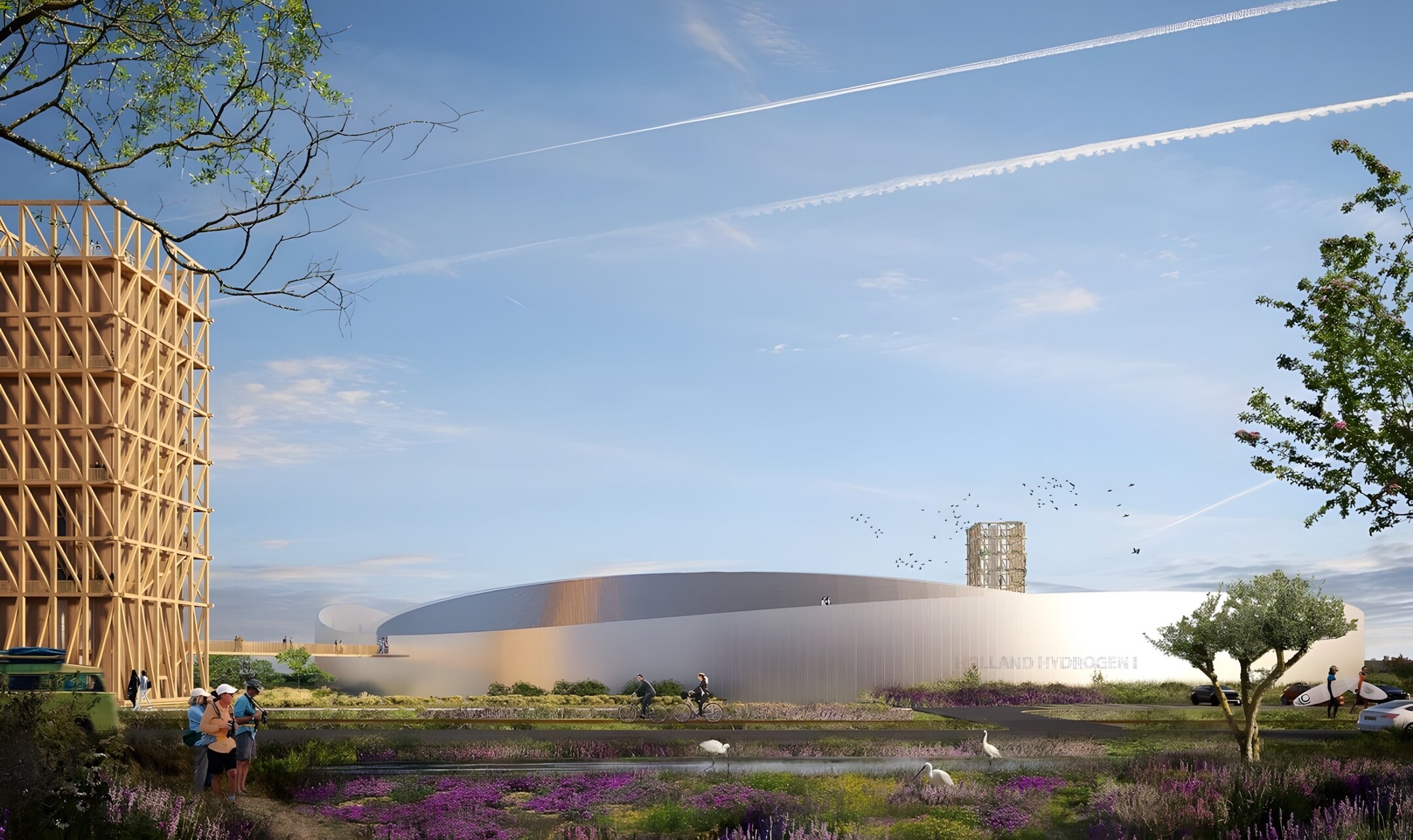
The Joint Research Centre mapped 1,300 hydrogen plants against local water resources and found the EU's targets reachable without a water crisis, though southern Europe and parts of central Europe will need careful planning.