A Record Number of Water Conflicts Are Hitting the World
More water-related conflicts were recorded worldwide in 2024 than ever before, according to the latest analysis by the Pacific Institute, a US water research institute, presented on the opening day of World Water Week 2026 in Stockholm. At the event, organised by the Stockholm International Water Institute (SIWI) from 23 to 27 August under the theme “Water for People and Progress”, the intertwining of water and armed conflict is an increasingly urgent topic year after year (UN-Water, 2026). This year's data are particularly worrying: in war-torn regions – from Gaza and Sudan to Iran and Ukraine – water is increasingly not just a casualty but also a target and an instrument of warfare.
Behind the numbers – what the Pacific Institute measures
According to the Pacific Institute's analysis (Shimabuku, 2025), a total of 420 water-related conflicts were documented worldwide in 2024, a record.
This represents a 78% increase on the 235 cases in 2022 and a 20% rise compared with 2023. For more than three decades, the institute has maintained the Water Conflict Chronology database, which classifies water-related violent events into three categories.
The first category is casualty: cases where water infrastructure – dams, pipelines, wells, treatment plants or energy systems – is damaged deliberately or as collateral damage during an armed conflict. The second is trigger: where water scarcity, unequal access or disputes over resources spark violence, often between communities, farmers, herders or armed groups. The third, rarest but all the more worrying category is weapon: where water is used as a weapon to punish opponents or exert pressure – including cutting off supply, contaminating water sources or deliberate flooding.
In 2024, 61% of cases were attacks on infrastructure, 34% were disputes over access or resources, and 5% involved the deliberate use of water as a weapon. These proportions alone show that water is increasingly becoming an instrument of warfare rather than merely incidental damage in conflicts. By comparison, only 24 such cases were recorded worldwide in 2000 – today's figure is therefore seventeen times higher, and growth has accelerated most in the past few years.
Types of water conflict, 2024
%
Source: Pacific Institute – Water Conflict Chronology
| Attacks on infrastructure | 61 |
|---|---|
| Disputes over access and resources | 34 |
| Water as a weapon | 5 |
The overall picture is nuanced by the fact that the vast majority of conflicts take place not between countries but within them: between farmers, herders, urban and rural water users, religious communities or family clans, typically in Africa, the Middle East and South Asia.
All this is intensifying even though a 2010 UN resolution explicitly recognised access to water and adequate sanitation as a human right – legal recognition alone has therefore not stopped the trend.
Gaza – where water itself is the weapon
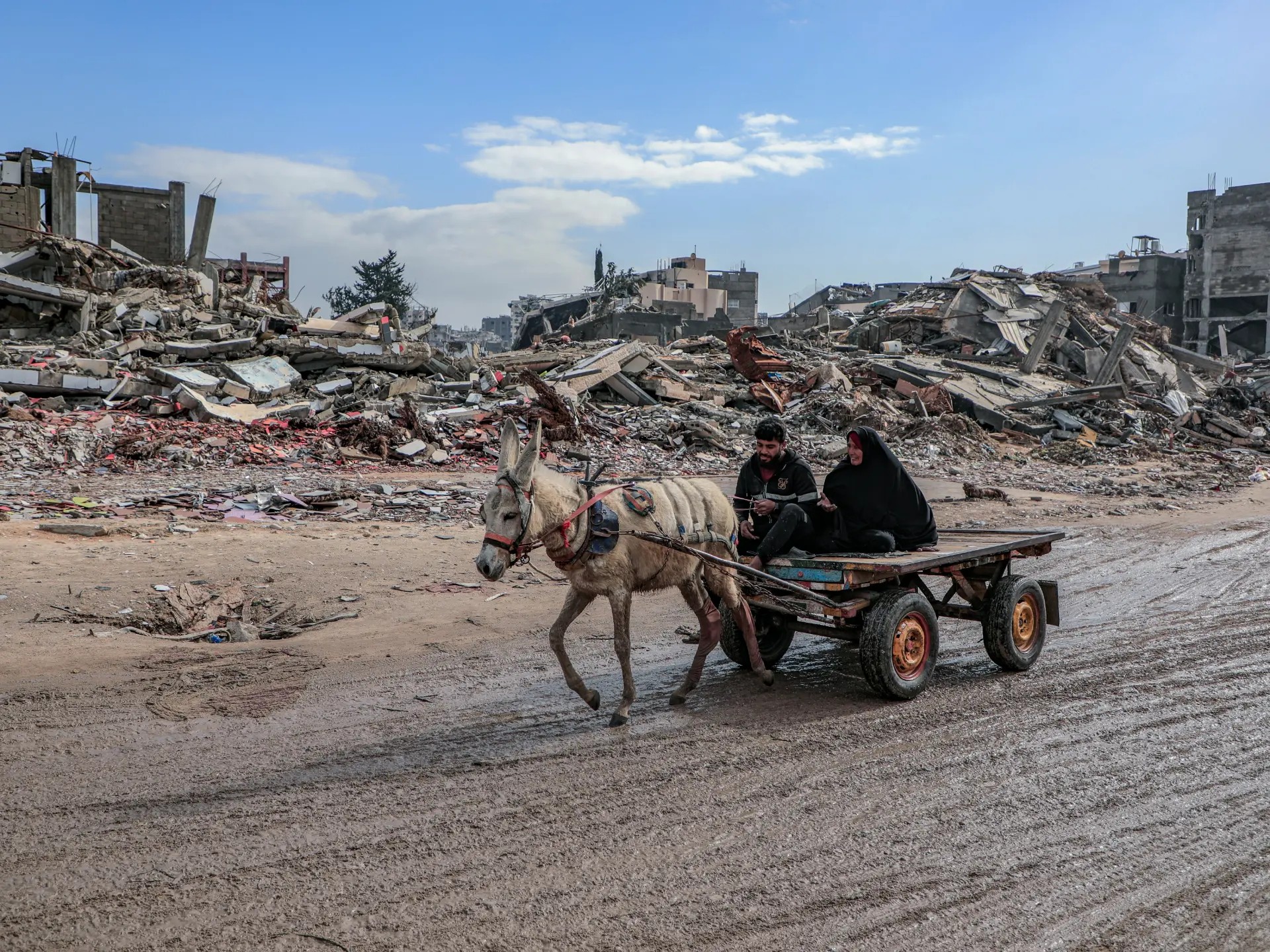
Nowhere is the wartime role of water as stark as in the Gaza Strip. According to UNICEF, around 90% of the water utility system in the territory has been destroyed or damaged, while 1.9 million of its 2.1 million inhabitants have been forced from their homes (UNICEF, 2026).
70% of the population lacks access to the minimum 6 litres of drinking water a day, and 90% of households suffer from moderate or severe water shortages.
According to Médecins Sans Frontières (MSF), water prices in the territory have risen by as much as 500%, while average daily water consumption is just 4.5 litres per person. All six wastewater treatment plants have stopped working, 70% of pumping stations are out of service, and around 154,600 m³ of untreated sewage enters the environment every day. Earlier – in June 2024 – a UN report recorded damage to or destruction of 76 municipal desalination plants and 194 water production wells.
The situation is no better in the West Bank: settler attacks and Israeli demolitions regularly damage Palestinian water infrastructure, and repeated raids on the Ein Samiya wells east of Ramallah have cut off supply to some 100,000 people.
Sudan – the world's largest humanitarian crisis
Since April 2023, an armed conflict has been raging between the Sudanese Armed Forces and the Rapid Support Forces (RSF), which has now displaced some 12 million people and caused a humanitarian crisis affecting more than 30 million – currently the largest such crisis in the world.
According to a recent report by the Geneva Academy (2025), water is being used as a weapon in Sudan in two ways: first as a military tactic – the RSF, for example, has seized reservoirs, destroyed treatment plants and cut off access to water in major cities and refugee camps – and second through the humanitarian crisis, as the collapse of water systems has caused cholera epidemics and famine. According to the report, the seizure of the Golo and Shagra reservoirs in North Darfur alone cut off more than 270,000 people from safe drinking water.
As a result of water shortages, the cholera epidemic has already caused more than 83,000 cases and 2,100 deaths, while the risk of famine is growing in Darfur, Kordofan and Blue Nile state.
According to the UN, the situation is made worse by the fact that humanitarian organisations are often unable to reach those in need because of the continuous fighting.
Iran and the Gulf – caught between drought and war
US and Israeli air strikes since 28 February have further strained Iran's water system, already weakened by prolonged drought, low rainfall, depleted groundwater and agricultural water demand. The attacks reportedly also damaged desalination plants and reservoirs on Qeshm Island and in Hormozgan province, disrupting supply for tens of thousands of people. Damage to energy networks and roads further hampered recovery.
During the war, Iran's water reserves were already critically low: some reservoirs were up to 92% empty, while in Mashhad, the country's second-largest city with around 4 million inhabitants, reservoir levels fell below 3%.
The war also highlighted the vulnerability of water infrastructure in the Gulf, one of the world's most water-scarce regions, where drinking water supply depends heavily on desalination plants. They provide 90% of Kuwait's drinking water, 86% of Oman's and 70% of Saudi Arabia's, while in Bahrain the share is over 90% and in Qatar 99%. During the war, desalination plants were damaged in Bahrain, Kuwait, the United Arab Emirates and Iran, although the impact on water supply has so far been limited. The exposure is structural: desalination is an extremely energy-intensive process, so a single strike on a power plant or the electricity grid can easily lead to water shortages – in the region, water and energy security are practically inseparable.
Ukraine – energy infrastructure and water supply
Ukraine's water crisis has deepened further as Russia's war destroys energy and water systems. According to UNICEF, 4.3 million people received safe drinking water through humanitarian assistance last year, while 12.7 million need such support. Attacks have cut electricity generation by 70%, also disrupting water and heating supply – in Kherson, strikes cut whole districts off the drinking water network.
The Kakhovka dam disaster in June 2023 directly affected more than 100,000 people, and since then around 10 million people in the country have lacked reliable access to safe drinking water.
The situation is made worse by the fact that in the winter months heating and water supply are closely intertwined, so a single strike on energy infrastructure can cause a water crisis in itself.
Water crises by region
| Region | Nature of the conflict | Key figure | Population affected |
|---|---|---|---|
| Gaza | deliberate destruction and blockade | 90% of water and wastewater infrastructure damaged or destroyed | 2.1 million |
| Sudan | water as a weapon (seizure of reservoirs) | 83,000 cholera cases, 2,100 deaths | 30 million |
| Iran | air strikes and prolonged drought | some reservoirs 92% empty | 4 million |
| Gulf region | damage to desalination plants | 70–99% of drinking water comes from desalination | several million |
| Ukraine | attacks on energy infrastructure | 12.7 million people need humanitarian water assistance | 10 million |
Sources: Pacific Institute – Water Conflict Chronology (2025); UNICEF; Geneva Academy
Water as a target
The message of World Water Week 2026 in Stockholm is clear: water is less and less merely a by-product of armed conflict and more and more its instrument and target. According to the Pacific Institute, a record 420 cases were recorded in 2024, and the trend has been rising steadily for years. From Gaza and Sudan to Iran and Ukraine, the same pattern emerges: wars first break water and energy supply, which then claims lives in its own right – through cholera epidemics, famine and the collapse of everyday survival.
According to SIWI's executive director, Helena Thybell, the world already has the solutions to water challenges; they just need to be applied together, in practice. The question is whether, by the 2026 UN Water Conference and COP31, this recognition can be turned into real, actionable steps – before water becomes an even more permanent participant in the wars of the 21st century. Until that happens, the policymakers, researchers and civil society organisations who gather in Stockholm every year can at most document a process whose human cost is by far the highest on the battlefield.
In 2024, a record 420 water-related conflicts were recorded worldwide – 78% more than the 235 cases in 2022. According to Pacific Institute data presented at World Water Week 2026 in Stockholm, 61% of cases were attacks on water infrastructure, 34% were access disputes and 5% involved the deliberate use of water as a weapon. In Gaza, 90% of water and wastewater systems have been damaged or destroyed, 70% of the population lacks the minimum 6 litres of drinking water a day, and prices have risen by 500%. In Sudan, the seizure of reservoirs cut 270,000 people off from water, and a cholera epidemic has caused 83,000 cases and 2,100 deaths. In Iran, some reservoirs are 92% empty due to the combined effects of war and drought. In Ukraine, 12.7 million people need humanitarian water assistance, and 10 million have lacked reliable drinking water since the Kakhovka dam disaster.
According to new data presented at World Water Week 2026 in Stockholm, more water-related conflicts were recorded worldwide in 2024 than ever before: 420 – a 78% increase on the 235 cases in 2022 and a 20% rise compared with 2023. According to the Pacific Institute's Water Conflict Chronology database, 61% of cases were attacks on water infrastructure, 34% were disputes over access or resources and 5% involved the deliberate use of water as a weapon – compared with just 24 cases recorded in 2000, a seventeenfold increase in barely two and a half decades.
The most severe situation has developed in Gaza, where 90% of water and wastewater infrastructure has been damaged or destroyed, 70% of the population lacks the minimum 6 litres of drinking water a day, and water prices have risen by as much as 500%. In Sudan, the world's largest current humanitarian crisis – affecting 30 million people – the seizure of reservoirs (such as Golo and Shagra) alone cut 270,000 people off from safe drinking water, according to the Geneva Academy, and a cholera epidemic has caused 83,000 cases and 2,100 deaths.
In Iran, the combined effects of war and prolonged drought have depleted some reservoirs by 92%, and in Mashhad, a city of 4 million, levels have fallen below 3%. In the Gulf, the vulnerability of desalination plants has become evident, as they provide 70–99% of the region's drinking water, and because the technology is energy-intensive, a single power outage can easily lead to water shortages. In Ukraine, 12.7 million people need humanitarian water assistance, and since the 2023 Kakhovka dam disaster 10 million people have lacked reliable access to safe drinking water.


A study of 10,826 Chinese treatment plants finds that big centralised systems are reaching two limits at once, on easing water scarcity and on paying their way, and that a hybrid model could do the job for up to 37% less.
FAO has published draft principles on who may use water and on what terms, a quiet piece of international work that speaks directly to this year's fights over drought, wells and free irrigation.

A new report projects data centres' water footprint reaching 9.32 trillion litres by 2030, but the number is only meaningful once you know what it counts, and who is making the case.
An English coalition has costed what it would take to keep every drop of wastewater out of England's largest lake, £3.6–3.7 billion, and its modelling says nothing less ends harmful algal blooms.