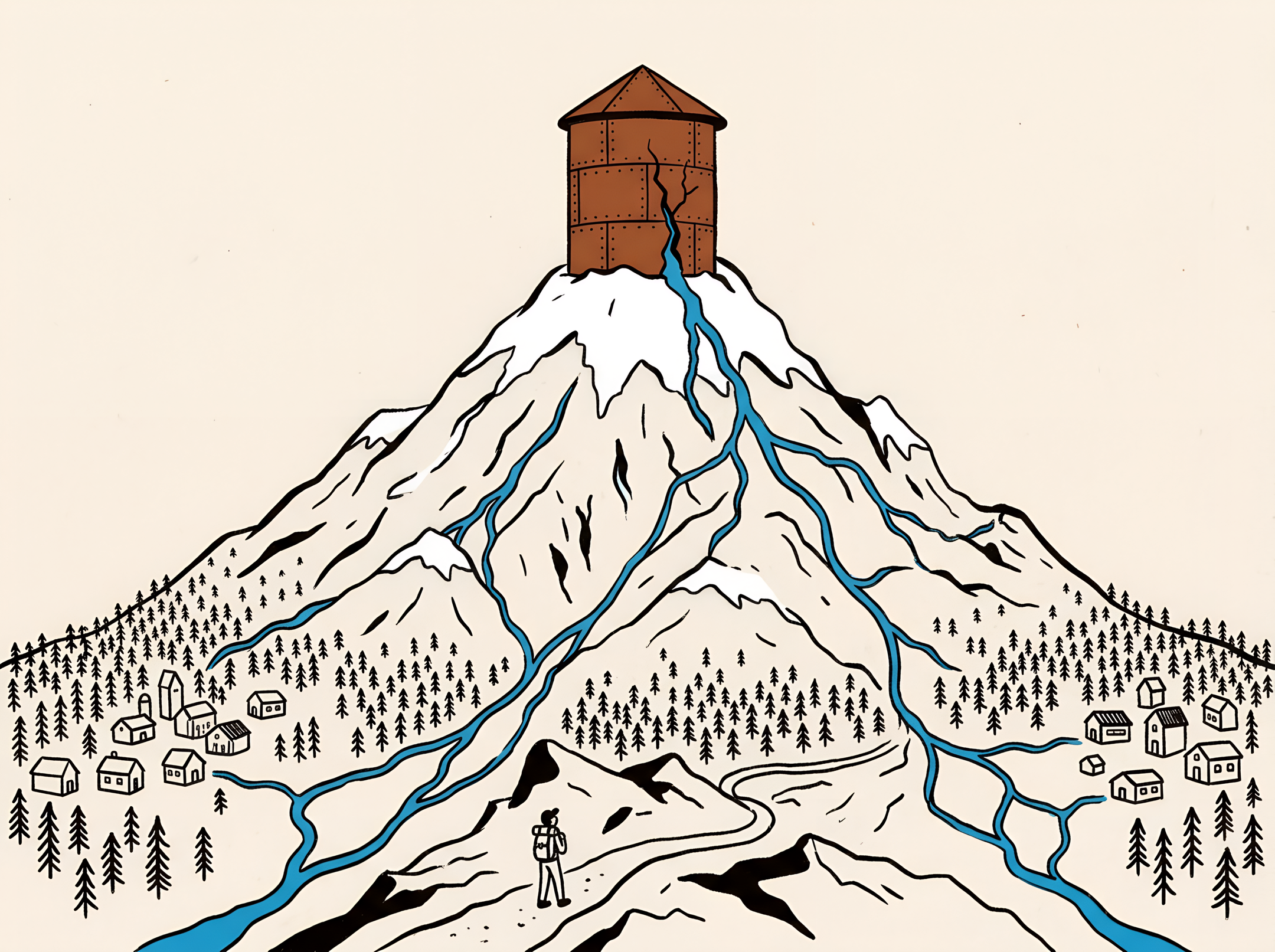
Our Planet's Waters: Where Do We Stand Now?
For World Water Day, W4 Magazine has prepared a series of articles that draw on the latest studies and surveys to describe the state of water systems around the world and in Europe. This part looks at the global picture; the European part follows in the next article of the series.
We wish all our readers an informative and thought-provoking read!
One of our greatest treasures: water
All life needs water. On World Water Day this simple fact carries special weight – especially since, according to the UN's newly published 2026 World Water Development Report (UN-Water, 2026), the state of the Earth's freshwater resources is increasingly worrying. Freshwater does not disappear – it simply becomes harder to reach, more unevenly distributed, and contested by ever more people, ecosystems and economies.
The good news is that the knowledge, technology and political will for change are available. The only question is whether we use them.
How much freshwater is there on Earth – and how much of it is accessible?
The Earth's renewable freshwater resources amount to about 43,000 km³ a year. That is a huge figure – but it is worth putting in context: only 2.5% of all the planet's water is freshwater, and much of that is locked up as ice in inaccessible places. The easily accessible freshwater in rivers, lakes and groundwater is far smaller.
In theory, the Earth's freshwater would be enough for everyone – the problem is not quantity but distribution, access and quality.
This annual budget of 43,000 km³ is relatively constant – but availability varies enormously in space and time. Climate change is making this variability ever more extreme: where it rains, floods wreak havoc; where it does not, drought strikes. Seasonal fluctuations are a particular problem where there is not enough infrastructure to store surplus water and bridge dry periods.
How do we use water?
Humanity's global water use – the sum of abstraction across all sectors – has remained relatively stable over the past two decades at around 4,000 km³ a year. That is about 10% of the renewable resource. According to the 2025 WWDR, this figure rose by 14% between 2000 and 2021, an average annual increase of 0.7% – with the growth concentrated mainly in rapidly developing cities and regions.
How use is split says a lot about where the real fault lines lie:
- Agriculture: 72% – the only sector that remains dominant globally. In low-income countries the share can reach 90%.
- Industry: 15% – this share is slowly falling in advanced economies, a sign of improving water efficiency.
- Municipal/domestic: 13% – this share is rising in fast-growing cities.
Global water use by sector
%
| Agriculture | 72 |
|---|---|
| Industry | 15 |
| Municipal, domestic | 13 |
Groundwater plays a particularly important role: it supplies nearly half of domestic water use and about a quarter of irrigation water. But this source is not unlimited – in parts of South Asia and North America, abstraction persistently exceeds recharge, leading in the long run to an irreversible decline in groundwater reserves.
Glaciers – the world's invisible water reserves
The UN's 2025 report (UN-Water, 2025) – which focused specifically on mountains and glaciers as "water towers" – paints an alarming picture of the state of the cryosphere. The world's mountain regions cover 33 million km², and nearly 1.1 billion people live directly in them. A further 2 billion people depend on rivers fed by melting snow and glaciers for drinking water, irrigation or energy.
The world's glaciers are melting faster than at any time since records began – and this is not just a problem for glacier regions but for all of us.
The numbers speak for themselves:
- The Andean glaciers have lost 30–50% of their mass since the 1980s. They supply 50% of the Amazon River's baseflow.
- The East African glaciers – on Mount Kenya, the Rwenzori and Kilimanjaro – could disappear entirely by 2040 if current trends continue.
- The "Third Pole" – the Hindu Kush–Karakoram–Himalaya system – contains 100,000 km² of glaciers, half of which could melt by 2100.
Melting glaciers pose a double threat: in the short term they increase the risk of floods and glacial lake outbursts, and in the long term they reduce available water by diminishing the flow into rivers and lakes. In Alpine regions, snowmelt is still the most important regulator of river flow – but that balance is changing fast.
Water stress: the reality behind the numbers
A region is considered water-stressed when it withdraws 40–80% or more of its available renewable water each year. This threshold shows when water use becomes unsustainable from a resource management point of view.
According to the 2026 WWDR:
- 10% of the world's population lives in countries with critical or high chronic water stress.
- Around 4 billion people – half the planet's population – live with severe water stress for at least one month a year.
- 25 countries – together home to a quarter of the world's population – face extremely high water stress every year.
These numbers are not abstract statistics: behind them are farmers without enough water for irrigation, cities forced to restrict water use and ecosystems in slow decline.
The global picture for drinking water and sanitation
Real progress has been made on access to water in recent decades – but the goal is still far off. Between 2015 and 2024, nearly 961 million people gained access to safe drinking water, and global coverage rose from 68% to 74%. That is a huge achievement, built on the work of millions of people.
Yet in 2024, 2.1 billion people – 26% of the world's population – still lacked safely managed drinking water. The situation for sanitation is even more worrying:
- 3.4 billion people lack safely managed sanitation.
- 1.7 billion people do not even have basic hygiene services at home.
- Only 56% of the world's household wastewater is safely treated.
Where wastewater flows back untreated into natural waters, the vicious circle closes: sewage contaminates drinking water sources, which in turn cause disease and further worsen the situation of the communities affected.
The broader picture of water quality also demands serious attention: only 56% of the world's monitored rivers, lakes and groundwater bodies are in good ecological condition. Among pollution sources, diffuse pollution from agriculture is the most significant – a primary problem even in advanced, high-income countries.
SDG 6: the yardstick we measure ourselves against
In 2015 the UN adopted the Sustainable Development Goals (SDGs), of which Goal 6 deals specifically with water:
"Ensure availability and sustainable management of water and sanitation for all." The goal is broken down into targets covering everything from drinking water, sanitation and water quality to integrated water resources management and the protection of ecosystems.
The finding of the 2026 WWDR is clear and grave: not a single SDG 6 target is on track to be met by 2030. Some areas show moderate progress, others stagnation, and a few indicators are even going backwards.
This does not mean that past efforts were in vain – on the contrary, where action was taken, change is visible. It means that the pace so far is not enough, and water investment, integrated water management and international cooperation must accelerate radically in the coming years.
Ecosystems and water: an inseparable link
The state of water resources cannot be understood without considering freshwater ecosystems – rivers, lakes, wetlands and marshes. These habitats are much more than natural scenery: they act as natural water filters, flood buffers, refuges for wildlife and drinking water sources all at once.
The causes of ecosystem degradation are well known: climate change, unsustainable land-use change and pollution. Here too the numbers are grim: since the 1970s, 35% of the world's wetlands have disappeared – and the remaining ones are being lost three times faster than forests. Wetlands matter enormously: 40% of plant and animal species, including 30% of all known fish species, depend on them.
The interaction between groundwater and surface water is also critical: over-abstraction of groundwater is not only a threat to wells and agriculture – it directly endangers wetlands, springs and the baseflow of rivers.
Climate change as a multiplier
Climate change on its own neither creates nor removes water – but it fundamentally reshapes its distribution. As a result of global warming:
- Extremes are intensifying: floods and droughts are both becoming more frequent and more severe.
- The water cycle is changing: the annual distribution of precipitation is becoming more extreme, and snow plays an ever smaller role as a natural "reservoir".
- Uncertainty is growing: farmers, water utilities and cities find it ever harder to plan, because previously reliable seasonal patterns are breaking down.
Climate change and the water crisis are not two separate problems – they are closely intertwined. Protecting water protects the climate, and vice versa.
There is reason for hope – and for action
The overall picture is not hopeless. Humanity has the knowledge and technology to reverse these trends – or at least slow them down. Nature-based solutions (restoring wetlands, planting forests in catchments), circular water management, reducing network losses, smart irrigation technologies and efficient wastewater treatment are all tools that can be used today.
Change is possible not only at national or global level but also for individuals and companies. Every litre of water saved, every industrial process made more efficient and every catchment protected contributes to the sustainability of the whole system.
This year's World Water Day reminds us that water cannot be taken for granted. It never could – but in the 21st century this is truer than ever: clean, safe freshwater is one of the most precious resources our planet has.
According to the UN's 2026 World Water Development Report (WWDR), the Earth's freshwater resources have reached a critical turning point. Although there would in theory be enough renewable freshwater, unequal distribution, pollution and climate change are fundamentally altering access to it. Today 2.1 billion people lack safe drinking water and 4 billion live with water stress for part of the year, while elsewhere glaciers are melting at an alarming rate. Not a single SDG 6 target is on track for 2030. Yet the knowledge and technology are available – the question is how fast and how determined decision-makers will be. World Water Day is a call to action.
The UN's newly published 2026 World Water Development Report (WWDR) gives a comprehensive picture of the current state of the planet's freshwater resources. The Earth's renewable freshwater amounts to about 43,000 km³ a year, of which humanity uses only 4,000 km³ – 10% – and 72% of that goes to agriculture. At first glance this may seem sufficient, but the problem lies not in the global quantity but in unequal distribution, deteriorating quality and accelerating losses.
According to the latest data, 2.1 billion people lack access to safe drinking water, 3.4 billion lack safely managed sanitation, and barely more than half of the world's waters are in good ecological condition. Around 4 billion people experience water stress for at least one month a year. Meanwhile, the UN's 2025 report painted an equally dramatic picture of glacier loss: Andean glaciers have lost 30–50% of their mass since the 1980s, East Africa's glaciers could disappear by 2040, and the Himalayan system could lose half of its ice by 2100. These ice fields underpin the water supply of nearly 2 billion people.
The WWDR 2026 is clear: not a single SDG 6 water target is on track to be met by 2030. But the report stresses that the necessary technologies and solutions exist. Nature-based approaches, more efficient irrigation, modern wastewater treatment and stronger international cooperation can together reverse the trend. World Water Day calls on us to see water not as a given, but as our most precious shared treasure.

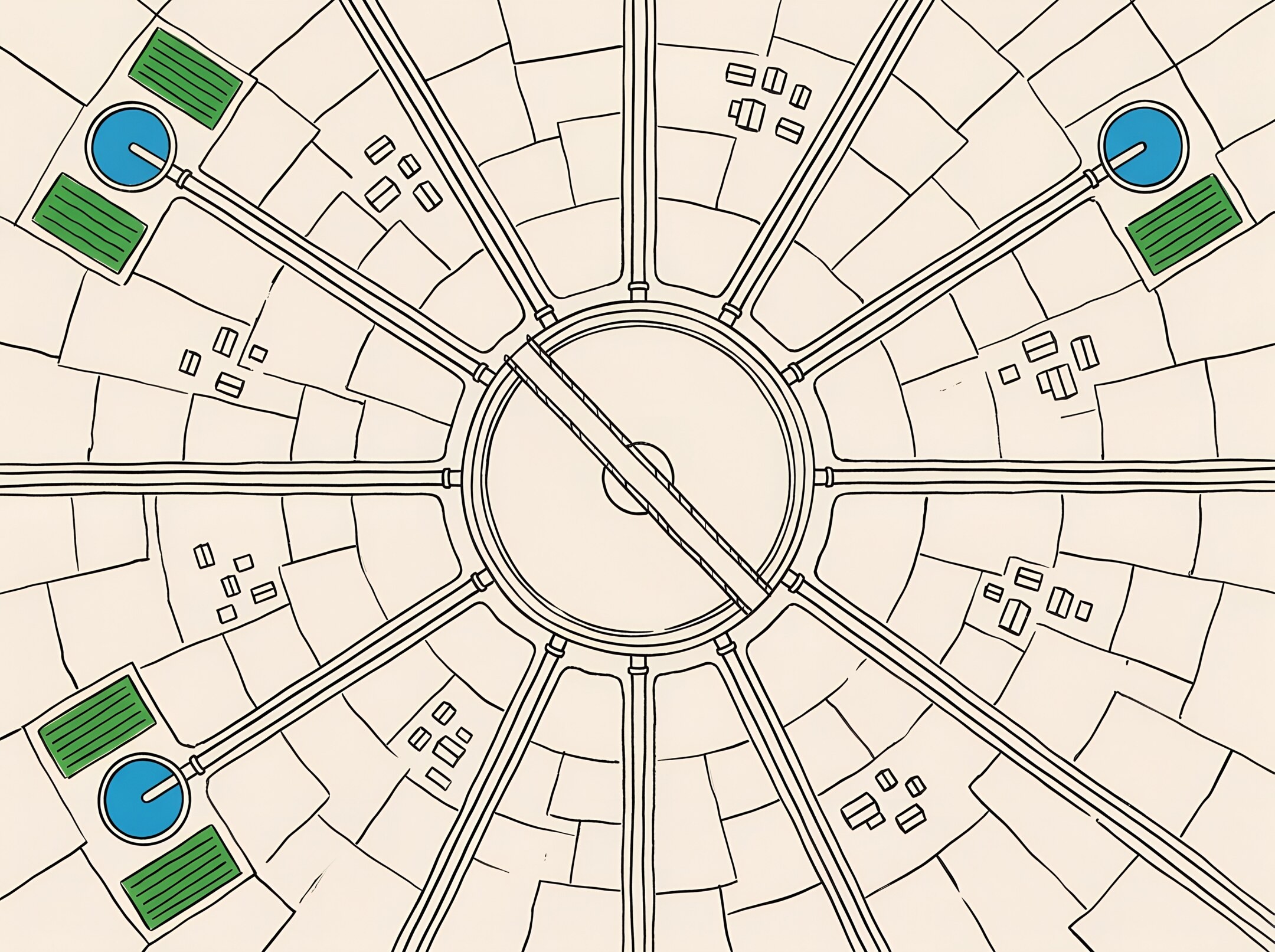

A study of 10,826 Chinese treatment plants finds that big centralised systems are reaching two limits at once, on easing water scarcity and on paying their way, and that a hybrid model could do the job for up to 37% less.
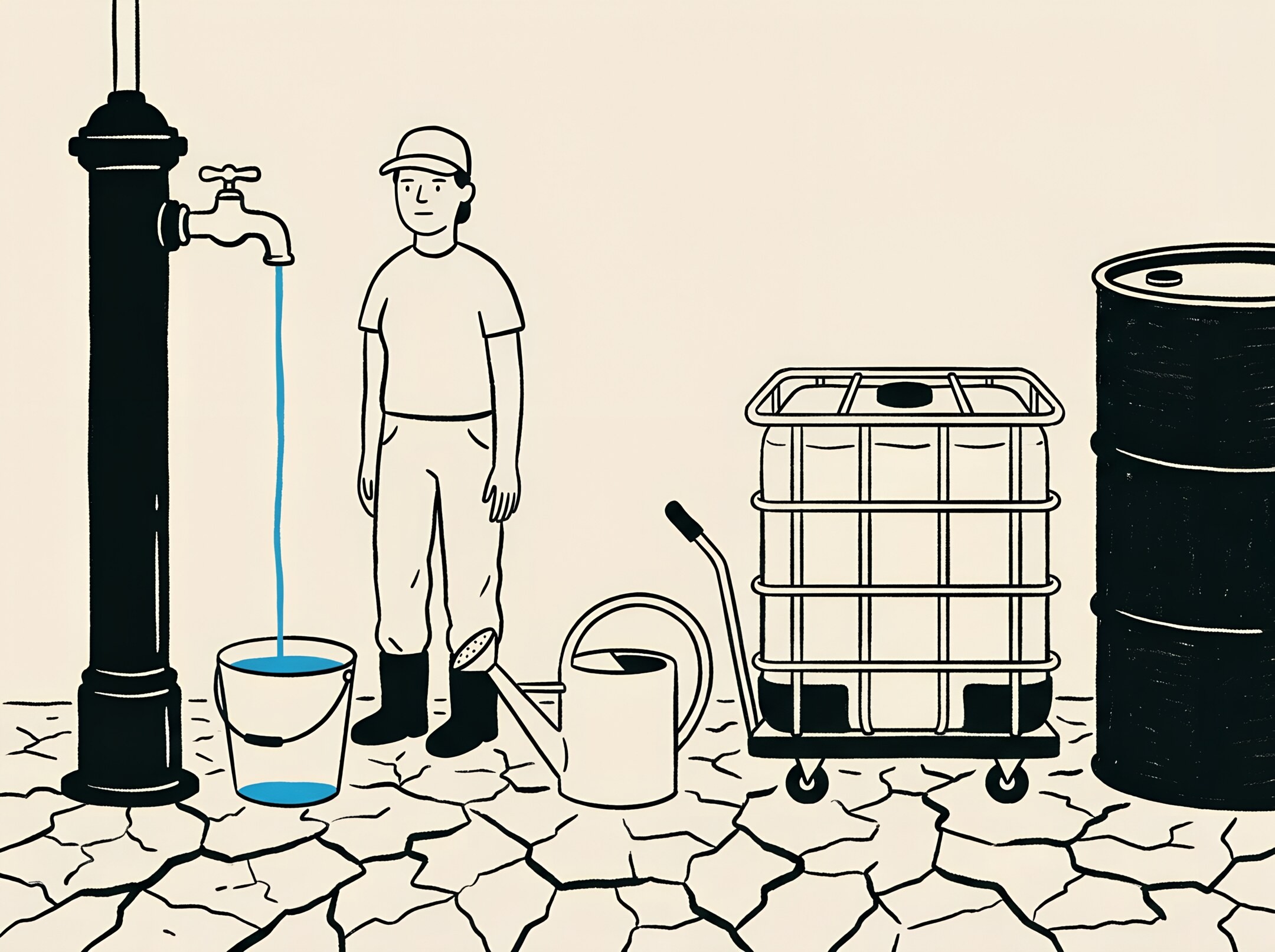
FAO has published draft principles on who may use water and on what terms, a quiet piece of international work that speaks directly to this year's fights over drought, wells and free irrigation.
A new report projects data centres' water footprint reaching 9.32 trillion litres by 2030, but the number is only meaningful once you know what it counts, and who is making the case.
An English coalition has costed what it would take to keep every drop of wastewater out of England's largest lake, £3.6–3.7 billion, and its modelling says nothing less ends harmful algal blooms.