The Carpathian Basin's Water: Source and Future
Our World Water Day series closes with a look at the water systems of the Carpathian Basin and Hungary.
Our home, the Carpathian Basin
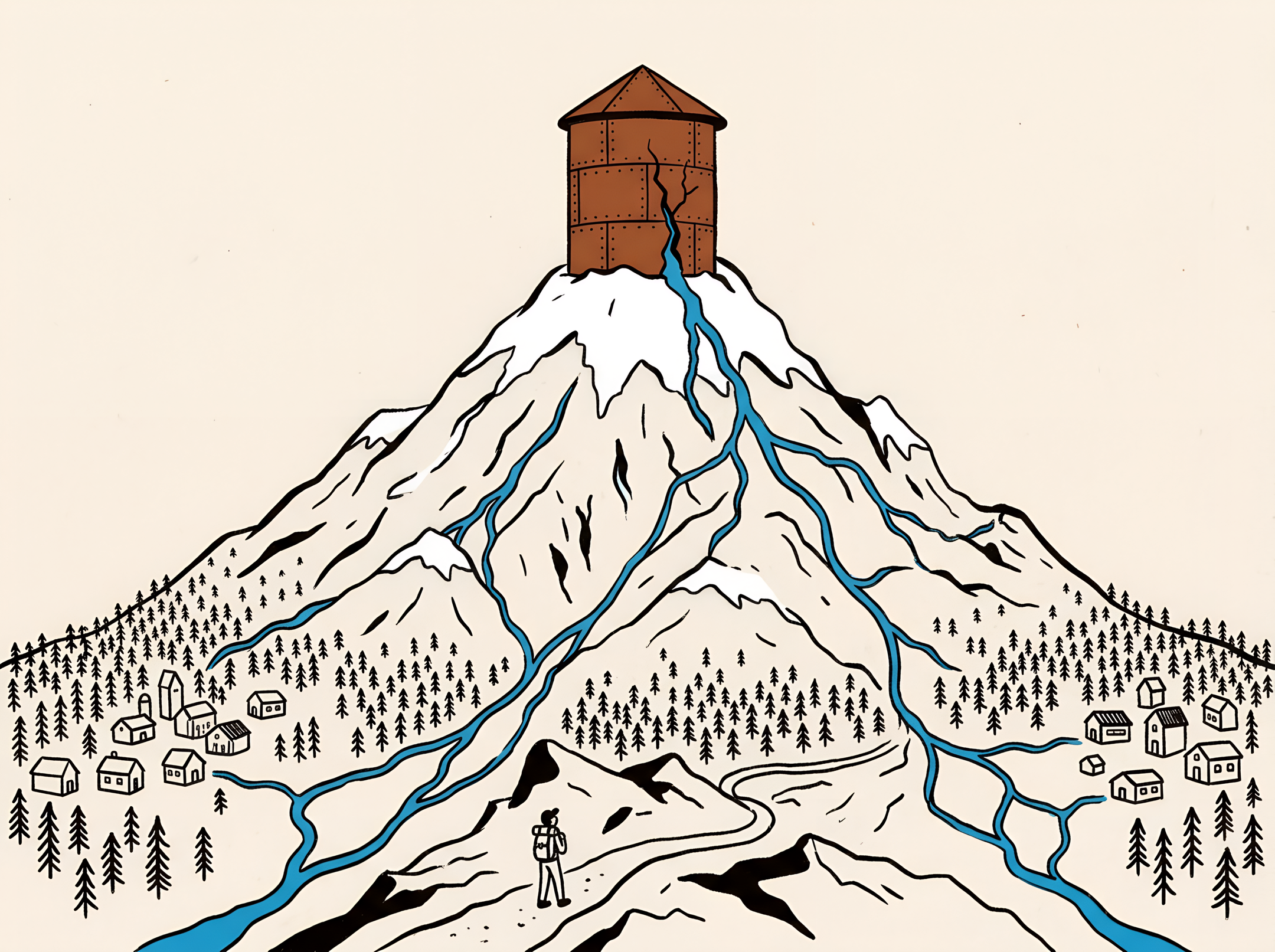
For thousands of years the Carpathian Basin has been one of the most water-rich landscapes in Europe. A ring of mountains forms a natural catchment around the Great Hungarian Plain, the vast river systems of the Danube and the Tisza gather and carry away mountain rain and meltwater, and the aquifers beneath hold one of the largest freshwater reserves on the continent. The system still works, but more and more factors are disrupting it.
Climate change, the legacy of decades of water management decisions and growing economic demand for water together confront the region with challenges that past answers can no longer meet. World Water Day is a good moment to take stock of where the Carpathian Basin – and Hungary within it – really stands, and of what can still be changed.
The Carpathians: guardian of the basin's water
To understand the state of Hungary's water resources, we have to look one level up: to the Carpathians. The UN's 2025 World Water Development Report documents in detail that the Carpathians are not just a mountain ecosystem but the foundation of water management across the whole Carpathian Basin (UN-Water, 2025).
The Carpathians are shared by seven countries: the Czech Republic, Hungary, Poland, Romania, Serbia, Slovakia and Ukraine. Close to 30% of Europe's plant species are found here, along with the continent's largest populations of bears, wolves and lynx. But the mountains' role runs deeper still. Their waters drain into three major basins: the Danube and the Dniester, which flow into the Black Sea, and the Vistula, which runs to the Baltic.
The Carpathians are irreplaceable not only for their biodiversity: the rivers and groundwater of the region depend overwhelmingly on these mountain catchments for their recharge.
Snow and rain in the mountains seep slowly into the rivers and aquifers, providing a steady supply to the plains of the basin. This natural regulating mechanism is now increasingly out of balance. According to the UN report, climate change is shortening the snow season in the Carpathians and bringing snowmelt forward. Summer river flows are falling, while short, intense downpours raise the risk of floods and landslides. Agriculture is now the main source of surface and groundwater pollution in the region.
One basin, seven countries – and a shared responsibility
Recognising the Carpathians' role as a catchment, the seven countries signed the Carpathian Convention in 2003, committing to protect the region's natural and cultural heritage and to develop it sustainably. The Convention works closely with the International Commission for the Protection of the Danube River (ICPDR), and measures taken in the Carpathians under the Danube Flood Risk Management Plan feed directly into national implementation.
This transnational cooperation matters because water knows no borders. What happens in the forests, on the slopes and in the soils of the Carpathians shows up weeks or months later in the level of the Tisza, the quality of the Danube and the groundwater tables of Hungary. The 2000 Baia Mare mining disaster in Romania was dramatic proof: cyanide-laden waste entered the Tisza and then the Danube, sweeping through the entire basin.
The UN report also points out that the war in Ukraine is putting heavy pressure on the natural resources of the Carpathian region. Oil products from destroyed military infrastructure have polluted the catchments of the Dniester and the Vistula, and intensified logging is increasing flood risk on the slopes (UN-Water, 2025).
The basin's balance: a thirsty plain
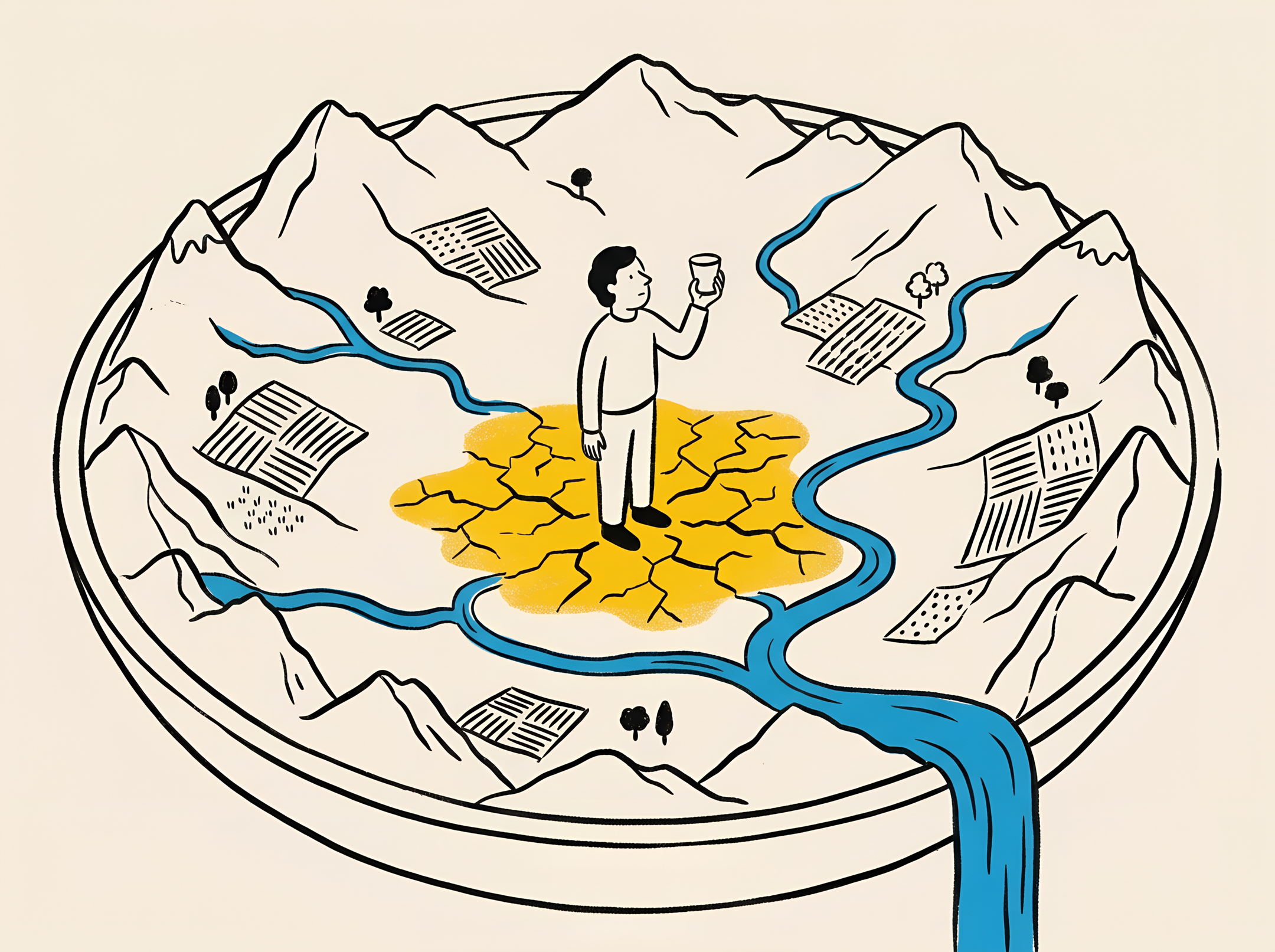
While change up in the mountains is slow and hard to see, down on the plains of the basin its consequences can already be felt. It is a natural feature of the Carpathian Basin, and of Hungary in particular, that rain and meltwater leave the area quickly through the rivers. The great river regulation works of the 19th century sped this up: natural floodplains were cut off from the rivers, low-lying land was drained, and water now runs off through a heavily channelled system instead of soaking into the ground.
The result is the water deficit Hungary faces today.
World Water Day in 2026
Every year on 22 March, World Water Day celebrates the most vital element on the planet. In Hungary in 2026, the celebration is mixed with a good deal of concern and a will to act. In Green Economy 2026 (Zöldgazdaság 2026), a collection of studies compiled by the Association of Environmental Service Providers and Manufacturers (KSZGYSZ), Hungarian experts argue that sustainability is no longer just a theoretical goal but a precondition of economic stability (KSZGYSZ, 2026).
Squeezed between climate change and rising industrial water demand, Hungary is turning its attention to a long-neglected field: wastewater treatment and the reuse of industrial water. The message of modern water management is clear, writes Gabriella Hancz, associate professor at the University of Debrecen, in her study: wastewater should no longer be seen as a burden but as a valuable secondary raw material.
From water superpower to water deficit
The slogan that "Hungary is a water superpower" is deeply rooted in the Hungarian public mind. If that was ever true, the scientific facts today are sobering. The country's water balance has turned negative: every year roughly 7 km³ more water leaves Hungary through its heavily regulated rivers than flows in.
Because 96% of the drinking water supply relies on groundwater, the decline in its quantity and quality is a risk to national security. On the Homokhátság, the sand ridge between the Danube and the Tisza, and in the Nyírség region, the water table is already falling by 3–5 cm a year in places. Semi-desert conditions have developed in parts of the land between the two rivers, confirmed both by scientific measurements and by the appearance of plants typical of semi-deserts.
In this situation, retaining water and bringing treated water back into the cycle is the only way forward. One important step would be to soften the damage done by past river regulation. That would mean building riverbed sills, barrages and large reservoirs and re-creating the network of canals that once ran across the lowland landscape – a huge public investment that above all requires a broad change of mindset. Here, though, we turn to a less visible but equally important question: putting wastewater to use and protecting drinking water sources.
New dimensions in wastewater treatment
The results of conventional wastewater treatment are no longer good enough. The EU's recast Urban Wastewater Treatment Directive (UWWTD), adopted in 2024, sets stricter requirements, especially for larger treatment plants, which will have to add quaternary treatment. This is needed because conventional technologies cannot fully remove pollutants such as pharmaceutical residues, hormones and microplastics.
Measurements in Hungary have confirmed that although treatment plants significantly reduce microplastic loads, the concentration in treated effluent is still higher than in the receiving rivers. Modern analytical methods such as ICP-MS and GC-MS are therefore becoming essential, not only for quality assurance but also for environmental monitoring. Specialists see the future in whole effluent assessment (WEA), which rates the environmental risk of discharged water against the PBT criteria: persistence, bioaccumulation and toxicity.
Reusing industrial wastewater
Economic development – especially the energy- and water-intensive battery manufacturing now high on Hungary's agenda – puts an enormous burden on water resources. Here, too, the answer lies in circular thinking. The CATL plant in Debrecen sets a forward-looking example: it plans to cover 70% of its process water demand with treated wastewater, or greywater, and to draw only 30% from the drinking water network. This is paired with best available techniques (BAT), where recirculating cooling water and water-saving cooling towers are a basic requirement.
The CATL plant in Debrecen shows how heavy industrial water demand can be met sustainably: 70% greywater, 30% drinking water – the direction the industry needs to take.
International examples show what the technology can do. At Dow's chemical site in the Netherlands, 2.5 million m³ of municipal wastewater is reused every year, cutting energy use by 96.5%. A textile project in Pakistan achieved 98% pollutant removal and 90% water recovery.
Hungary, too, needs to make it a priority that large industrial users do not consume the public's drinking water reserves but instead use advanced pre-treatment – such as the Fenton process and electrochemical oxidation – to make water fit for repeated reuse.
Rainwater: a hidden source for towns and cities
One of the most important changes in the new EU rules is that urban wastewater now includes stormwater. At present, stormwater overflows account for more than 50% of the pollutants entering surface waters, washing organic matter, heavy metals and tyre wear particles into rivers. The EU aims to bring this load below 2%.
One possible answer is the sponge city concept and sustainable urban drainage systems (SUDS). Instead of quickly carrying polluted rainwater away through the combined sewer network, the water is held, infiltrated and stored where it falls. This not only relieves the sewers and treatment plants but also cools the urban microclimate through evaporation. Green roofs, rain gardens and permeable paving, applied across whole systems, could be key to adapting to climate change.
Nature-based solutions and underground storage
The future of water management lies in combining technology and nature. The innovative NaBa-MAR® method – nature-based, targeted managed aquifer recharge – makes it possible to return surplus water, including properly treated wastewater, to the aquifers. The geology itself serves as the "reservoir", helping to restore falling water tables and preserve wetlands.
The NaBa-MAR® method is especially promising on the Homokhátság and in the Nyírség: water returned to the aquifers supports agriculture, ecosystems and long-term drinking water security at the same time.
On the Homokhátság and in the Nyírség, this technology could be a lifeline for farming and ecosystems alike.
A shared responsibility
World Water Day should leave one lesson: Hungary cannot carry on wasting water as it does today. Better wastewater treatment, the removal of micropollutants and the circular use of industrial water are not only environmental obligations but economic necessities.
Three things are essential for success. Strict regulation and enforcement that push industry towards BAT and greywater use. Continuous innovation in treatment technology – quaternary treatment and bioremediation – and in monitoring. And public awareness, so that everyone understands that water is a finite resource and that wastewater is really a wasted opportunity.
We cannot make water spring from the rock. But preserving, cleaning and wisely using the treasure we already have is in our own interest – and a duty we owe to those who come after us.
For thousands of years the Carpathian Basin has been one of the most water-rich regions in Europe, but that position is now under serious pressure. The Carpathians, the main source that feeds the basin's rivers and groundwater, are sending less water down to the plains as the climate and land use change. Hungary's water balance has turned negative: every year some 7 km³ more water leaves the country than arrives. Semi-desert conditions are emerging on the Homokhátság sand ridge between the Danube and the Tisza and in the Nyírség region. With 96% of the country's drinking water drawn from groundwater, this is a question of national security. The answers lie in circular water management, in treating wastewater as a resource, and in nature-based techniques that recharge aquifers with treated water.
The water system of the Carpathian Basin is a complex, transnational whole. The mountain catchments of the Carpathians feed the Danube, the Tisza and the aquifers on which 96% of Hungary's drinking water supply depends. The UN's 2025 World Water Development Report documents how snowmelt in the Carpathians is arriving earlier, summer river flows are falling, agriculture has become the main source of water pollution and flood risk is rising. The Carpathian Convention, signed in 2003, and the International Commission for the Protection of the Danube River (ICPDR) provide a framework for cooperation, but the challenges are growing faster than the responses.
Hungary's position is particularly acute. Its water balance is negative: roughly 7 km³ more water leaves the country each year through its heavily regulated rivers than flows in. On the Homokhátság sand ridge and in the Nyírség, the water table is falling by 3–5 cm a year in places, and semi-desert vegetation has appeared in parts of the land between the Danube and the Tisza. The solutions, meanwhile, are becoming more inventive. The recast EU Urban Wastewater Treatment Directive requires quaternary treatment to remove micropollutants; CATL's plant in Debrecen plans to cover 70% of its process water demand with treated wastewater; and the NaBa-MAR® method recharges aquifers with purified water. The sponge city concept keeps rainwater where it falls and puts it to use. Together they point to a change of mindset: wastewater is not a burden but a valuable resource – a message that carries particular weight on World Water Day.



A study of 10,826 Chinese treatment plants finds that big centralised systems are reaching two limits at once, on easing water scarcity and on paying their way, and that a hybrid model could do the job for up to 37% less.
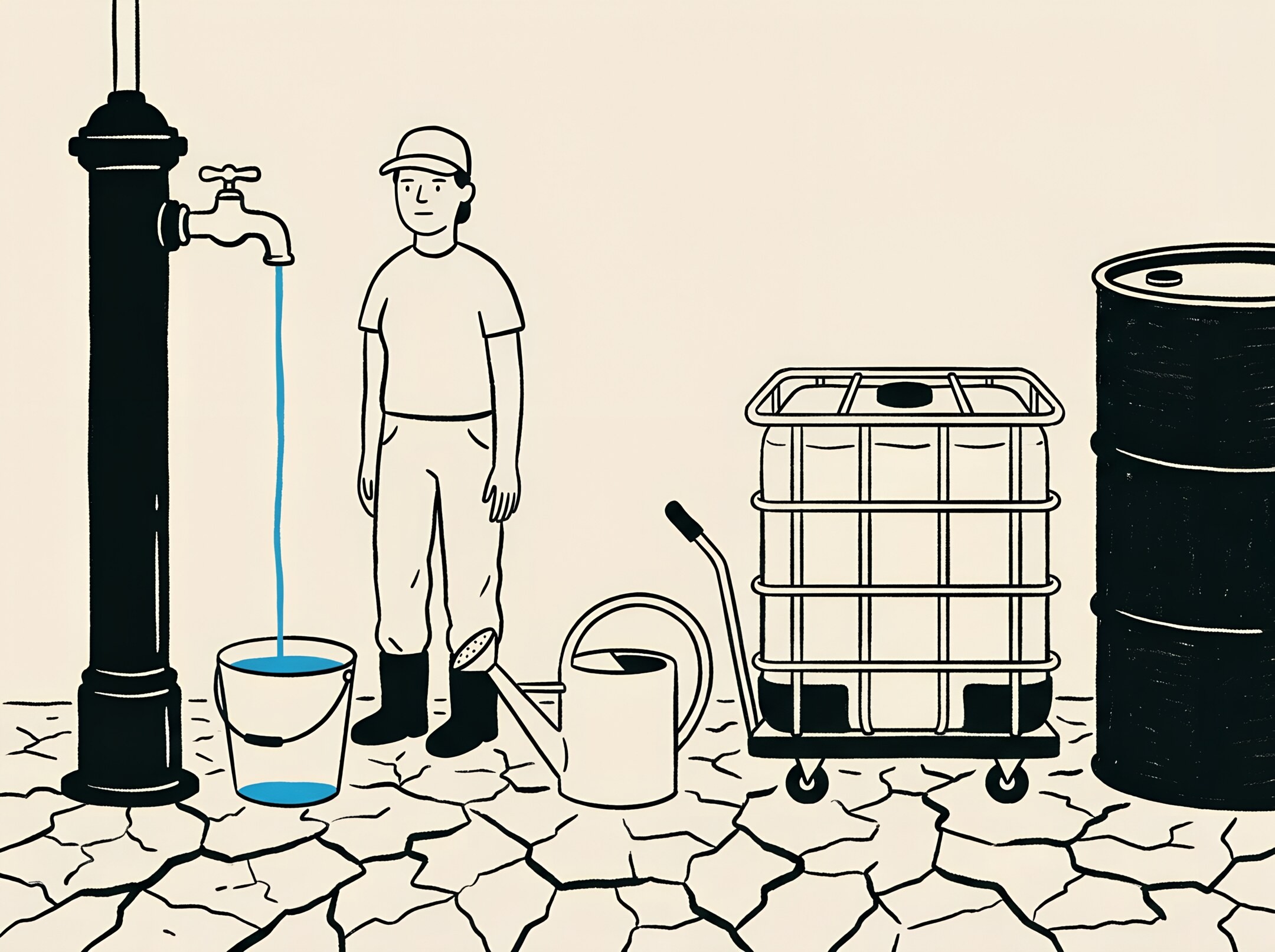
FAO has published draft principles on who may use water and on what terms, a quiet piece of international work that speaks directly to this year's fights over drought, wells and free irrigation.

A new report projects data centres' water footprint reaching 9.32 trillion litres by 2030, but the number is only meaningful once you know what it counts, and who is making the case.
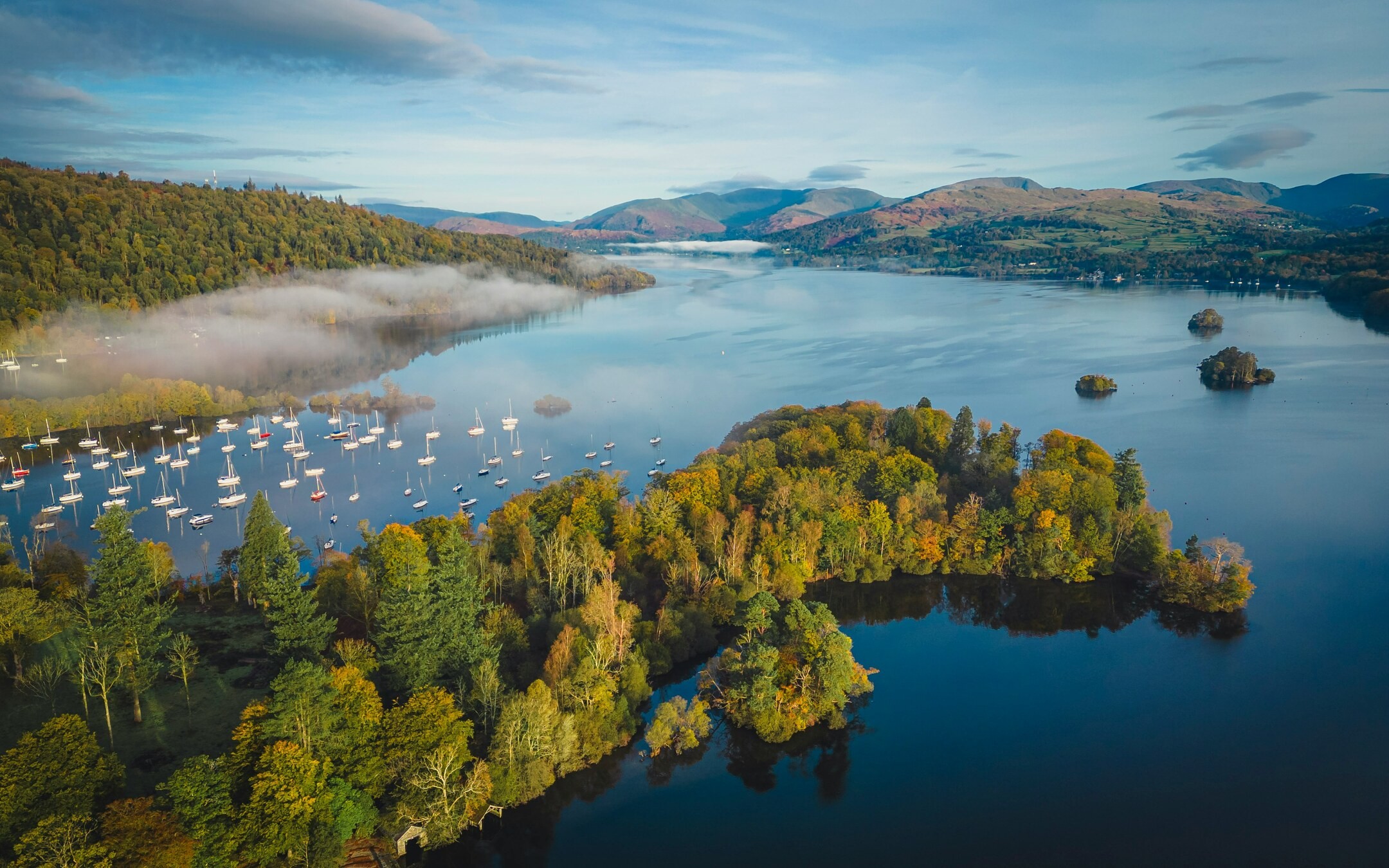
An English coalition has costed what it would take to keep every drop of wastewater out of England's largest lake, £3.6–3.7 billion, and its modelling says nothing less ends harmful algal blooms.