How Is Hydrogen Made?
In the first part of our series we outlined why hydrogen has become one of the key elements of the energy transition and how the global race to use it stands. But one question remained open: if 83% of hydrogen is grey – that is, fossil-based – what can it have to do with climate neutrality? The answer is that the word "hydrogen" on its own says nothing about the ecological footprint. Everything depends on how it is produced. Let us look at how today's widespread and tomorrow's production technologies work, and how they differ in efficiency, CO₂ emissions and price per kilogram. And let us see why water is not just a by-product but one of the most critical raw materials of all!
Grey hydrogen: industry's workhorse
Grey hydrogen is the main player on the world hydrogen market. 62% of production comes from natural gas, 21% from coal and 0.5% from oil, and in all three cases the resulting carbon dioxide is released into the atmosphere. (IEA, 2025)
The most widespread process is steam methane reforming (SMR): methane (CH₄) is reacted with steam at 700–900 °C. The result is hydrogen and carbon dioxide. The process can reach an efficiency of 80%, the best of the fossil methods. SMR's direct CO₂ emissions are about 9–11 kg CO₂-equivalent per kg of H₂ – the ecological "price" of grey hydrogen.
Coal gasification is a technology used mainly in China, working at an efficiency of at most 55% and emitting about 20.8 kg CO₂-equivalent per kg of H₂ without CCUS. Volatile coal prices also pose a serious economic risk.
According to European Hydrogen Observatory (EHO) data for 2024, the total cost of SMR-based production is about €3.45/kg in Hungary, €2.68/kg in Spain and €3.56/kg in Poland – the differences are mainly explained by gas prices.
Blue hydrogen: the contested bridge
Blue hydrogen is produced by SMR or coal gasification, with the resulting CO₂ captured by CCUS (carbon capture, utilisation and storage). According to the EHO, blue hydrogen costs about €4.23/kg in Hungary and €3.41/kg in Spain – more than SMR, because capturing carbon dioxide is a capital-intensive investment.
There are two serious scientific objections to the technology. The first concerns capture efficiency: most CCUS systems can retain 85–90% of the CO₂ produced, with the remaining 10–15% escaping into the atmosphere. According to Howarth and Jacobson (2021), if methane leakage across the whole life cycle is taken into account, blue hydrogen's greenhouse gas footprint may even be worse than grey hydrogen's. Over a short (20-year) horizon, methane's warming effect is almost 84 times that of carbon dioxide.
The second objection concerns how mature CCUS really is: large-scale, reliable and long-term CO₂ storage has been proven in only a few places. Blue hydrogen is therefore a contested product that may be useful during the transition but cannot be considered a lasting solution.
Turquoise hydrogen: no breakthrough yet
Turquoise hydrogen is produced by pyrolysis: methane is split into hydrogen and solid carbon in an oxygen-free environment, with no CO₂ produced. In theory the solid carbon can be used as an industrial raw material (e.g. activated carbon, fillers). But the process is energy-intensive, the long-term and safe handling of the carbon residue is unresolved, and there is no industrial-scale application today. Turquoise hydrogen is still at the experimental stage.
Nuclear-based hydrogen: pink and yellow
Nuclear energy can be linked to hydrogen production in two ways, and industry is seriously interested in both.
Pink hydrogen comes from electrolysis powered by nuclear electricity. The principle is the same as for green hydrogen – a PEM or AEL electrolyser. Its advantage is that a nuclear plant provides weather-independent, continuous output, maximising electrolyser utilisation. A higher capacity factor translates directly into a lower levelised cost of hydrogen (LCOH): the same capital produces more hydrogen. Where nuclear power is cheap and counted as carbon-neutral, pink hydrogen can be a competitive alternative.
Yellow hydrogen is also produced by electrolysis, but with grid electricity, so it depends entirely on the grid's energy mix – where the grid is carbon-intensive, yellow hydrogen's ecological footprint can even exceed that of grey hydrogen.
A third nuclear route, still under development, is the high-temperature thermochemical cycle: heat from a nuclear reactor – especially the 700–950 °C outlet temperatures achievable in fourth-generation reactors – can be used directly to produce hydrogen, without generating electricity. The most promising is the sulphur–iodine cycle, with a theoretical efficiency of 40–50%. The process is at the demonstration stage today; Japan and the United States are investing most in experiments in this direction.
Green hydrogen: three routes of electrolysis
Green hydrogen is produced by electrolysis powered by renewable energy: electricity splits water into hydrogen and oxygen. The production process itself emits no CO₂, and if the electricity really comes from renewable sources, hydrogen production is more or less carbon-neutral. With the best technology, electrolysis can reach an efficiency of 85%, surpassing SMR. Practical efficiency varies by technology; three main types compete.
AEL – alkaline electrolyser
The alkaline electrolyser (AEL) is the oldest and most mature technology – used at industrial scale since the 1920s. It works in a sodium or potassium hydroxide solution at around 80 °C and needs cheaper catalysts free of precious metals. According to a comparative analysis (Wei et al., 2024), AEL's efficiency is ~60%. Its advantages are low capital expenditure (CAPEX) and large unit size – multi-MW systems can be built; its drawback is slower load following, which limits direct coupling to variable renewables.
PEM – proton exchange membrane electrolyser
The PEM electrolyser accounts for most newly built capacity. A solid polymer membrane separates the two electrode compartments; it works at ~80 °C and responds extremely quickly to load changes – which makes it ideal for variable renewables. Its efficiency is ~73%. Its drawbacks are that it needs expensive iridium-based catalysts and that replacing membranes is costly. According to industry estimates, CAPEX fell by 30–50% between 2020 and 2026. (Wei et al., 2024)
HTEL – high-temperature electrolyser

The high-temperature solid oxide electrolyser (SOEC/HTEL) points towards the theoretical peak: it works at 700–850 °C and its efficiency can reach ~90%. This is possible because high temperatures reduce the electrical energy needed for electrolysis – part of it can be supplied as heat, which can come from waste heat recycled in industrial processes. The technology is particularly promising next to steelworks or chemical complexes. It is less mature: material damage caused by thermal cycling is still an engineering challenge. (Wei et al., 2024)
Which technology is competitive when?
AEL is the most economical at steady sites with high capacity factors – green hydrogen production next to geothermal or hydropower plants. PEM is the best choice for variable loads, with solar or wind systems. HTEL gains a real advantage where industrial waste heat can be brought into the process. The race is currently between PEM and AEL; HTEL is the promise of the next decade.
Hydrogen production methods compared
Efficiency, emissions, levelised cost (LCOH), water demand and maturity, 2024
| Method | Efficiency | CO₂ (kg/kg H₂) | Price 2024 (€/kg) | Water demand (l/kg) | Maturity |
|---|---|---|---|---|---|
| Grey (SMR) | ~80% | 9–11 | 2.7–3.6 | ~26 | mature |
| Blue (SMR + CCUS) | ~75% | 1–3.6 | 3.4–4.4 | ~26 | limited |
| Turquoise (pyrolysis) | 40–60% | ~0 (solid carbon) | n/a | ~20 | experimental |
| Green – AEL | ~60% | 0 | 5–11 | ~22 | mature |
| Green – PEM | ~73% | 0 | 5–9 | ~17.5 | spreading fast |
| Green – HTEL | ~90% | 0 | high | ~15 | under development |
Sources: Joule (2024); European Hydrogen Observatory (2024); IRENA–Bluerisk (2023); IEA Global Hydrogen Review (2025); RMI (2023). Green hydrogen emissions are zero with renewable electricity.
Water as a raw material
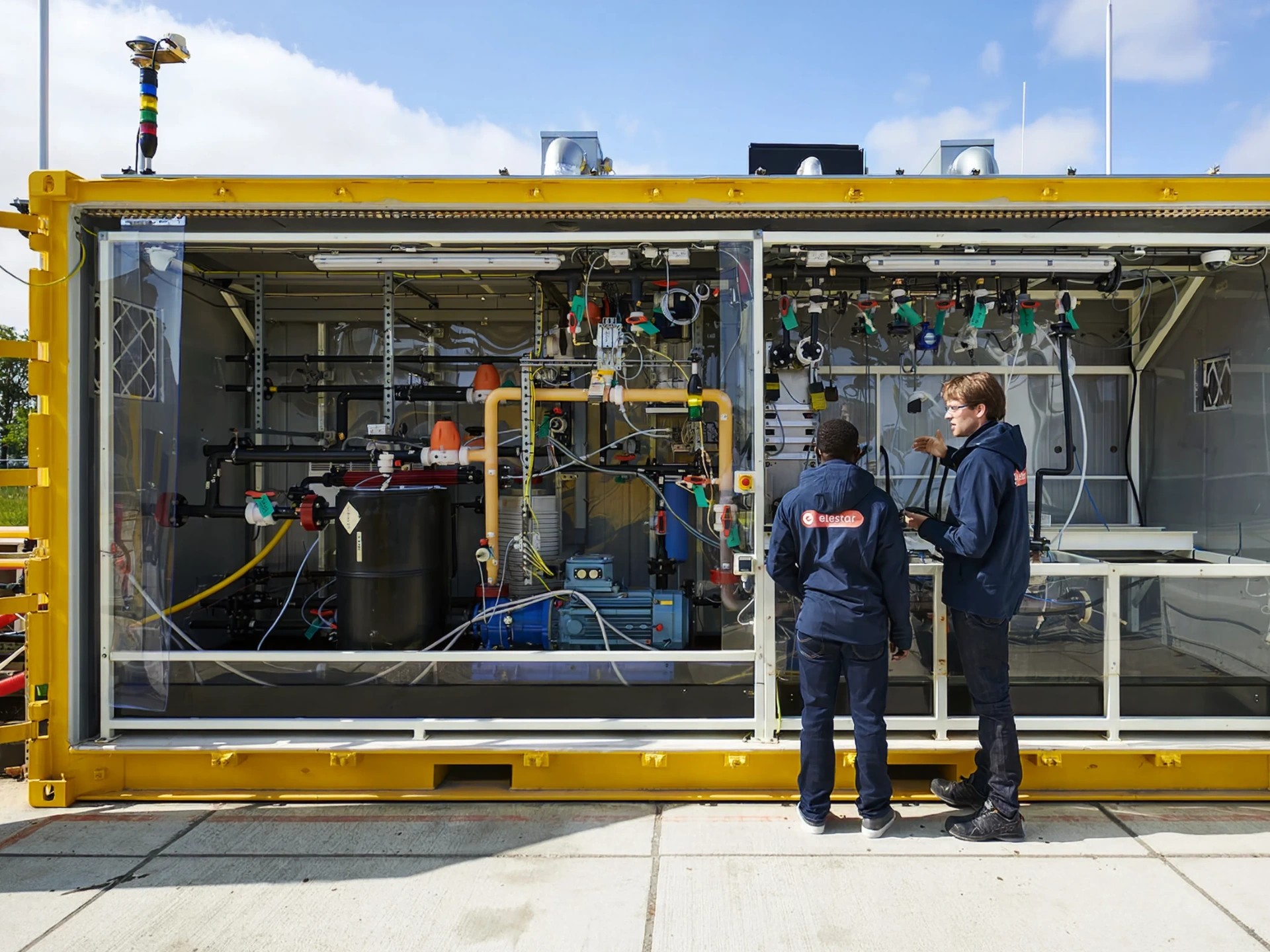
Electrolysis needs not only energy but also water as a raw material – purified, deionised water. The basic chemistry is clear: to produce 1 kg of hydrogen, the electrolyser splits 8.9 litres of water. In reality more is needed: because of water treatment and cooling, total water demand for PEM ranges from 20 to 30 l/kg. According to a 2023 report by IRENA and Bluerisk presented at COP28, PEM is the most water-efficient of all hydrogen production methods at 17.5 l/kg, while AEL needs about 22 l/kg and SMR with CCUS about 26 l/kg (IRENA–Bluerisk, 2023).
If all of the global hydrogen demand in 2050 were met by electrolysis, water demand would amount to just 0.3% of today's global freshwater resources (RMI, 2023). So globally, water is not an obstacle – but locally it can be. The regions with the best renewable resources are often dry: where sun and wind are abundant, freshwater may be scarce. IRENA's analysis points out that more than 80% of China's grey hydrogen production takes place in the Yellow River basin – a region where water stress is already serious (IRENA–Bluerisk, 2023).
Wastewater deserves a mention as a possible input for electrolysis: treated wastewater brought to the right quality could in principle be used in the process, closing a loop between water management and energy production. Today this is at the experimental stage, but it is a noteworthy direction from a circular perspective.
The reality of hydrogen prices
Electricity accounts for 55–70% of the LCOH of green hydrogen (EHO, 2024). The strikingly high price of grid-based green hydrogen in Poland – €11.24/kg – shows how expensive green hydrogen becomes when a carbon-intensive grid mix meets high industrial electricity prices. Globally, the cheapest green hydrogen in the best solar and wind regions – the Middle East, Chile, Australia – is already close to €1.5–2/kg, though excluding transport infrastructure.
The price of hydrogen in Europe
Total production cost (CAPEX + OPEX + energy), €/kg, 2024
| Country | Grey (SMR) | Blue (SMR + CCUS) | Green – grid | Green – direct renewable |
|---|---|---|---|---|
| Hungary | 3.45 | 4.23 | 8.64 | 9.06 |
| Denmark | 3.38 | 4.16 | 6.14 | 5.46 |
| Spain | 2.68 | 3.41 | 5.04 | 5.69 |
| Poland | 3.56 | 4.35 | 11.24 | 6.44 |
Source: European Hydrogen Observatory – Cost of Hydrogen Production 2024
According to industry consensus, green hydrogen could become competitive with grey hydrogen in some regions by 2030 if electrolyser CAPEX falls to $300–400/kW from the current $700–1,000/kW (Aminaho et al., 2025).
Who will have the last laugh?
Hydrogen production today is a paradox: the cheapest and most mature methods are the most harmful, and the cleanest are the most expensive. Grey hydrogen from SMR, at €3–4/kg, is an unbeatable economic basis – but it emits 9–11 kg of CO₂ per kilogram. Blue hydrogen reduces these emissions, but methane leakage and the maturity limits of CCUS mean it cannot be considered a lasting solution. Electrolysis – AEL, PEM, HTEL – is the way of the future: zero direct emissions, but still €5–9/kg in Europe today, and competitive only where renewable electricity is cheap.
Water plays a double role in this equation: raw material and constraint at the same time. Where it is plentiful and clean, it is no obstacle; where it is scarce, it is a fundamental question for the sustainability of production.
Coming up: what is hydrogen good for?
Knowing the production technologies, the natural next question is: where does it make sense to use hydrogen at all, and where not? The answer is less obvious than it seems.
Hydrogen is not always the best solution – in fact, in many applications direct electrification is more efficient, cheaper and simpler. For passenger cars, most analyses find battery electric drive two to three times more energy-efficient than a hydrogen fuel cell.
Yet there are areas where hydrogen offers a real advantage that is hard to replace: in heavy industry, where high temperatures are needed; in shipping and aviation, where energy density is decisive; and in steelmaking, where there is hardly any other way to replace coke. Ammonia and methanol production is still unthinkable without hydrogen, as – through fertiliser production – is global food supply.
The upcoming part 3 explores these applications: where the line lies between a real advantage and an expensive detour, and what projects already in operation show.
Hydrogen in itself is neither clean nor dirty energy – everything depends on how it is produced. 83% of global production today is grey hydrogen, made by steam methane reforming (SMR) or coal gasification and emitting 9–11 kg of CO₂ per kilogram. Blue hydrogen reduces this footprint with CCUS, but methane leakage and low capture efficiency make it a contested solution. The three main types of electrolysis – alkaline (AEL), proton exchange membrane (PEM) and high-temperature solid oxide (HTEL) – differ in efficiency, capital requirements and water treatment needs. AEL is the most mature system, optimal for steady loads; PEM adapts flexibly to renewables; HTEL uses industrial waste heat with outstanding efficiency. European LCOH data show green hydrogen costing €5–11/kg in 2024 – electricity accounts for 55–70% of production costs. Water as a raw material is not a global constraint, but locally it can be a serious one.
How hydrogen is produced determines the ecological and economic balance of the entire value chain. Grey hydrogen – produced by steam methane reforming (SMR) – makes up 83% of global production and emits 9–11 kg of CO₂ per kilogram; in Europe it costs €2.7–3.6/kg. Blue hydrogen reduces this footprint with carbon capture (CCUS), but even the best systems retain only 85–90% of the CO₂, and according to Howarth and Jacobson (2021) a full life-cycle accounting of methane leakage can show an even worse picture than for grey hydrogen.
The three main types of electrolysis represent different levels of technological maturity and fields of application. AEL is the cheapest and most mature solution for steady loads; PEM, with high efficiency and fast load following, is ideally suited to variable renewables; HTEL, with a theoretical efficiency of 90%, can make use of industrial waste heat. According to a life-cycle analysis published in Joule in 2024, efficiencies are: AEL ~60%, PEM ~73%, HTEL ~90%.
According to the European Hydrogen Observatory's 2024 LCOH database, producing green hydrogen costs €5.04–11.24/kg depending on the country and electricity source – Spain, with better solar conditions, is among the cheapest, while Poland's carbon-intensive grid makes grid-powered green hydrogen the most expensive. Electricity accounts for 55–70% of the production cost of green hydrogen – which determines where it can compete. On top of the 8.9 litres of water chemically needed to produce 1 kg of hydrogen, total water use including treatment and cooling is 17.5–30 l/kg for PEM – not a global obstacle, but a planning constraint in dry regions.

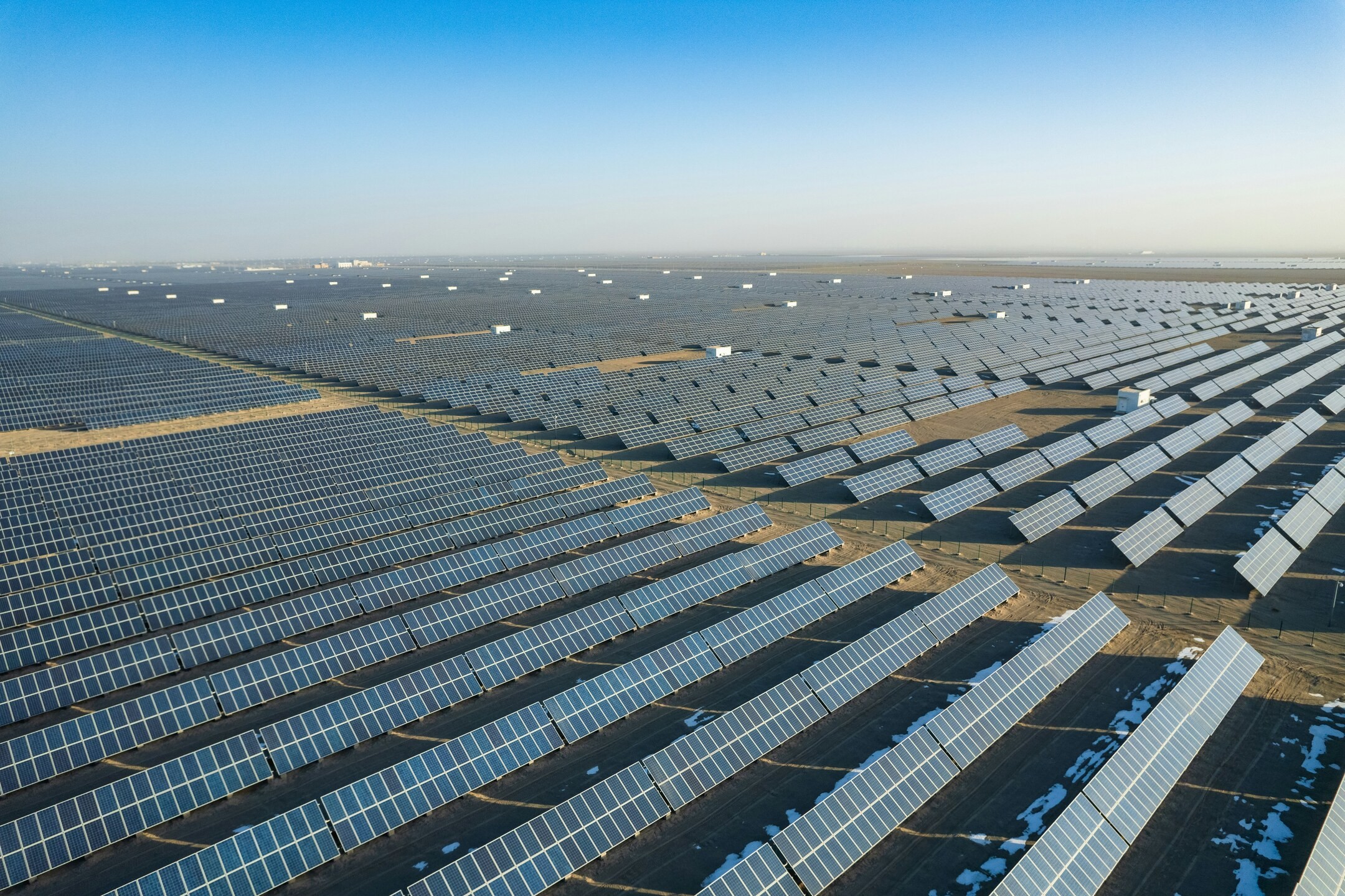

The IEA expects the first annual fall in renewable additions in 21 years, the biggest six-year expansion on record, and a grid that is now the main thing standing in the way.

A new report projects data centres' water footprint reaching 9.32 trillion litres by 2030, but the number is only meaningful once you know what it counts, and who is making the case.
From 4 November, companies that want to buy biomethane can post their demand on the European Commission's platform and producers can bid from January. Here is what to do now and what the scheme will not give you.

The Dutch Authority for Digital Infrastructure warns that the shared cloud back ends behind home batteries, inverters and heat pumps could threaten grid stability, a risk EU rules only partly address.