The Decade of Fusion Energy Begins
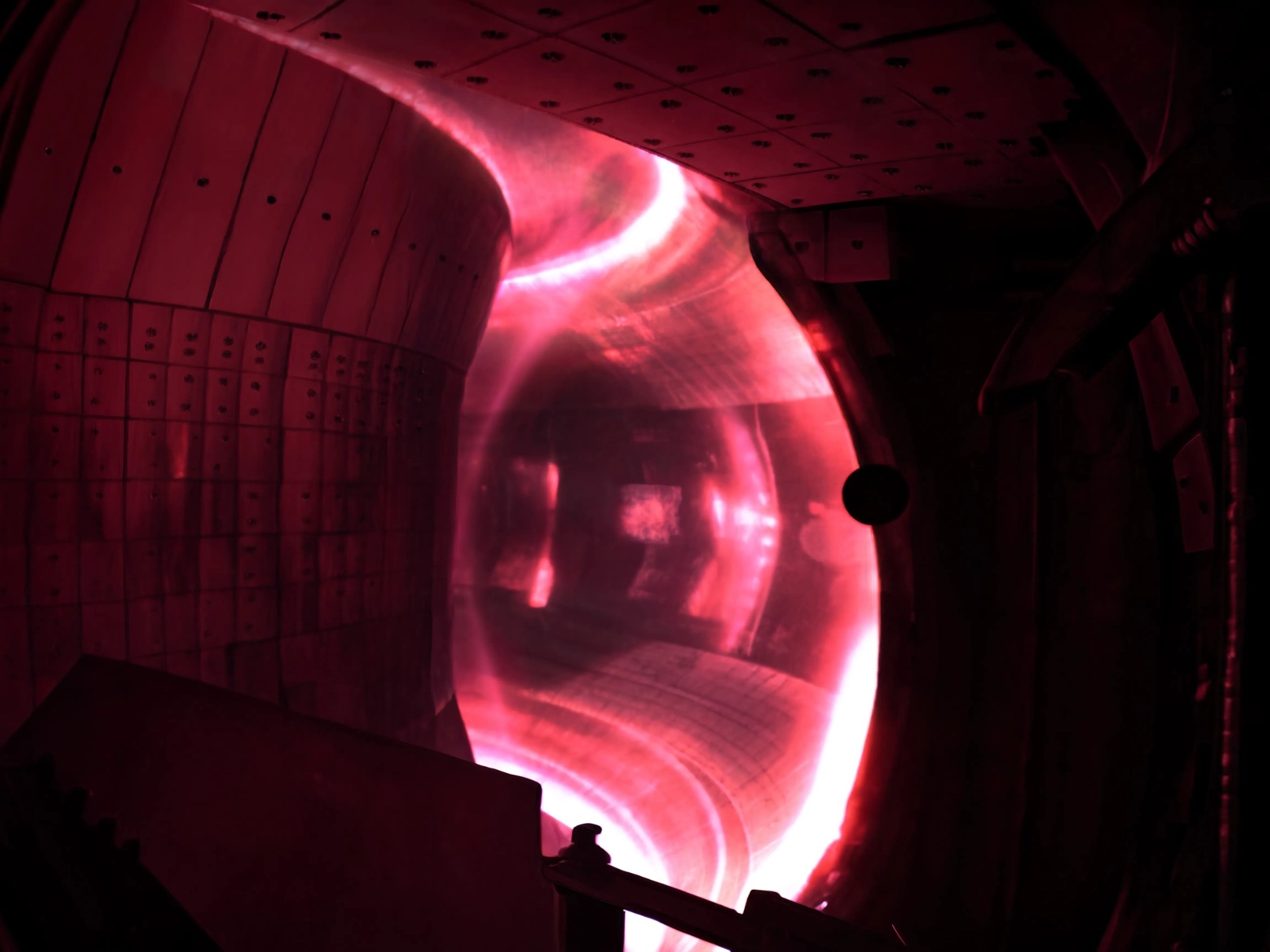
On 2 September, Realta Fusion and Madison Gas and Electric (MGE) announced that they are jointly studying the possibility of building a 200 MW fusion power plant in the state of Wisconsin. It would be the state's first fusion power plant and, according to the plans, could meet the energy needs of around 150,000 homes from the mid-2030s. The agreement is unusual because MGE did not just announce its intention to buy power in the future; it also took an equity stake in the young fusion company and is providing it with engineering and permitting support.
Yet the Wisconsin news is just one episode in a much larger transformation. According to the annual report of the Fusion Industry Association (FIA, 2026), the global fusion industry had a record year in 2026: companies raised $4.5 billion of private investment, 69% more than a year earlier, bringing the total invested since 2021 to $14.24 billion. American, European and Chinese players are competing to be first to bring to market a technology that mimics the energy-producing process of the stars – and the stakes are no longer just scientific prestige but the energy supply of the future.
What does fusion take, and why is it so hard?
In nuclear fusion, light atomic nuclei – typically the hydrogen isotopes deuterium and tritium – fuse into a heavier element, releasing an enormous amount of energy. This is the same process that takes place inside the Sun, only at far higher pressure than we can produce on Earth.
To start fusion, the hydrogen atoms must be heated to about 100–150 million °C.
At this temperature matter is no longer a gas but a plasma of electrically charged particles that no physical container can hold – it would melt any material.
The solution is strong magnetic fields or powerful lasers that enclose the hot plasma like an invisible "vessel". For half a century researchers have been struggling to meet the so-called Lawson criterion: plasma that is dense enough and hot enough must be held together long enough for the fusion reaction to release more energy than was spent on heating and confining it. In recent years several devices have crossed this threshold under experimental conditions, which is the scientific basis of today's optimism.
Three ways to confine plasma
The fusion community has historically developed three main approaches.
The most widespread is the tokamak: a doughnut-shaped chamber in which magnetic fields keep the plasma moving in a circle.
This principle is followed by ITER in France and by the SPARC device of America's Commonwealth Fusion Systems (CFS).
The second route is the stellarator, which tries to make the plasma more stable with a more complex, twisted magnetic structure – its flagship is Germany's Wendelstein 7-X, together with the plans of Proxima Fusion, the European company built on it.
The third, less well-known approach is the magnetic mirror, in which the plasma is held between two strong magnets in an open-ended cylinder. The principle dates back to the 1950s but was sidelined for decades after researchers turned to the tokamak, which promised better confinement. The arrival of high-temperature superconducting magnets has breathed new life into the concept: Realta Fusion's experimental device, the Wisconsin HTS Axisymmetric Mirror (WHAM), takes this technology forward, and in July 2024 it set a record with a magnetic field of 17 T – about 350,000 times the Earth's magnetic field. This summer the company also showed that the plasma's kinetic energy can be converted directly into electricity without a thermal cycle.
There is also a fourth, inertial approach: California's National Ignition Facility (NIF) compresses the fuel with lasers, and in 2022 it was the first to achieve net energy gain in a fusion experiment.
America's private sector: an explosion of capital
The most intense phase of the fusion race is taking place in the United States. The sector is led by Commonwealth Fusion Systems (CFS), which has raised $4 billion of capital so far, $1 billion of it this summer. The Massachusetts-based company's SPARC experimental tokamak is expected to reach first plasma this year, and the next step is ARC, a 400 MW commercial power plant in Virginia to be built with Dominion Energy in the early 2030s. The project is significant: CFS was the first to file an interconnection request with PJM, the country's largest wholesale grid operator, and Google and Italy's Eni have already signed power purchase agreements for its future output.
The Wisconsin agreement between Realta Fusion and MGE fits into this line, with one difference: here a traditional, regulated utility has taken a direct stake in a fusion company that is still in development.
"Our agreement with MGE is a clear sign that fusion's time has come," said Kieran Furlong, CEO of Realta Fusion.
Other players in the sector are active too: Helion Energy signed the first known fusion power purchase agreement with Microsoft in 2023, while TAE Technologies and General Fusion listed their shares on the stock market this year – a sign that, alongside venture capital, the sector now has access to public capital markets.
According to the Fusion Industry Association, 71% of companies expect the first commercial electricity in the 2030s, while 67% see funding as the biggest short-term obstacle.
Europe's answer: Proxima Fusion and the public–private tandem
Europe's front-runner is Munich-based Proxima Fusion, the first spin-off of the Max Planck Institute for Plasma Physics. In July the company closed a €411 million funding round, raising its valuation to €2.4 billion and making it Europe's best-funded fusion company (Max Planck Society, 2026). Its investors include Google and the German energy company RWE.
The funding builds on an agreement signed in February in which Bavaria, RWE and the Max Planck Institute pledged €400 million of public funding for two Proxima projects: the Alpha demonstration stellarator and the Stellaris commercial power plant that follows it, to be built on the site of the Gundremmingen nuclear power plant, which is being decommissioned.
"Europe is racing the United States and China for the first fusion power plant," said Francesco Sciortino, CEO and co-founder of Proxima Fusion.
Proxima's technology is based on the Wendelstein 7-X stellarator, also operated by the Max Planck Institute, which has been breaking plasma physics records since its completion in 2015. The EU's Euratom programme has also funded the continent's joint fusion research for decades, with the French ITER project and its associated national laboratories as its institutional backbone.
China's pace
In the fusion race, China is building on large state programmes and rapid engineering development at the same time.
In January, the Experimental Advanced Superconducting Tokamak (EAST) in Hefei, nicknamed the "artificial sun", sustained a stable, high-confinement plasma for 1,066 seconds – nearly three times the 2023 record.
Meanwhile, in June the CRAFT (Comprehensive Research Facility for Fusion Technology) project successfully tested the largest superconducting magnet ever built for a fusion reactor, outperforming similar components of the international ITER project.
The next stage of China's strategy is BEST (Burning Plasma Experimental Superconducting Tokamak), with which the country plans the first grid-connected fusion demonstration producing net energy by 2030. A whole "Fusion City" is also being planned around the Hefei developments, with research institutes, industrial parks and residential areas.
Where is ITER, and why does it still matter?
Jointly funded by seven parties – including the European Union, the United States, China and Russia – ITER is the world's largest fusion experiment, designed to prove scientifically that fusion works at large scale. But the project has been dogged by delays and cost overruns for decades. Under the latest revised schedule, research operation would start in 2034 and the full deuterium-tritium reaction would only be tested from 2039 (Barabaschi et al., 2025) – more than a decade later than originally planned, with extra costs running into billions.
Despite the delays, ITER still plays a key role: the national laboratories that build and test components for the machine – including China's EAST and Hungarian research institutes – are building up engineering and diagnostic know-how that also feeds the faster, smaller projects of private companies. The project is also one of the largest ventures in scientific diplomacy: seven parties that compete on many issues work together over the long term, which is rare in today's geopolitical climate.
The Hungarian thread: Hungarian researchers in international projects
Hungary is not building a fusion power plant of its own, but its researchers have been active participants in international programmes for decades (Hungarian Academy of Sciences, 2024). The Fusion Plasma Physics Laboratory of the HUN-REN Centre for Energy Research is led by Sándor Zoletnik, who previously chaired the diagnostics working group of the International Tokamak Physics Activity, the scientific organisation of ITER's partners. Hungarian researchers are involved in developing ITER's optical pellet diagnostic system and in the video diagnostics project of Japan's JT-60SA tokamak.
Experts from the Institute of Nuclear Techniques at the Budapest University of Technology and Economics and from the Hungarian Nuclear Society also regularly take part in international professional consultations, strengthening Hungary's knowledge base in fusion. At the HUN-REN Wigner Research Centre for Physics, an alternative nanoplasmonic laser fusion approach was also studied in the NAPLIFE research laboratory, in cooperation with several Hungarian universities. The project completed its demonstration phase in spring 2026; according to the results, the method could become an alternative direction in fusion energy research in the longer term, although further development is needed before it can be used for energy.
Regulation and a maturing market
One condition for commercial fusion to spread is that regulators keep pace with the technology. In February the US Nuclear Regulatory Commission (NRC) published its proposed regulatory framework for fusion devices, which treats fusion facilities not under the strict licensing regime for fission power plants but under a lighter system similar to the rules for medical and industrial uses of radioactive materials. The approach builds on the 2024 ADVANCE Act and promises technology-neutral, risk-based regulation for tokamaks, stellarators, magnetic mirrors and other configurations alike.
Behind the investor momentum there is also a very concrete market need: the explosive growth in electricity demand from artificial intelligence and data centres.
That is why several large technology companies – including Google and Microsoft – have already signed long-term power purchase agreements with fusion start-ups, well before commercial operation.
On the road to fusion energy
In 2026, fusion energy is going through a scientific and a business breakthrough at the same time. Record private investment, utility partnerships like Realta Fusion and MGE's, and emerging regulatory frameworks all suggest that the technology is leaving the laboratory phase. But the challenges are real too: the vast majority of fusion companies say funding remains a bottleneck, and unsolved engineering questions – tritium supply, materials that withstand neutron radiation and efficient energy conversion – still stand at the end of the road. ITER's delays are also a reminder that for decades the scale and complexity of fusion have regularly overturned even the most optimistic plans.
The realistic expectation is therefore not that fusion will solve everything tomorrow, but that by the mid-to-late 2030s a few first-generation plants – in Wisconsin, Virginia, Bavaria or Hefei – could actually be supplying electricity to the grid. That alone would be a historic step for a technology that has been "thirty years away" for half a century.
On 2 September, Realta Fusion and Madison Gas and Electric (MGE) announced that they are jointly studying a 200 MW fusion power plant in Wisconsin, enough to supply around 150,000 homes from the mid-2030s. The news fits a much larger trend: according to the Fusion Industry Association, the global fusion industry attracted $4.5 billion of private investment in 2026, 69% more than a year earlier. Alongside the 400 MW ARC plant of America's Commonwealth Fusion Systems in Virginia and the Realta–MGE partnership, Europe has caught up: Munich-based Proxima Fusion became the continent's best-funded fusion company with a €411 million raise, while China plans its first grid-connected demonstration with the BEST project by 2030. The international ITER project, however, keeps slipping; its start has most recently been moved to 2039. Hungarian researchers are involved in diagnostics development for ITER and JT-60SA.
On 2 September, Realta Fusion and Madison Gas and Electric (MGE) announced that they are jointly studying a 200 MW fusion power plant in Wisconsin – the state's first such facility, enough to supply around 150,000 homes from the mid-2030s. MGE did not just promise to buy power in the future; it also took an equity stake in the company. The announcement fits a much larger, global trend. According to the Fusion Industry Association, the fusion industry had a record year in 2026: companies raised $4.5 billion of private investment, 69% more than a year earlier, and the total invested since 2021 rose to $14.24 billion. The leader is America's Commonwealth Fusion Systems, which is building its 400 MW ARC power plant in Virginia with $4 billion of capital. In Europe, Munich-based Proxima Fusion became the continent's best-funded fusion company with a €411 million raise, topped up with support from the Bavarian state. With the BEST project and the world's largest superconducting fusion magnet, China plans the first grid-connected demonstration producing net energy by 2030. Meanwhile the international ITER project keeps slipping: under the latest schedule, full deuterium-tritium operation would only start in 2039. Hungarian researchers – including a team from the HUN-REN Centre for Energy Research – are involved in developing ITER's diagnostic systems and Japan's JT-60SA tokamak. This year the US NRC proposed a lighter regulatory framework for fusion facilities, which could speed up commercial projects further.


The IEA expects the first annual fall in renewable additions in 21 years, the biggest six-year expansion on record, and a grid that is now the main thing standing in the way.


A new report projects data centres' water footprint reaching 9.32 trillion litres by 2030, but the number is only meaningful once you know what it counts, and who is making the case.

From 4 November, companies that want to buy biomethane can post their demand on the European Commission's platform and producers can bid from January. Here is what to do now and what the scheme will not give you.

The Dutch Authority for Digital Infrastructure warns that the shared cloud back ends behind home batteries, inverters and heat pumps could threaten grid stability, a risk EU rules only partly address.