Europe's Largest Waste-to-Energy Plant Gets Carbon Capture
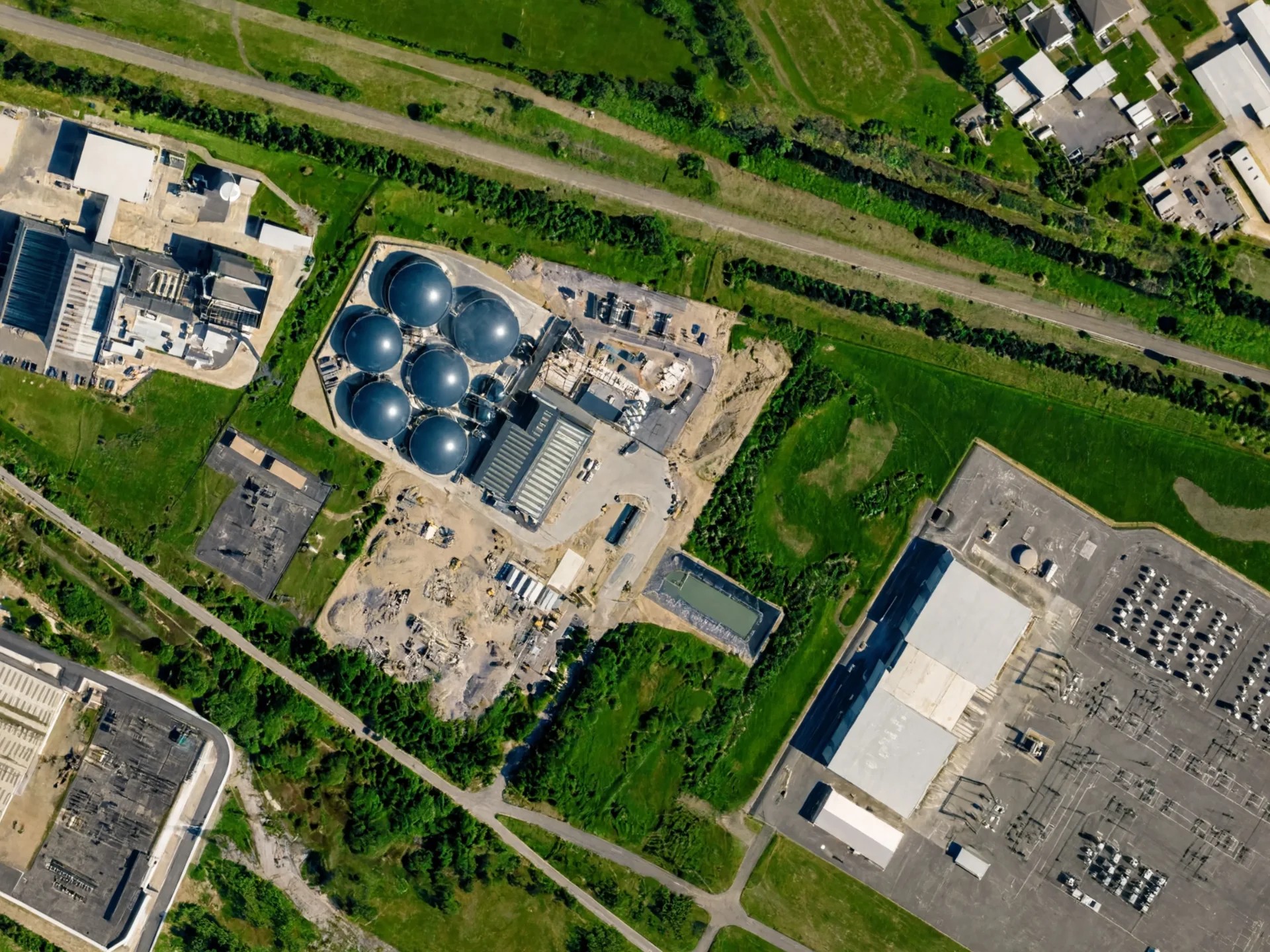
In August this year, Flintshire County Council in Wales granted planning permission for a carbon dioxide capture and liquefaction plant at the site of the Deeside Anaerobic Digestion Clean Energy Plant in North Wales. The planned facility will capture the carbon dioxide produced during biomethane production, purify it and then compress it into liquid form so that other industries can use it. The Deeside plant – currently under construction on the Deeside Industrial Estate – is one of Europe's largest waste-to-energy projects, and when complete it will be ten times larger than any anaerobic digestion facility operating in the UK today.
Carbon dioxide recovered from biogas
The newly approved development will be built next to the main digestion plant, on the former Gaz de France site. The capture and liquefaction plant's task is to recover the carbon dioxide produced when raw biogas is upgraded to biomethane, purify it, then compress and liquefy it for storage and transport. While the resulting biomethane will supply energy to nearby industrial plants – including Toyota's Deeside engine plant – the separated carbon dioxide will be liquefied and transported off site.
In granting permission, the council highlighted the development's potential environmental benefits.
One of Europe's largest waste-to-energy plants is being built in Deeside
The Deeside project is being developed by The Circular Economy Development Ltd (TCED), co-funded by the infrastructure fund abrdn Global Sustainable Infrastructure Partners IV. The entire waste-to-energy project is worth a total of £282 million, and its aim is to cut the share of residual material sent to conventional landfill to 10%, while raising the recycling rate to around 85%.
The plant will process around 180,000 tonnes of waste a year, and the biomethane produced will be used to supply green energy to the neighbouring Toyota Motor Manufacturing UK engine plant by pipeline, replacing its current natural gas supply. The switch is estimated to save the plant around 2,900 tonnes of carbon dioxide emissions a year. The project's importance is underlined by the words of the director of Toyota's Deeside site at the groundbreaking ceremony for the digestion plant:
“This anaerobic digester is a critical step in demonstrating Toyota's leadership in sustainable manufacturing.”
The technology: hydromechanical anaerobic digestion
The digestion plant's technology is supplied by BioConstruct NewEnergy, a subsidiary of Germany's BioConstruct GmbH. The hydromechanical anaerobic digestion and separation process it has developed can recover 70–90% of the incoming waste in usable form and produce biogas with a high methane content. The solid material left over from the process, digestate, can also be used, typically as a soil improver or fertiliser substitute in agriculture.
At full capacity, the plant is expected to produce 16,000 tonnes of carbon dioxide a year. The newly approved capture and liquefaction facility will process this volume instead of releasing it into the atmosphere: initially one, and later up to three 24-tonne containers of liquid carbon dioxide will leave the site each day.
Air Liquide and the journey of liquid carbon dioxide
The liquid carbon dioxide will be collected by Air Liquide, the world leader in industrial gases. Initially, one 24-tonne container of liquid CO₂ will leave the site each day, rising to as many as 3 containers a day once full capacity is reached. The recovered carbon dioxide will mainly be used as a refrigerant and in arc welding.
Air Liquide is already a major player in the market for biogenic – that is, biomass-derived – carbon dioxide: at several European sites, including its facility next to the Wissington bioethanol plant in the UK, it purifies and liquefies carbon dioxide suitable for industrial and even food-grade use. The Deeside project extends this model with a source from anaerobic digestion, that is, biomethane production – a kind of diversification that is playing an increasingly important role in the strategy of industrial gas suppliers.
A question of carbon dioxide supply security
The development is also notable because the UK's industrial carbon dioxide supply has traditionally relied on the by-product of a few large fertiliser plants. During the 2021 energy crisis, fertiliser plants shut down because of high natural gas prices caused an acute CO₂ shortage, which affected the food and drinks industry, including breweries and the meat industry, and required government intervention. The problem has recurred from time to time since: similar supply tensions arose in 2022–2023 and again this year, when the government supported the restart of the Ensus plant in Teesside to stabilise domestic CO₂ supply.
In this situation, carbon capture linked to anaerobic digestion plants – like the one being built in Deeside – offers industry an alternative, renewable source independent of fossil-based fertiliser production, while turning a previously overlooked by-product of waste management into a valuable raw material.
The British example as a model
The approval of the Deeside carbon dioxide capture and liquefaction plant shows how a previously overlooked by-product of the biogas industry – carbon dioxide – can become a marketable industrial raw material. The project simultaneously serves to reduce landfill and support the decarbonisation efforts of Toyota's Deeside plant, and helps diversify the UK's CO₂ supply. If the Deeside plant is built as planned, linking anaerobic digestion with carbon dioxide utilisation could serve as a model for other European waste-to-energy projects.
On 13 August, Flintshire County Council in Wales approved the construction of a carbon dioxide capture and liquefaction plant at the site of the Deeside Anaerobic Digestion Clean Energy Plant in North Wales. The facility will capture, purify and compress into liquid form the carbon dioxide produced during biomethane production, for storage and transport. The main digestion plant will be ten times larger than any anaerobic digestion facility operating in the UK today, will produce 16,000 tonnes of carbon dioxide a year and will supply energy to the neighbouring Toyota engine plant. The entire £282 million project is being developed by The Circular Economy Development Ltd, co-funded by the abrdn infrastructure fund, using technology from Germany's BioConstruct GmbH. The liquid CO₂ will be collected by Air Liquide for use as a refrigerant and in arc welding, initially 1 and later up to 3 containers a day. The development could also help diversify the UK's CO₂ supply, which has been hit by supply crises from time to time since 2021.
On 13 August 2026, Flintshire County Council in Wales approved the construction of a carbon dioxide capture and liquefaction plant at the site of the Deeside Anaerobic Digestion Clean Energy Plant in North Wales, on the former Gaz de France site. The facility will capture and purify the carbon dioxide produced during biomethane production, then compress it into liquid form for storage and transport. During the planning process, the Welsh environmental body Natural Resources Wales raised no objection regarding the impact on the River Dee Special Area of Conservation.
The main digestion plant – developed by The Circular Economy Development Ltd using hydromechanical digestion technology from Germany's BioConstruct GmbH – will be ten times larger than any anaerobic digestion facility operating in the UK today when complete. It will process around 180,000 tonnes of waste a year, producing 16,000 tonnes of carbon dioxide a year, while cutting the share of residual material sent to landfill to 10% and raising the recycling rate to 85%. The biomethane from the £282 million project will supply energy to the neighbouring Toyota engine plant, saving the company around 2,900 tonnes of emissions a year.
The liquid carbon dioxide – initially 1, later up to 3, 24-tonne containers a day – will be collected by Air Liquide for use as a refrigerant and in arc welding. The development is also significant because the UK's industrial CO₂ supply has traditionally relied on the by-product of a few fertiliser plants, which has led to acute supply crises on several occasions since 2021. A renewable carbon dioxide source from anaerobic digestion can therefore offer an alternative to a structurally vulnerable supply chain.



From 4 November, companies that want to buy biomethane can post their demand on the European Commission's platform and producers can bid from January. Here is what to do now and what the scheme will not give you.

Berlin wants gas and heating oil suppliers to sell a rising share of renewable fuels to households from 2028, but biomethane producers say the draft design favours hydrogen.

W4 relaunches with a new website, an English edition, dedicated series pages and a separate professional hub – the same coverage, with far better tools for reading and finding it.

A new analysis finds that global biomethane production could in theory cover much of international shipping's early decarbonisation energy demand, but regulatory details may decide whether it actually reaches the seas.