Which Way Is the Wind Blowing?
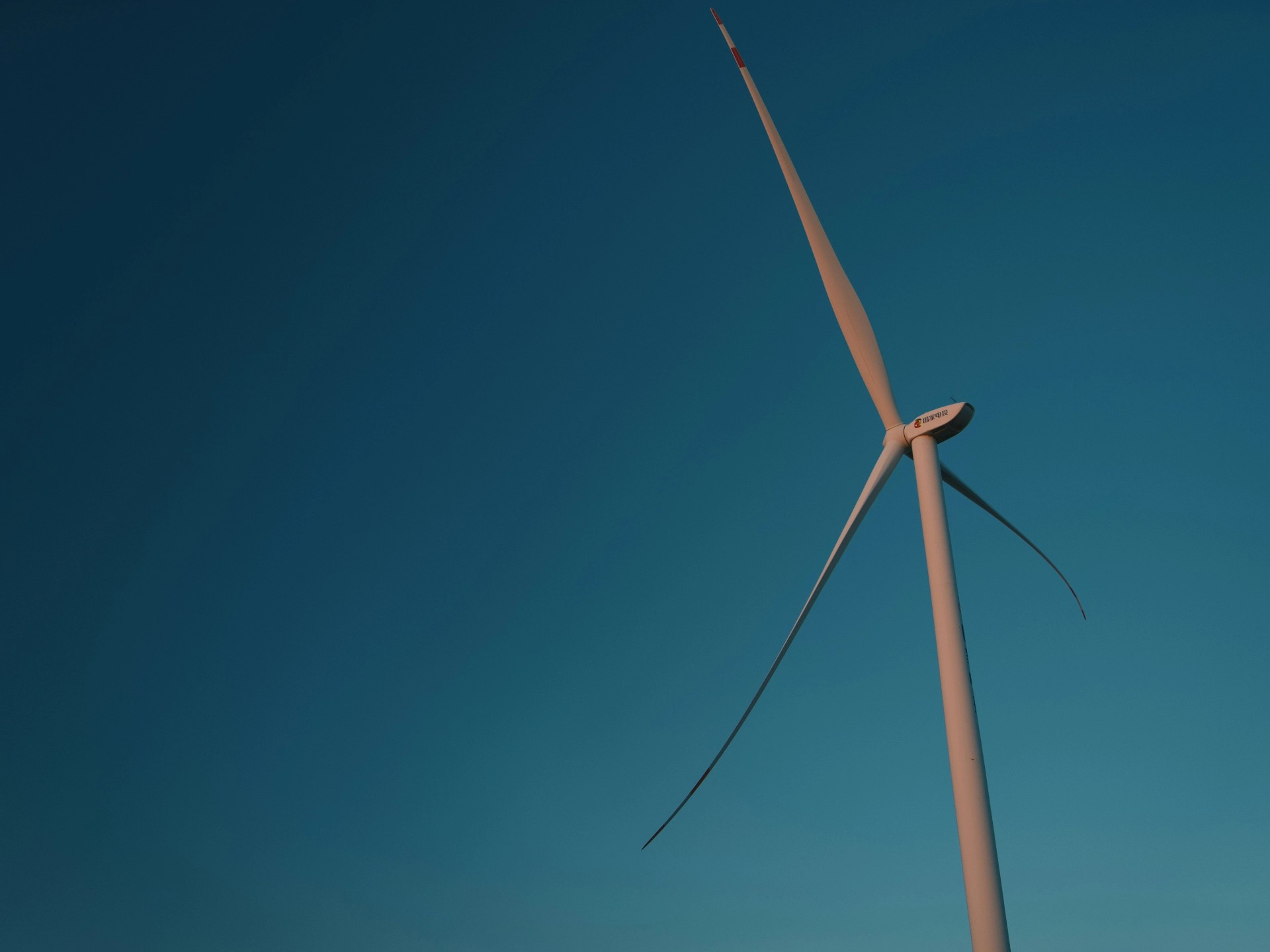
In western Hungary, the area around Vadosfa, a small, quiet village north-east of Szombathely, is set to be transformed: within a few years, Western European investors could build seventy wind turbines here, each two hundred metres tall. Local residents were not consulted on the plan, while the rules were amended to cut the minimum distance between turbines and the edge of residential areas from 12,000 metres to 700 metres.
Arguing from conviction about wind turbines
When we label a technology “green”, we rarely ask the most important question: compared with what? Both sides of the ecological balance sheet of a wind farm carry a long list of pros and cons. In some respects this type of power plant puts solar panels to shame, and in others its advocates have some awkward explaining to do. And at the end there is the question that investor brochures modestly keep quiet about: in twenty years' time, once its operating life is over, what will happen to all the concrete, steel and, above all, glass-fibre plastic built into it?
We have previously examined the ornithological risks of the Vadosfa project and looked at how wind energy is reviving in Hungary after the 2016 ban on new installations was lifted. Now we put the whole balance sheet on the dissecting table: how does the ecological footprint of wind power compare with solar, hydropower and energy from biomass?
The size of the footprint
Let us start by examining the full ecological footprint. The material for a wind turbine's two-hundred-metre steel tower and machinery comes from mines, coal-fired blast furnaces and rolling mills, and finally from engineering works. The material for the huge concrete foundation reaching deep into the ground is transported to the site from quarries and cement plants. Some machinery components are made of rare earth metals, others of plastics, that is, petroleum-based products, and its lubricants are “created” through oil production. Its huge blades are also made of petroleum-derived synthetic resin and glass fibre. According to life-cycle analyses, the bulk of a turbine's total ecological footprint – 44–99% – is generated before the rotor has turned even once. The strongest argument for wind energy is that its operation is environmentally friendly.
Ornithologists, however, treat even this claim with reservations, because the survival chances of birds that get in the way of the fast-moving blades converge towards zero.
The positive side of the balance
At first hearing, the above paints a devastating picture of wind turbines. But during operation, a turbine emits almost nothing beyond replacing worn-out lubricants. According to WindEurope, the energy payback time – the time it takes a turbine to generate the energy needed to manufacture, erect and later dismantle it – is just 3–14 months (WindEurope, 2025), which undoubtedly counts in favour of wind energy.
An analysis of life-cycle carbon dioxide emissions per kilowatt-hour, however, brings us closer to reality. A life-cycle analysis published in the Hungarian journal Multidiszciplináris tudományok in 2021 (Bodnár, 2021) ranked energy generation technologies as follows:
The cleanest is nuclear power at 4.68 g CO₂-equivalent/kWh. Close behind comes hydropower at 5.49 g, and only then wind at 10.1 g. After them, interestingly, the list makes a big jump: biomass at 57.5 g, solar at 65 g, and at the very end lignite-fired power at 1,340 g.
Other international data series give slightly different figures – 9–15 g for wind and 29–65 g for solar, depending on the technology and where it is manufactured – but the ranking is the same. Wind sits in the middle of the field, though well behind nuclear and hydropower.
The “carbon neutrality” of biomass is the most disputed item in the field: in principle, a burned plant releases as much carbon dioxide as it absorbed during its life, but in practice logging, transport and processing considerably worsen the overall picture. The sustainability of biomass, then, depends not on the technology but on where and how the feedstock is sourced.
The carbon cost of a kilowatt-hour
Life-cycle emissions
| Energy source | g CO₂-equivalent/kWh |
|---|---|
| Lignite (coal) | 1,340 |
| Solar | 65 |
| Biomass | 57.5 |
| Wind | 10.1 |
| Hydropower | 5.49 |
| Nuclear | 4.68 |
Source: Multidiszciplináris tudományok (2021); international life-cycle data series
A scar reaching to the sky
Unfortunately, the figures above say little about what people living near a wind farm will feel first-hand. The ecological footprint of a wind farm must be examined not only in terms of emissions, since the land occupied by wind turbines and their associated infrastructure is also habitat and landscape.
In terms of land use, wind paradoxically performs well: the farmland between the towers can still be cultivated, and the turbines themselves occupy only a few per cent of the area. A solar farm, by contrast, covers a continuous plot, and a hydropower plant floods a valley (though it also creates a wetland habitat).
The problem with wind farms is different. Towers a hundred and fifty metres tall, standing in groups, markedly change the view – this was precisely one of the official reasons for Hungary's 2016 buffer zone. The rotating blades also strike birds, bats and insects that get in their way. We have written about this in detail before; here it is enough to say that site selection decides almost everything, and that the harm to nature from bird deaths caused by wind turbines is orders of magnitude smaller than that caused by domestic cats or reflective glass surfaces. Hydropower, by comparison, reshapes the entire ecosystem of a river and can affect fish migration even where fish ladders exist; a biomass plantation brings all the disadvantages of monoculture (unless it is a matter of using waste or sewage sludge).
The waste problem
Here we reach the Achilles heel of wind farms, about which the brochures funded by the vested interests involved keep modestly silent. A wind turbine's design life is 20–25 years, after which a decision has to be made about its fate.
WindEurope estimates that around 80 GW of wind capacity in Europe will reach the end of its theoretical lifetime by 2030, so roughly 14,000 first-generation blades will be dismantled over the next five years (WindEurope, 2025). A fifth of Europe's turbine fleet is already at least fifteen years old, so the wave of waste is approaching.
Three paths are open to a wind farm owner. The first is lifetime extension, which postpones the waste management problem. The second is repowering – replacing the old turbines with newer, larger, more efficient ones. According to WindEurope, this is the most attractive option. On average, repowering doubles a wind farm's rated capacity and triples its output, while reducing the number of towers by 27% on average (WindEurope, 2022). What is more, existing roads, substations and grid connections can be reused. This solution, too, only means extending the lifetime, and it does not address the consequences of the third option, full decommissioning.
Burying the blades
Whichever path is chosen, sooner or later something has to be done with the blades.
Most of a turbine's mass – the steel tower, the copper, the generator metals – can very probably be recycled. The problem lies with the rotor blades, 40–90 m long. They are made of glass- or carbon-fibre-reinforced synthetic resin, the same family of materials as racing car bodies – strong, light, durable, and for that very reason agonisingly difficult to do anything with. It does not melt, rot or corrode.
The quantities are alarming. According to a 2023 European survey, the mass of blades taken out of service by 2050 could reach 7.5 million tonnes, which, given the material's low density, amounts to roughly 228 million m³ of waste. Every megawatt of installed capacity ultimately generates around 9.6 tonnes of composite waste.
Today's accepted “solution” is mere playing for time: the blades are buried, but in the ground they last for centuries. The second most common disposal route is co-processing in cement kilns, where the shredded blade material is used as fuel.
Exporting pollution?
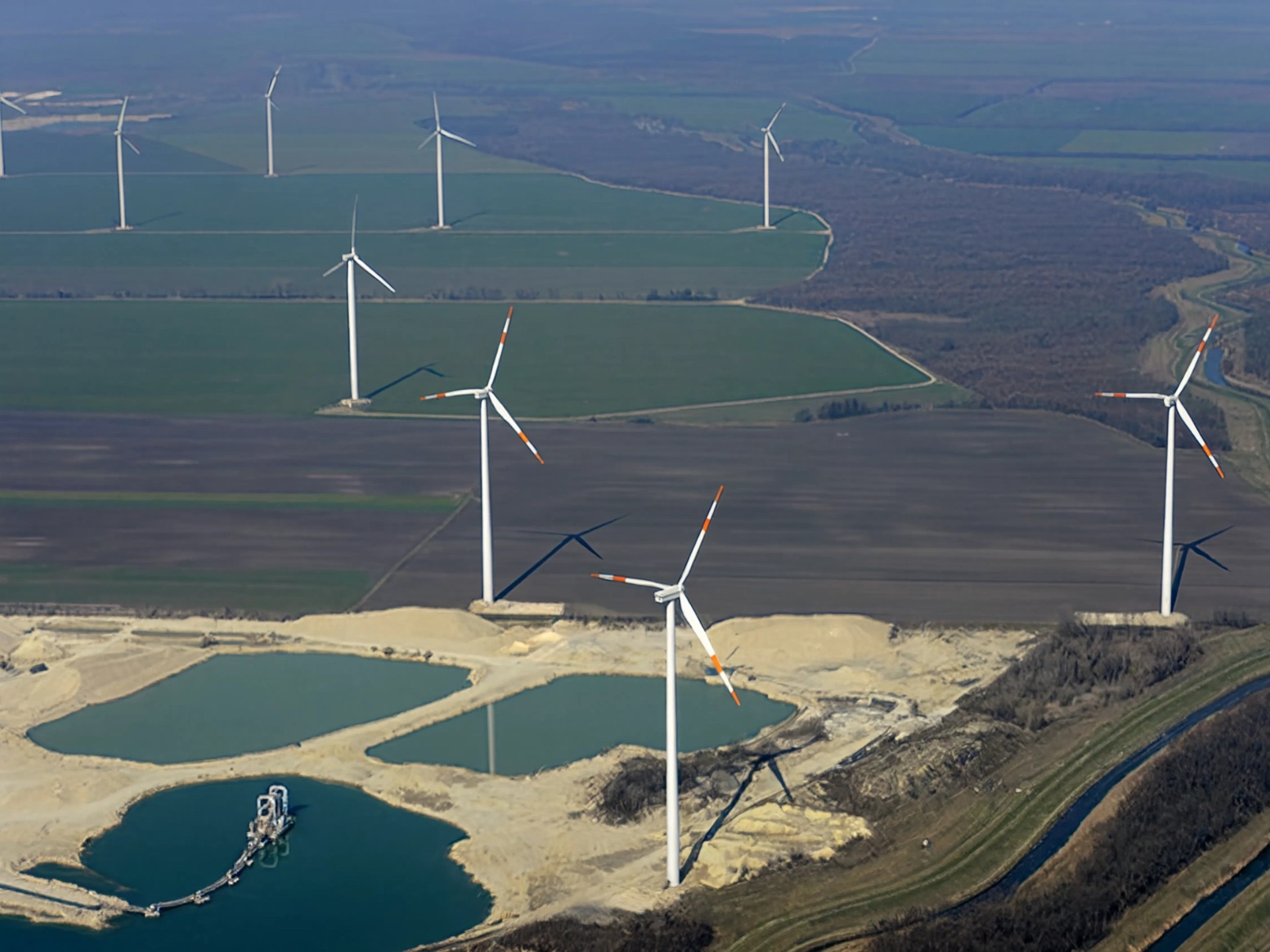
The seemingly good news is that the European wind industry has introduced a voluntary landfill ban on blades, and four member states (Germany, Austria, the Netherlands and Finland) have already banned burying them by law – the only question is what they actually do with the waste blades. One can only hope they are not planning to have their rubbish buried in other countries not covered by the ban…
Fortunately, alternative solutions exist too. Denmark's Vestas, for example, has for two years been using a chemical process that makes it possible to recover the raw material even from epoxy resin blades previously thought impossible to process.
The list of experimental technologies is also long: solvolysis uses a solvent to break down the composite and recover the valuable fibres, and pyrolysis does the same with heat. A 2025 review (Meng et al., 2025) sums up soberly: metal recycling is mature, concrete recycling is still in its infancy, and the composite processing methods that can be scaled up in the short term – mechanical shredding and co-processing in cement kilns – cannot return the original material. Methods that promise genuine circularity are not yet running at industrial scale.
There are some very positive examples too!
When the Muel wind farm in Spain was decommissioned, the operator, Iberdrola, achieved a recycling rate of 99.85% – almost every component was recovered, an astonishing result. Elsewhere, old blades are being used experimentally for noise barriers, bicycle shelters, playground elements and even furniture, but these solutions are still insignificant attempts in terms of scale.
A balance sheet, not a verdict
Manufacturing wind turbines therefore pollutes the planet significantly, creates a kind of visual scar on the landscape, and the fate of the blades at the end of their lifetime is not yet satisfactorily resolved. Against this stands the fact that, over its full life cycle, wind is one of the cleanest energy sources, uses less farmland than any of its peers and pays back the energy invested in it within a few months.
So once again the right question is not whether wind is “green energy”, because that is a matter of perspective. Rather, it is how it fits into a given country's energy mix and the reliable operation of its power grid, whether it is justified by local wind conditions, and finally what happens to the turbine blades at the end of their lifetime.
Prompted by a planned wind farm at Vadosfa in Hungary, we weigh up the technology's full ecological balance. Manufacturing places the heaviest burden on the environment: 44–99% of a turbine's footprint is generated before the blades turn. But the energy payback time is just 3–14 months, and life-cycle emissions are 10.1 g CO₂/kWh – cleaner than solar (65 g) or biomass (57.5 g), and beaten only by nuclear (4.68 g) and hydropower (5.49 g). Wind is the least land-hungry renewable. Its weak point is the glass- and carbon-fibre rotor blades decommissioned after 20–25 years: Europe will generate 7.5 million tonnes of such waste by 2050, most of which currently goes to landfill. Repowering, solvolysis and use in cement kilns are promising but not yet industrial-scale. Wind is not a flawless saviour, but over its life cycle it is one of the cleanest.
Prompted by the Vadosfa wind farm project in Hungary – whose ornithological and energy risks we have discussed before – we examine the full ecological balance of wind energy compared with other renewables. The starting point is awkward: the bulk of a wind turbine's total footprint – 44–99% according to some analyses – is generated in manufacturing and transport, before the rotor has turned once. Yet the balance tips quickly, because in operation the turbine barely pollutes: according to WindEurope, the energy payback time is only 3–14 months. Over its life cycle, wind at 10.1 g CO₂-equivalent/kWh is among the cleanest – ahead of solar (65 g) and biomass (57.5 g), and beaten only by nuclear (4.68 g) and hydropower (5.49 g); lignite, by comparison, emits 1,340 g. Wind also needs the least land: the ground between the towers remains farmable, while solar farms, hydropower and biomass take up far more. The “carbon neutrality” of biomass is the most disputed claim in the field. The most serious problem is the end of turbines' 20–25-year lifetime: 90% of the metal and concrete is recycled, but the 40–90 m glass- and carbon-fibre blades are not. Europe could generate 7.5 million tonnes of such waste by 2050, most of it ending up in landfill or cement kilns. Repowering can triple a wind farm's output, and solvolysis and pyrolysis can recover the fibres – but these are not yet industrial-scale. Wind is not flawless, but it is one of the cleanest energy sources.

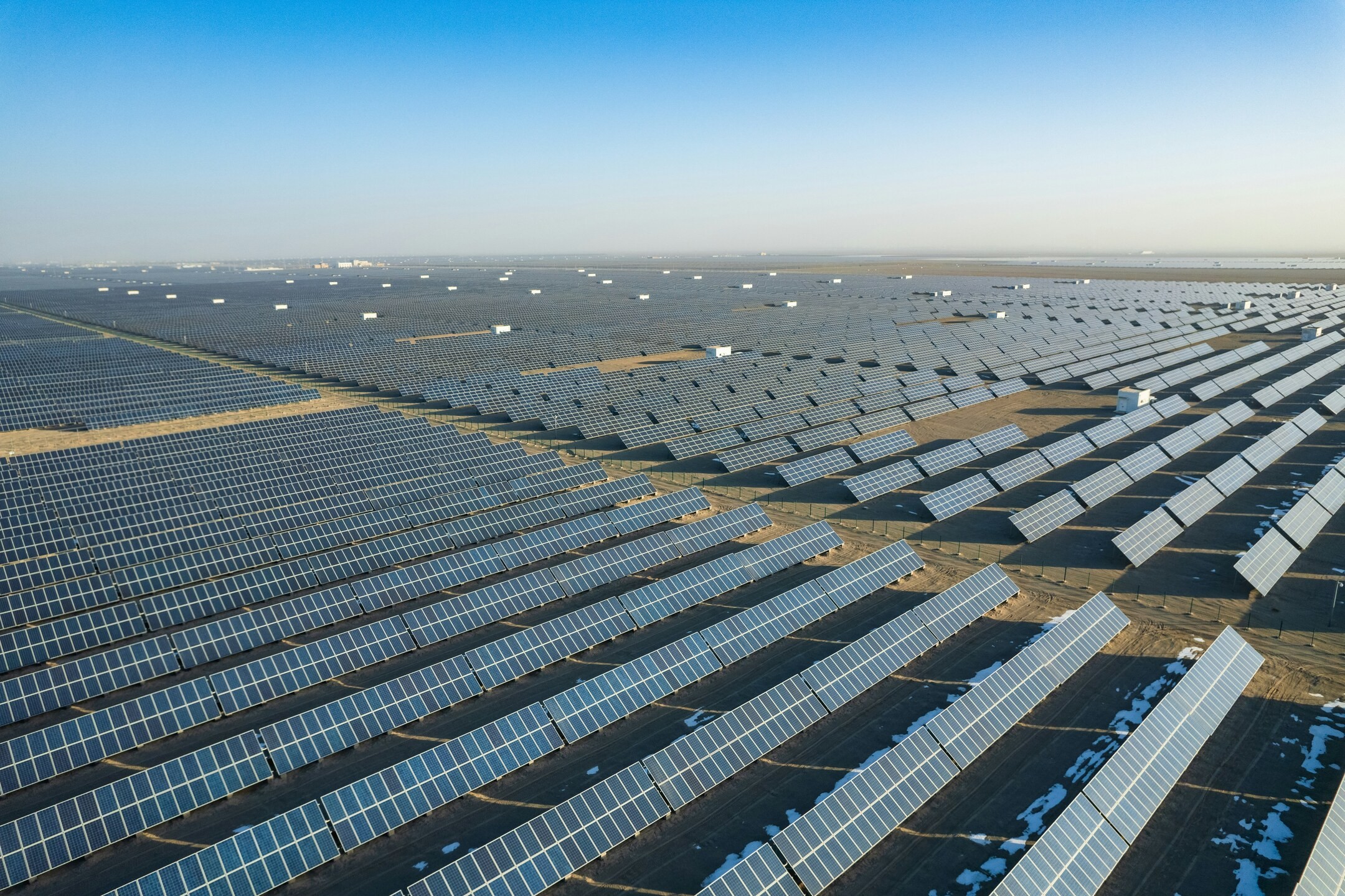

The IEA expects the first annual fall in renewable additions in 21 years, the biggest six-year expansion on record, and a grid that is now the main thing standing in the way.

A new report projects data centres' water footprint reaching 9.32 trillion litres by 2030, but the number is only meaningful once you know what it counts, and who is making the case.
From 4 November, companies that want to buy biomethane can post their demand on the European Commission's platform and producers can bid from January. Here is what to do now and what the scheme will not give you.

The Dutch Authority for Digital Infrastructure warns that the shared cloud back ends behind home batteries, inverters and heat pumps could threaten grid stability, a risk EU rules only partly address.