Neglected Drinking Water Networks in ‘Model’ Europe
In France, more than 40,000 people are currently turning on their taps to find no water, and around 80 municipalities are being supplied by tanker or with bottled water – a number that has risen from 30,000 in barely two weeks. The most important detail, however, is not the headcount but the map: the affected areas – Alsace, the Vosges and Brittany – are traditionally wet regions where no one expected a summer like this. Behind the phenomenon lies an infrastructure problem common to the whole continent, which the dry summer has now made visible.
The ever-damp British Isles are a thing of the past
France is just one of the most typical examples of a continental phenomenon that is tangible in most countries. According to the European Drought Observatory (part of the Joint Research Centre's Copernicus programme), at the end of July 50% of the EU and UK was affected by some level of drought, and 9% was at alert level. The hotspots are France, Germany, Hungary, Romania and the United Kingdom.
England had its driest July since records began: rainfall was just 10% of the average, and as little as 1% in the south-east. Parts of Hampshire, the Isle of Wight and West Sussex went 59 days without rain. According to the UK's National Drought Group, nearly 45 million people live in the drought-affected 71.3% of England, and as a result more than 27 million people are affected by water use restrictions. Eight water companies have introduced temporary hosepipe bans, which according to the Environment Agency reduced household demand by 9%. On 6 August reservoir storage stood at 69%, 11.6 percentage points below average. Five reservoirs were at critically low levels, and more than 1,500 abstraction restrictions are in force. The whole of Wales is also in drought.
A resource problem in France
The French chain broke step by step. July 2026 was the hottest month ever recorded in France, with an average temperature of 24.9 °C, and also the third-driest July in the Météo-France series, with a rainfall deficit of nearly 70%. According to the BRGM geological survey, on 1 August 63% of the piezometric monitoring points tracking groundwater levels were below the monthly average – compared with 54% a month earlier and 44% at the same time in 2025 – despite good winter recharge. The French Biodiversity Office's ONDE network observed partial or complete drying out on 1,373 surface watercourses at the end of July, 554 more than a month earlier – the most critical situation for that time of year since observations began in 2012.
At the hydrological monitoring committee meeting on 12 August, Monique Barbut, minister for ecological transition, said that the supply of more than 550,000 people had been put at risk and that nearly 3 million people live in areas in a critical situation. Several hydrological indicators have fallen back to the levels of the two earlier benchmark droughts, 1976 and 2022.
Emergency scenarios
What French utilities are deploying now is not new: according to Nathalie Davoisne, director of the CIEau water information centre, it is the standard escalation – demand management, then mobile tankers, then interconnection. What is new is the scale. Three specific cases show how this works in practice.
Sainte-Marie-aux-Mines, a Vosges valley town of 5,000 inhabitants in Haut-Rhin, relies entirely on its own springs for drinking water. Production has fallen to 800–850 cubic metres a day against a demand of 900–950 cubic metres. A tanker brings 30 cubic metres per trip from a neighbouring municipality connected to the groundwater of the Alsace plain, 8 trips a week – covering about a third of the daily shortfall, with restrictions and reservoir reserves covering the rest. This is the first time in the town's history that a tanker has been needed.
Gérardmer, some 30 kilometres to the south-west, has taken a different route: since 12 August, lake water has been pumped to the treatment plant. The lake intake was installed in May 1972 and has since been used in 2003, 2015, 2020 and 2022 (then from August to October) – now for the fifth time in 24 years.
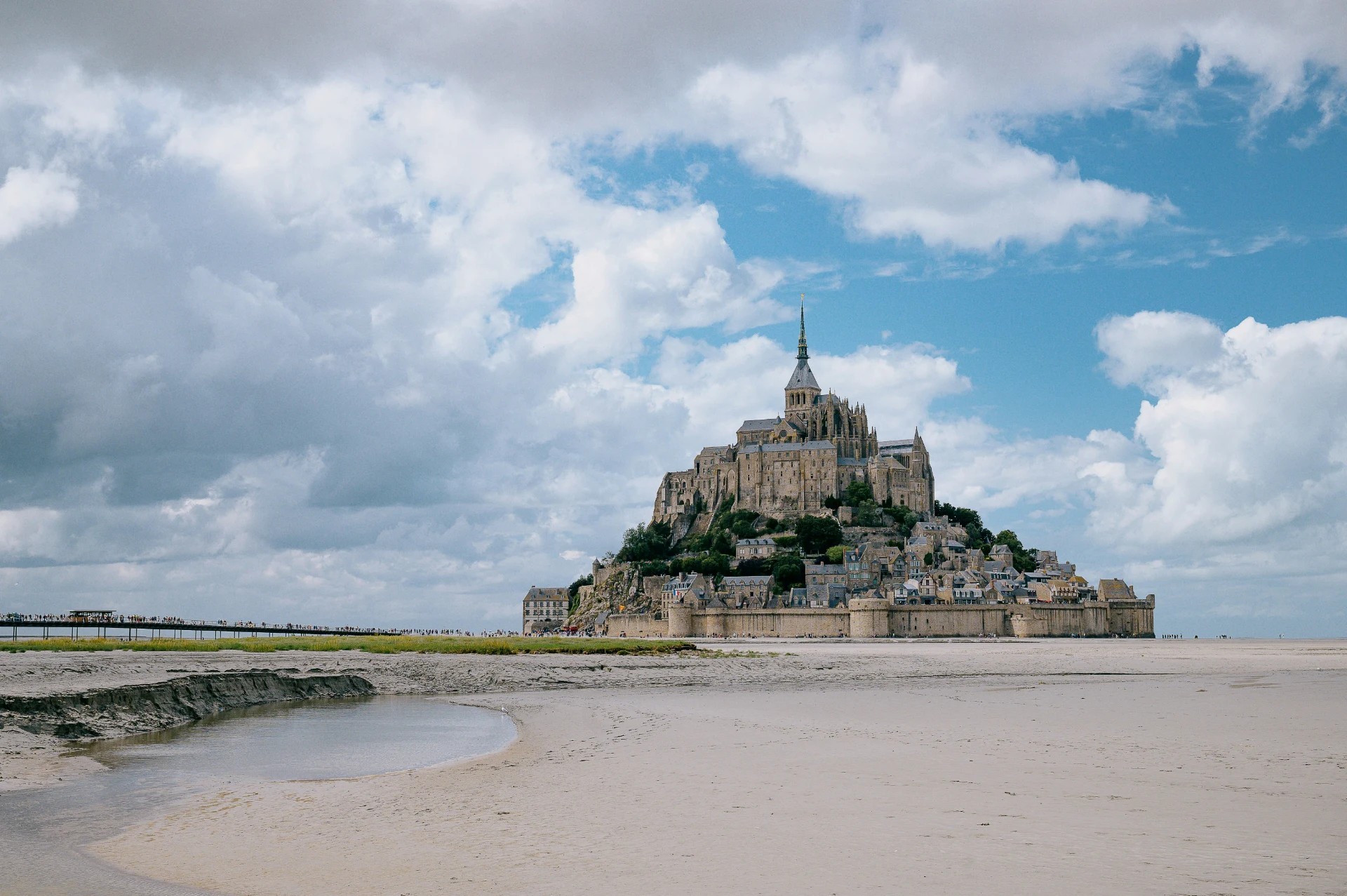
In Brittany, the stream feeding the Beaufort waterworks – which supplies 35 municipalities along the Bay of Mont-Saint-Michel – has been dry since July. The system relies on two alternative reserves, which according to the chair of the Saint-Malo area water syndicate are not inexhaustible; according to Veolia meter data, consumption jumped by 30% during heat peaks. Here, residents have been prepared for 18 months to get by on 40 litres per person a day. A third of the population has already spent 3 days at home under the emergency plan, with two cans of water.
In the Puy-de-Dôme department, Saint-Hilaire-de-Pionsat ran out of mains water at the end of June and applied to connect to a neighbouring water syndicate – household bills are expected to double next year.
What the French state asked for – and what it did not
The 12 August meeting did not introduce a new restriction regime, only stricter enforcement of the existing one: measures concentrated on the sub-catchments most sensitive for drinking water supply, tighter checks on daytime watering and irrigation, a review of exemptions already granted, enforcement plans in every department, and immediate restriction orders when thresholds are crossed.
No specific measures were adopted for the most exposed large industrial users – data centres and nuclear power plants – and no clear order of priority was set between them and household supply. In the light of what happened on the Danube in the same two weeks, where low water levels forced nuclear plants to shut down units, this is a gap other governments will also have to answer for.
The deferred asset question
The inability to meet water demand also highlights a long list of deferred investment. France's official renewal indicator, P107.2, measures the share of network length replaced each year as a five-year average. According to the June 2026 report, covering 8,665 utilities and 99% of the population, it stands at 0.61% for drinking water networks and 0.41% for sewer networks. At this rate, completely replacing France's drinking water network would take around 164 years – while a pipe's service life is 30–80 years, and this covers only the pipe network, not the full infrastructure of the waterworks.
At the current rate, France would take 164 years to replace its entire drinking water network – while a pipe lasts 80 years at most.
Distribution efficiency fell from 81.2% to 79.2% in 2024; leakage accounts for 18.8% of the water put into the network, equivalent to the annual consumption of 20 million people.
France is no exception: according to the 2025 summary of Europe's Water in Figures, published in June 2026 by EurEau, the European federation of national water associations, 12 countries named ageing assets as one of their three most important challenges. According to the federation, renewal rates across Europe are too low to halt deterioration and have fallen further compared with the 2021 report; investment amounts have increased, but mainly as a result of construction inflation. Annual investment is €6.5 billion in France, €9.7 billion in Germany and €11.7 billion in the United Kingdom – while the annual investment gap identified by the EU Water Resilience Strategy is €23 billion.
On the losses side, non-revenue water in Europe averages around 23%, ranging from 6% in the Netherlands to 45% in Bulgaria; in Italy, the national statistics office ISTAT measured 42.4% in 2022. This indicator covers not only leakage but also maintenance, street cleaning and firefighting use.
Two structural obstacles lie behind the figures. One is a lack of visibility: as Durk Krol, executive director of Water Europe, put it, much of the continent's water infrastructure is underground,
“…so it remains politically and publicly invisible until something fails.”
The other obstacle is size: according to EurEau, France and Germany each have more than 5,000 water operators – in France's SISPEA register, if individual drinking water services are counted separately, the number rises to 9,623. Small operators, Krol argues, cannot finance renewal on their own: the capability, the data systems and the borrowing capacity all sit above their size. Sainte-Marie-aux-Mines, with its 5,000 inhabitants and single water source, embodies exactly this argument.
France's response to the funding gap has so far been modest compared with the need. The 2023 Plan Eau earmarked an additional €180 million a year in water agency support from 2024, targeting around 2,000 municipalities classed as vulnerable and some 170 pipeline sections with leakage rates above 50%.
The municipalities calling in tankers are not suffering from a lack of rain: their single-source, unconnected networks were built for a climate that no longer exists.
As long as the renewal rate of Europe's water networks lags decades behind real needs, every dry summer will expose in the same way where the weakest points of water utility infrastructure lie.
In France, more than 40,000 people have no water coming from their taps, and 80 municipalities are being supplied by tanker – up from 30,000 people in two weeks. The affected regions, Alsace, the Vosges and Brittany, are traditionally wet areas that do not usually suffer drought. The phenomenon is seen across Europe: 50% of the EU and UK was in drought at the end of July, and water restrictions are in force across 71.3% of England. At the current rate (0.61% renewal a year), France would take 164 years to replace its drinking water network. According to EurEau, Europe's annual water investment gap is €23 billion. The tankers make visible not a lack of rain, but deferred network renewal.
In France, more than 40,000 people have no water coming from their taps, and 80 municipalities are being supplied by tanker or with bottled water – up from 30,000 people in two weeks. The key detail is the map: the affected regions – Alsace, the Vosges and Brittany – are traditionally wet areas with single-source, ageing networks.
The phenomenon is continental: at the end of July, 50% of the EU and UK was in drought and 71.3% of England was under restrictions, with 45 million people living in affected areas. In France, three places – Sainte-Marie-aux-Mines, Gérardmer and the area of Brittany supplied by the Beaufort waterworks – show how the emergency scenario unfolds: demand management, tankers and finally a costly network interconnection.
The deeper problem is structural: at the current renewal rate of 0.61% a year, France would take 164 years to replace its drinking water network, while a pipe lasts 30–80 years. According to EurEau, 12 countries named ageing assets as a main challenge, and Europe's annual investment gap is €23 billion. Non-revenue water ranges from 6% in the Netherlands to 45% in Bulgaria. The tankers make visible not a lack of rain, but deferred network renewal.

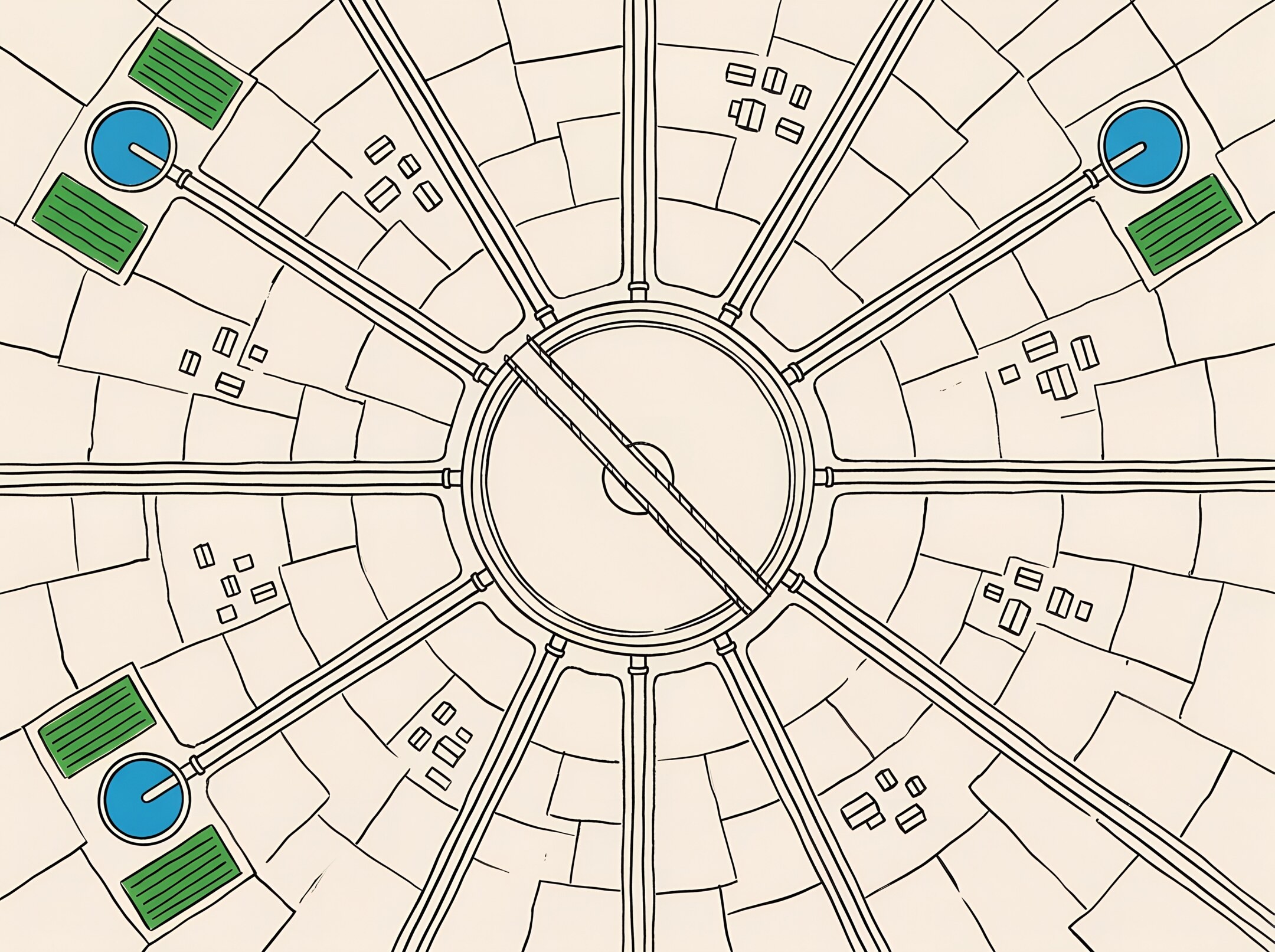

A study of 10,826 Chinese treatment plants finds that big centralised systems are reaching two limits at once, on easing water scarcity and on paying their way, and that a hybrid model could do the job for up to 37% less.
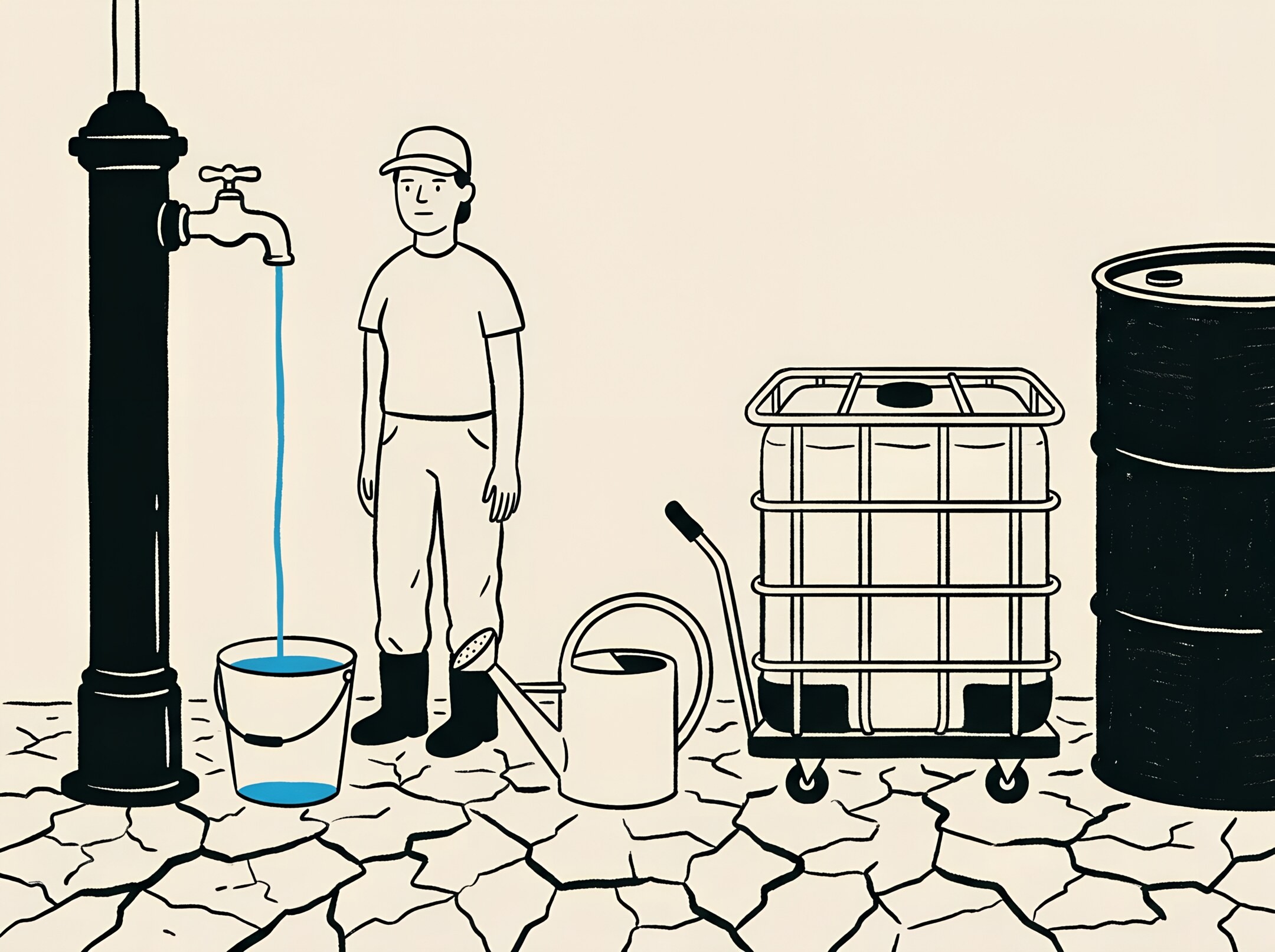
FAO has published draft principles on who may use water and on what terms, a quiet piece of international work that speaks directly to this year's fights over drought, wells and free irrigation.

A new report projects data centres' water footprint reaching 9.32 trillion litres by 2030, but the number is only meaningful once you know what it counts, and who is making the case.
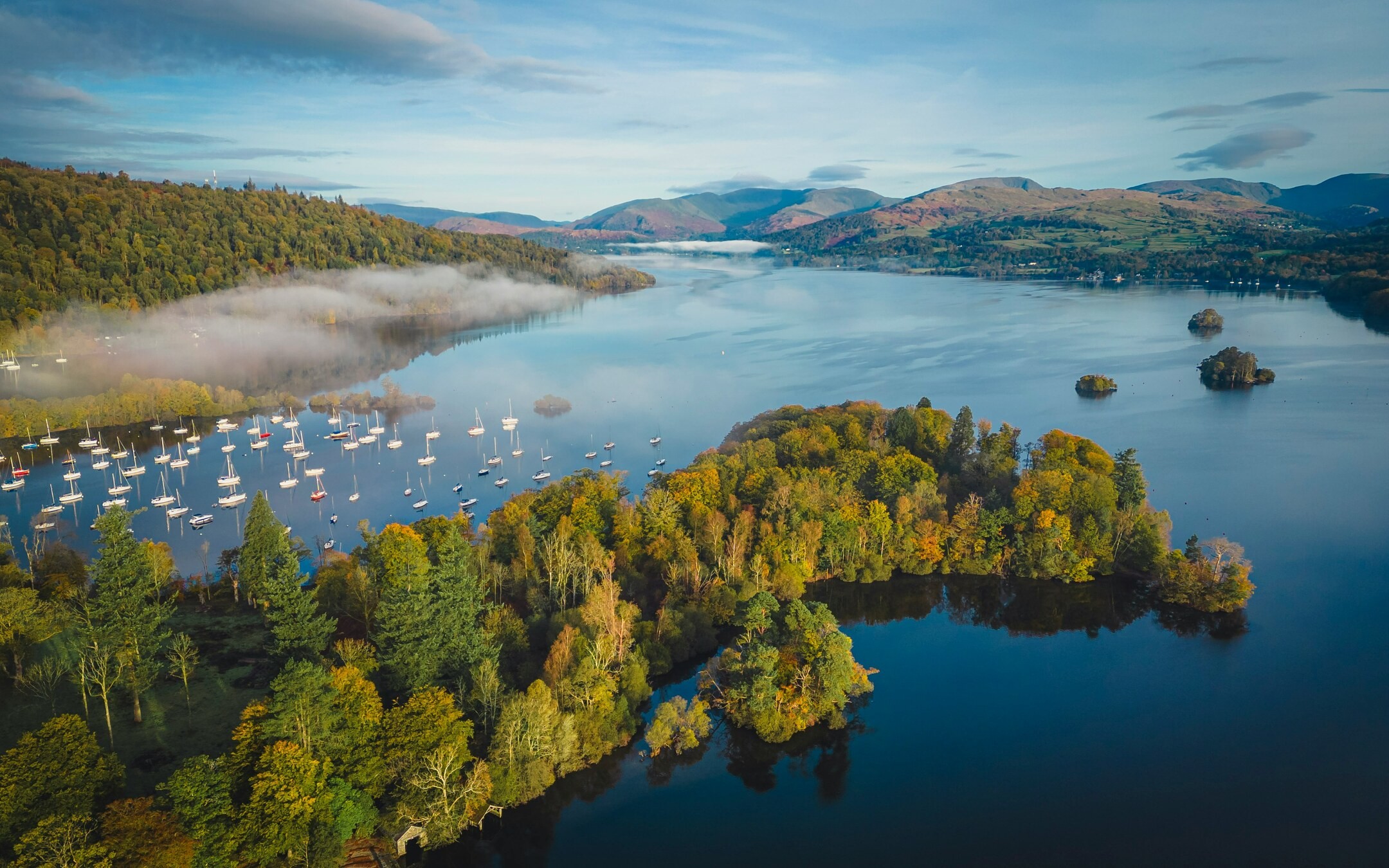
An English coalition has costed what it would take to keep every drop of wastewater out of England's largest lake, £3.6–3.7 billion, and its modelling says nothing less ends harmful algal blooms.