A Trunk Sewer Collapses Near Washington

A major sewer failure occurred on 19 January 2026 along the Potomac River, near the Clara Barton Parkway in Montgomery County, Maryland, just outside Washington, D.C. The collapse hit a section of the Potomac Interceptor, a regional trunk sewer that carries up to 60 million gallons (about 227 million litres) of raw sewage a day to the capital's treatment plant.
An estimated 240 million gallons (over 900 million litres) of untreated sewage poured into the river before the operator, DC Water, could contain the discharge with an emergency bypass and high-capacity pumps.
Water quality tests showed a drastic rise – up to a thousandfold in some samples – in E. coli (Escherichia coli) and other pathogens, posing a serious public health and ecological risk. The authorities stressed, however, that Washington's drinking water was never at risk, because the supply system is separate from the affected stretch of river and continued to deliver safe water.
Why did the trunk sewer collapse?
The incident is a textbook case of ageing infrastructure, chemical corrosion and peak hydraulic loads combining into a system-wide vulnerability.
1. Ageing trunk sewer infrastructure
The failed pipe, a 72-inch line, was built in the 1960s as part of a large-diameter concrete gravity system. Its job is to carry wastewater from the Washington metropolitan area to the Blue Plains Advanced Wastewater Treatment Plant.
Decades of hydraulic and chemical stress significantly erode the safety margin of the wall thickness and the structural integrity of the pipe.
2. Biogenic corrosion and hydrogen sulphide
In large, partially filled gravity sewers, sulphate-reducing bacteria thrive under anaerobic conditions. The hydrogen sulphide (H₂S) they produce oxidises in the upper part of the pipe and turns into sulphuric acid. The acid attacks the cement binder of the concrete, speeding up spalling of the surface layer and thinning of the wall, which over time reduces the pipe's load-bearing capacity.
3. Unfavourable ground conditions
The pipe failed in a riverside zone of partly made-up, waterlogged ground. Typical risks in such settings include changing external pressure as the groundwater level fluctuates, void formation, washout of fine soil particles and, in places, dynamic surface loads from road traffic.
Once the external support of the pipe is partly lost, concentrated loads can trigger a local structural collapse.
4. Peak hydraulic loads
The system conveys hundreds of millions of litres of wastewater every day. During heavy rainfall, combined sewer networks can be briefly overloaded. Although this is essentially a gravity system, local backing-up can create temporary surcharge pressure, putting extra strain on an already weakened pipe.
5. The limits of monitoring and condition assessment
Internal inspection of trunk sewers this size (CCTV, laser scanning, ultrasonic wall-thickness measurement) is expensive and carries operational risk. Corrosion damage often develops out of sight in the crown of the pipe, and deterioration is not linear but accelerates over time.
Conventional condition assessment models can therefore underestimate the likelihood of a sudden collapse. The system may well have reached the tipping point at which a local weakness led to progressive structural failure.
6. System-wide vulnerability
The multi-state sewer network serving the Washington, D.C. metropolitan area is a highly concentrated system: a single structural failure can release hundreds of millions of litres of raw sewage and become a regional environmental incident.
Key lessons
The lesson is clear: for strategic, large-diameter trunk sewers, conventional maintenance cycles are not enough. What may be needed is predictive corrosion modelling, H₂S control programmes (chemical dosing, ventilation), structural rehabilitation technologies (liners, sliplining, CIPP) and redundant conveyance routes.
The Potomac incident shows that ageing urban water infrastructure is not merely an engineering issue but a public health and ecological security risk – especially in large cities.
In January 2026 a major sewer failure struck near Washington, D.C.: a section of the Potomac Interceptor trunk sewer collapsed and some 240 million gallons (over 900 million litres) of raw sewage poured into the river. Behind the disaster lies a combination of ageing infrastructure, biogenic corrosion and peak hydraulic loads. Built in the 1960s, the concrete pipe had been weakened for decades by sulphuric acid formed from hydrogen sulphide. Drinking water was not affected, but E. coli levels in the river rose a thousandfold. The incident shows that ageing urban water infrastructure is a serious public health and ecological risk.
On 19 January 2026 a section of the Potomac Interceptor, a regional trunk sewer running along the Potomac River in Montgomery County, Maryland, collapsed just outside Washington, D.C. The line carries up to 60 million gallons (about 227 million litres) of wastewater a day, and an estimated 240 million gallons (over 900 million litres) of untreated sewage reached the river before the operator, DC Water, brought an emergency bypass online.
Water quality tests showed E. coli and other pathogens rising up to a thousandfold. Washington's drinking water supply was not affected, as it is drawn and treated separately from the polluted stretch.
The failure had several causes. The concrete sewer, built in the 1960s, has been weakened for decades by biogenic corrosion: hydrogen sulphide produced under anaerobic conditions turns into sulphuric acid, which gradually eats away at the concrete. Unstable, waterlogged riverside soil, partial loss of external support and peak hydraulic loads added to the strain.
The case also exposes the limits of conventional condition assessment: inspecting large-diameter trunk sewers is costly and risky, while corrosion damage develops out of sight and at an accelerating pace. A single structural weakness can turn into a regional environmental incident.
Experts say strategic trunk sewers need predictive modelling, H₂S control programmes, structural rehabilitation and redundant conveyance routes to prevent similar disasters.



A study of 10,826 Chinese treatment plants finds that big centralised systems are reaching two limits at once, on easing water scarcity and on paying their way, and that a hybrid model could do the job for up to 37% less.
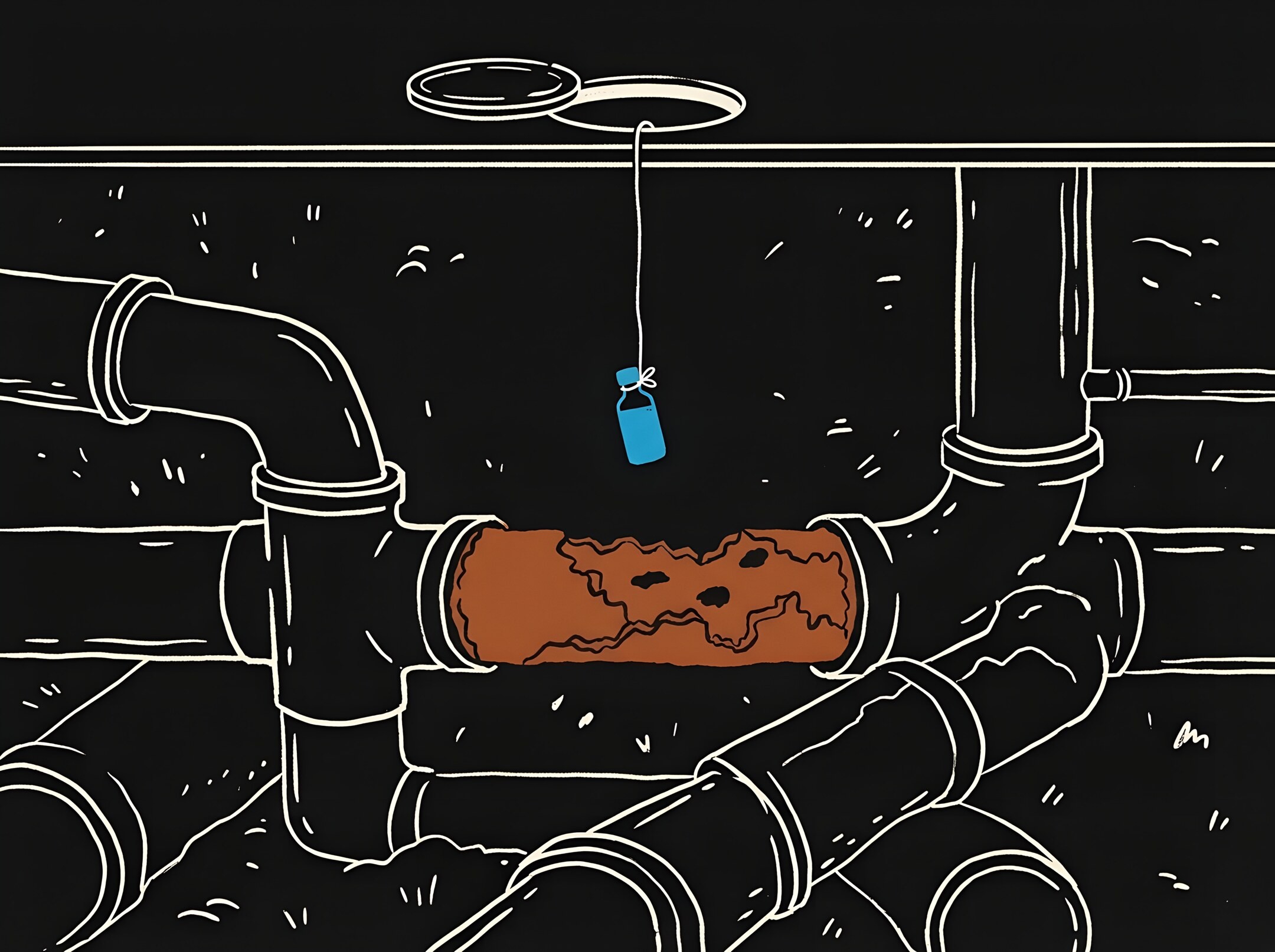
Japanese researchers combined bacterial DNA from wastewater with pipe data and machine learning to flag the sewer sections most prone to corrosion – across the whole network, before the camera goes in.
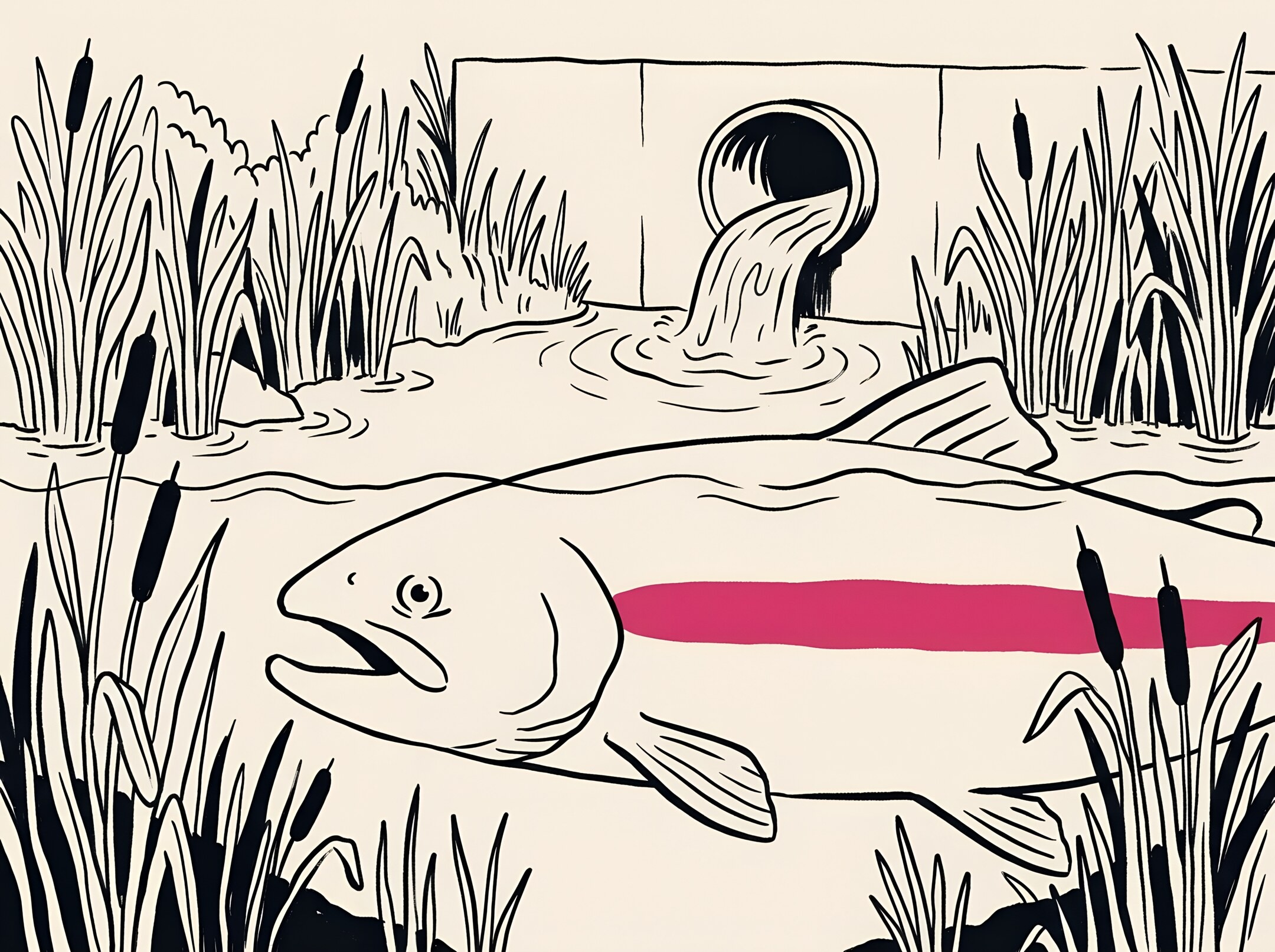
Twelve years of Philadelphia data show that after combined sewer overflows, dissolved oxygen in smaller streams stays low for days, while the big river barely notices.

An English coalition has costed what it would take to keep every drop of wastewater out of England's largest lake, £3.6–3.7 billion, and its modelling says nothing less ends harmful algal blooms.