Europe Is Drying Up
We are launching a new series of articles analysing Europe's water and energy problems. This year has made it clear that the continent faces serious problems in these areas, which are likely to get worse in the period ahead. The aim of our series is to inform the public about these problems and help prepare them, to some extent, for the years to come.
The summer of 2026 has made it clearer than ever that something very ominous is happening to Europe's water resources. According to the European Drought Observatory, the drought monitoring service of the European Commission's Joint Research Centre (JRC), in mid-August 50% of the territory of the European Union and the United Kingdom was struggling with some level of water shortage, with 9% of the area already at “alert” level (European Drought Observatory, 2026). This proportion is remarkable even compared with the two previous record years, 2018 and 2022: in 2018, 3% of the area reached alert level, and in 2022 11% – making 2026 the second most severe year in the available record.
But the point is not this summer's extremes, but what lies behind them. According to the long-term data series of the European Environment Agency (EEA, 2026), 12 of the 24 years between 2000 and 2024 were drought years, and 8 of these water-scarce years came after 2010. Drought has therefore become a recurring phenomenon – and according to the agency, without effective climate mitigation and adaptation measures, the area affected by drought is not expected to shrink by 2030. The JRC's own forecast shows no significant improvement in the coming weeks and months either: the warm, dry weather could continue into September, while the developing El Niño could bring further warming lasting until spring 2027 (JRC, 2026).
This article is the first in a four-part series examining the structural and climatic causes putting Europe's water resources under increasing pressure, and which countries are most at risk. Later parts of the series deal with the energy consequences, and then with the responses of governments, the EU and individuals.
Between 2000 and 2024, the drought-affected area of Europe exceeded the long-term median in 12 years – in eight cases after 2010.
Dusty riverbeds
One of the most striking signs of summer 2026 was the emptying of the continent's major rivers. According to data from the Copernicus European Flood Awareness System (EFAS), in July the lowest average July flow in the data series kept since 1992 was measured along 95% of the Thames, 85% of the Rhine and around two-thirds of the Danube. Similar records were registered along 30% of the Rhône and 40% of the Po.
Detailed hydrological data refine the picture. At Lobith, where the Rhine enters the Netherlands, daily flow reached 81% of the 2019–2025 average in April, 66% in May, 58% in June and only 37% in July – the July 2026 monthly average was lower even than the worst single day of the 2022 drought summer. In France, the Garonne at Tonneins carried just 5% of its normal flow in July, the Loire at Saumur 13% and the Rhône at Beaucaire 41%. On the Danube, measured at the Iron Gates, flow fell to 58% of normal in May, 54% in June and 48% in July.
River flows in July 2026
% of normal level
Rhine compared with the 2019–2025 average.
| Garonne (Tonneins) | 5 |
|---|---|
| Loire (Saumur) | 13 |
| Rhine (Lobith) | 37 |
| Rhône (Beaucaire) | 41 |
| Danube (Iron Gates) | 48 |
The drying out was visible not only in data series but also in everyday life along the riverbanks. In Serbia, boats were left stranded on the harbour floor at Novi Sad, and at Prahovo the wreck of a German Second World War warship emerged from the Danube – similarly, on the stretch between Tolkamer and Spijk in the Netherlands, the De Hoop, a ship that sank in 1895, became visible in the receding Rhine, while in Budapest a DKW, a German military motorcycle that ended up in the Danube during the Second World War, surfaced from the drying riverbed. The crisis also reached river tourism on the Danube: a cruise ship ran aground on the Bulgarian stretch, and several companies were forced to change or cancel sailings.
“As the climate continues to warm, the hydrological extremes we are now experiencing will only be the tip of the iceberg.”
Allan added that managing water resources will become increasingly challenging.
Where is Europe's water going?
Summer 2026 is not an isolated phenomenon but a symptom of a much deeper structural problem. According to EEA data, the EU's total annual water abstraction averaged around 192,600 million m³ in 2020–2023, roughly 200 billion m³ (EEA, 2025) – 14% less than the average of the 2000s, but the decrease is almost entirely due to the decline in cooling water use by power plants, while water demand from agriculture, industry and public water supply has been rising again since 2010.
The vast majority of water used comes from just four sectors: cooling for electricity generation accounts for 36% of total abstraction, agriculture 29%, public water supply (drinking water, households, tourism) 19% and industry 14% – together the four sectors account for almost 98% of total water use. Pressure on groundwater is also growing: between 2000 and 2023, groundwater abstraction for agriculture rose by 52%, while surface water abstraction fell by 13% – meaning farmers are increasingly relying on more vulnerable groundwater resources that renew more slowly.
EU water abstraction by sector
% of total water abstraction
| Cooling for power generation | 36 |
|---|---|
| Agriculture | 29 |
| Public water supply | 19 |
| Industry | 14 |
In 2025, the European Commission adopted the European Water Resilience Strategy, which aims to cut water use by 10% by 2030 and restore the water cycle (European Commission, n.d.). The strategy's importance is underlined by EurEau's 2026 report, according to which losses in European water networks still amount to 23.5% – meaning nearly a quarter of the water abstracted never reaches the consumer – while infrastructure investment varies enormously between member states: Germany spends €9 billion a year, France €6.5 billion, but Slovenia only about €100 million.
The regional distribution of water scarcity is not random either: almost two-thirds of Europe's irrigated land is concentrated in just three countries – Italy, Spain and France – while 90% of the EU's arable land currently has no access to irrigation at all. This structural imbalance explains why the burden of this year's drought is not evenly shared across the continent.
Particularly worrying for the future is that water demand is growing not only in traditional sectors. The EEA warns that data centres and semiconductor manufacturing are consuming available water resources ever faster, and the spread of green hydrogen production could require further significant volumes of high-purity water – while wastewater reuse in Europe currently accounts for only 2.4% of water abstracted. This combination – growing industrial water demand and untapped reuse potential – is one of the main reasons why the Commission's strategy prioritises tools such as digital leak detection, smart irrigation and the expansion of non-conventional water sources, including desalination and rainwater harvesting; part 3 of the series returns to these in detail.
Countries in the crossfire
Hungary is a particularly worrying case because this is not a single bad year but a water deficit that has been building up for several years. According to the country's General Directorate of Water Management (OVF), the cumulative rainfall deficit since 2021 had reached a national average of 462 mm by April 2026 – roughly a full year's rainfall – and in the Tisza catchment and parts of the Great Plain the deficit exceeds 900 mm in places. The trend can be traced year by year: 2023 was milder, but groundwater levels did not recover; in 2024 the summer rainfall deficit reached 80% and half of the maize fields were scorched; 2025 was the most severe year so far; and 2026 is continuing the trend.
In France, the maize harvest could be one of the weakest of the past half-century. According to the French maize growers' association (AGPM), the harvest could fall to 9.5 million tonnes, a 26-year low. According to Benoit Fayaud, senior grain analyst at Expana, crop losses are growing day by day because of the heat and lack of rain, and there is a real chance that the harvest will fall below 8 million tonnes, last seen in 1976. The French agriculture ministry expects a 35% drop in the main grain-growing regions, and some analysts do not rule out an even steeper fall of up to 50%. The drought does not stop at maize: according to industry organisations, up to 50% of the crop may have been lost for some vegetables, and in many places it is not safe to sow into the dried-out soil for the next cycle, which will carry over into 2027. The heatwave did not spare the poultry sector either, where livestock mortality rose significantly.
Romania, by contrast, presents a mixed picture. On the one hand, more than 1 million hectares of crops were destroyed by drought in 2026, and 7.3 million hectares of the country's 9.7 million hectares of arable land are permanently threatened by water scarcity. On the other hand, at times during the summer Romania received more rain than its western neighbours, which partly offset the fall in the EU maize harvest – although this did not solve the cooling problems at the country's Cernavodă nuclear power plant, both units of which were offline for 19 days in May because of low Danube water levels on top of planned maintenance. The long-term exposure is shown by the fact that Bucharest has begun renovating the outdated irrigation canal network from the socialist era: under the plan, following a first section of around 24 km starting in summer 2026, 18.5% of Romania's agricultural land could become irrigable by 2027 – which in itself shows how large the backlog is.
In Spain and Italy, the extremely high water demand of agriculture makes the situation particularly vulnerable: in Spain, agriculture accounts for 70–80% of total water use, which regularly comes into conflict with household and tourist demand. During the summer, local water restrictions were introduced at the most popular tourist destinations in Croatia, Italy and Greece alike – a particular concern given that the Mediterranean and the Adriatic remain among Europe's most popular summer destinations. In Italy, water shortages on the Po simultaneously threatened irrigation, hydropower generation and drinking water supply; over the past decade or so, Italian maize production has also halved as farmers have diverted scarce water resources towards more profitable fruit and vegetable growing.
Economic impacts
The economic burden of the 2026 drought and the accompanying heatwaves can be measured with increasing precision. According to estimates, the damage caused by the hot summer could reach €180 billion, close to 1% of EU GDP. According to an Allianz analysis, the two-week heatwave in June alone may have reduced Europe's GDP by 0.3 percentage points, while maize and sunflower crop losses had already reached 6–7% by July.
The impact on the grain market is clearly visible in the figures: the grain trade association Coceral cut its forecast for the EU maize harvest by nearly 8% to 52.7 million tonnes – the lowest since 2007. The combined grain harvest of the EU and the UK could total around 286.6 million tonnes this year, 23.4 million tonnes less than last year; within this, the wheat harvest is estimated at 140.8 million tonnes.
The question, however, is not just how much damage an exceptional summer causes, but whether the situation could keep getting worse for an unforeseeable period. The JRC's series of PESETA projects – which model the economic impacts of climate change under different warming scenarios – gives a scientifically grounded, concrete answer. According to the latest analysis, PESETA V, with 2 °C of global warming drought damage could reach as much as 15% of regional GDP in some regions of Southern and South-Eastern Europe, mainly in agriculture, while the average loss for the EU as a whole is put at around €13 billion a year, or 0.08% of GDP – already 16% higher than it would be in a baseline without warming (JRC, 2024). The earlier PESETA IV project is even starker: with 3 °C of warming, drought damage could increase as much as fivefold by 2100 compared with today, with the largest increases expected in the Mediterranean and Atlantic regions, where agricultural losses could more than double from €3.3 billion to €8 billion a year (JRC, 2020).
The JRC's earlier PESETA IV analysis also examined by sector where these losses come from: according to data for 1990–2016, 39–60% of drought losses came from agriculture and 22–48% from the energy sector, with proportions varying by country – in France, for example, drought already caused losses of around €1.2 billion a year at the current level of warming, largely from the combination of processes under way now: power plants short of cooling water and drying fields.
These figures indicate that this summer is not a one-off disaster but the first clearly visible stage of a process that will intensify over the long term. If we continue on the current emissions path, estimates suggest we must expect increasingly frequent and severe crop failures, persistently higher food prices and significant, regionally concentrated losses of competitiveness – especially in Southern and South-Eastern European economies that rely heavily on agriculture and hydropower.
According to the JRC's scientific estimate, with 3 degrees of warming, drought damage could increase as much as fivefold by 2100 compared with today.
Impacts on security of supply
Water scarcity also directly threatens critical infrastructure. On the Rhine, falling water levels mean ships can only sail partly loaded, making freight transport more expensive and slower; on some stretches the authorities have even resorted to blasting the riverbed to maintain navigability. Germany's steel, chemical and energy industries are particularly exposed, as inland waterway transport is proportionally more important in Germany than in most Western European countries. According to analysts, low water on the Rhine could on its own push the German economy closer to recession, as rising transport costs and limited loading capacity directly increase the cost of industrial raw materials, including coal and fuels.
Along the Danube, the pattern is different: Serbian power producers increased imports at the expense of domestic lignite-fired generation because of the lack of cooling water and unfavourable coal import conditions, while most Danube and Rhine systems made up for the missing hydro and nuclear power with natural gas, imports and rapidly growing solar generation – the only major power source not directly constrained by water scarcity.
Daily output at Hungary's Paks nuclear power plant fell from 38 GWh to 21 GWh between 28 and 31 July – a 45% drop in just three days.
On the Danube, nuclear power plants that depend on cooling water came under the greatest pressure. In Hungary, daily output at the Paks nuclear power plant fell from 38 GWh to 21 GWh between 28 and 31 July – a 45% drop in just three days, and the lowest level of the whole period. According to analyses, the loss tracked the Danube's water level more closely than air temperature, suggesting that the limits were set not primarily by the heat but directly by the amount of cooling water. In Romania, one unit of the Cernavodă plant was able to produce only around 15 GWh a day in June instead of a normal July level of around 29 GWh.
In addition, the water restrictions introduced at the height of the tourist season – from Croatia to Greece – show that drinking water security is now a problem not only in the driest Mediterranean areas but also at some of Europe's most popular holiday destinations. River cruise companies were forced to change routes or cancel sailings on several stretches of the Danube, which could also affect the region's tourism revenues in the longer term.
This year's drought is part of a trend
The 2026 drought is not an isolated “bad year” but one stage in a process that has been gradually worsening for at least a decade. Data from both the European Environment Agency and the JRC show that there has been no lasting improvement in recent years, and according to current scientific forecasts – without effective climate mitigation and adaptation – the situation is more likely to deteriorate than improve in the coming years and decades (World Weather Attribution, 2026). Meanwhile, groundwater deficits have been building up in Hungary for years, France's maize harvest is falling to a decades-long low, crops are being destroyed on a scale of millions of hectares in Romania, and in the Mediterranean, household and tourist water supply is increasingly coming into conflict with agriculture.
The stakes are not only ecological. According to the JRC's own economic modelling, as warming progresses, Europe's food production, industrial water supply and energy security will all come under lasting, structurally greater pressure – which in the longer term could lead to more expensive food, restrictions on water-intensive industries and regionally concentrated losses of competitiveness, especially in the Mediterranean and South-Eastern Europe. Exactly how quickly and to what extent this process will unfold cannot yet be known for certain – but on the basis of the available data, it is safe to say that this is a lasting, not a one-off, challenge.
The next part of the series examines how all this is linked to the vulnerability of Europe's energy system – since, as this article has shown, emptying rivers already directly threaten hydropower plants and the cooling of nuclear power plants.
Editorial opinion
Europe's water problems have been going on for years and are steadily intensifying. This year has made it clear to the governments and citizens of several member states that the situation is critical and that immediate action is needed. Drinking water supply to the population is at risk in several regions. In the view of the W4 Magazine editorial team, the situation is much worse than it appears: serious drinking water and food shortages could occur in the next 1–3 years, for which much of Europe is simply not prepared. Managing the situation is not helped by the fact that neither the European Union nor the governments of member states are adequately informing the public about the seriousness of the situation, nor helping people prepare for a possible water shortage and the food shortage that would follow. One example worth following is the recent move by Tajik President Emomali Rahmon, who warned Tajikistan that, because of global uncertainty, the country must reduce its dependence on imported goods, and urged families to build up food reserves for at least two years.
Summer 2026 brought drought to 50% of the territory of the EU and the UK, with 9% at alert level – the second most severe year after 2018 and 2022. But the phenomenon is not a one-off: according to EEA data, the affected area exceeded the median in 12 years between 2000 and 2024, eight times after 2010. Flows on the Rhine, Loire, Garonne and Danube fell in places to 5–48% of normal. A groundwater deficit building up for years in Hungary (a cumulative rainfall deficit of 462 mm since 2021), a 50-year low in the maize harvest in France and 1 million hectares of destroyed crops in Romania point to a structural problem. Estimated economic damage reaches €180 billion, close to 1% of EU GDP. JRC modelling shows that with 3 °C of warming, drought damage could increase as much as fivefold by 2100 – so the process could keep worsening at an unpredictable pace.
Summer 2026 brought drought to 50% of the territory of the European Union and the United Kingdom, with 9% already at alert level – the second most severe year in the available record after 2018 and 2022. Yet this is not about a single bad year: according to the European Environment Agency, the drought-affected area exceeded the long-term median in 12 years between 2000 and 2024, 8 of them after 2010, indicating a process that is steadily getting worse, not better.
The continent's major rivers showed record-low flows: in July the Rhine at Lobith carried 37% of its usual volume and France's Garonne just 5% of normal, while the Danube at the Iron Gates stood at 48%. In Hungary, a cumulative rainfall deficit of 462 mm has built up since 2021; in France the maize harvest could fall to a 50-year low; in Romania more than 1 million hectares of crops were destroyed; and in Spain and the Mediterranean, tourist and household water supply increasingly clashes with agricultural demand.
Estimated economic damage reaches €180 billion, close to 1% of EU GDP, and Coceral cut its EU maize harvest forecast to 52.7 million tonnes – the lowest since 2007. According to the JRC's scientific modelling, with 3 °C of warming drought damage could increase as much as fivefold by 2100 compared with today, reaching 15% of GDP in some Southern European regions – so the current crisis is, by all indications, only the beginning of a long process unfolding at an unpredictable pace.

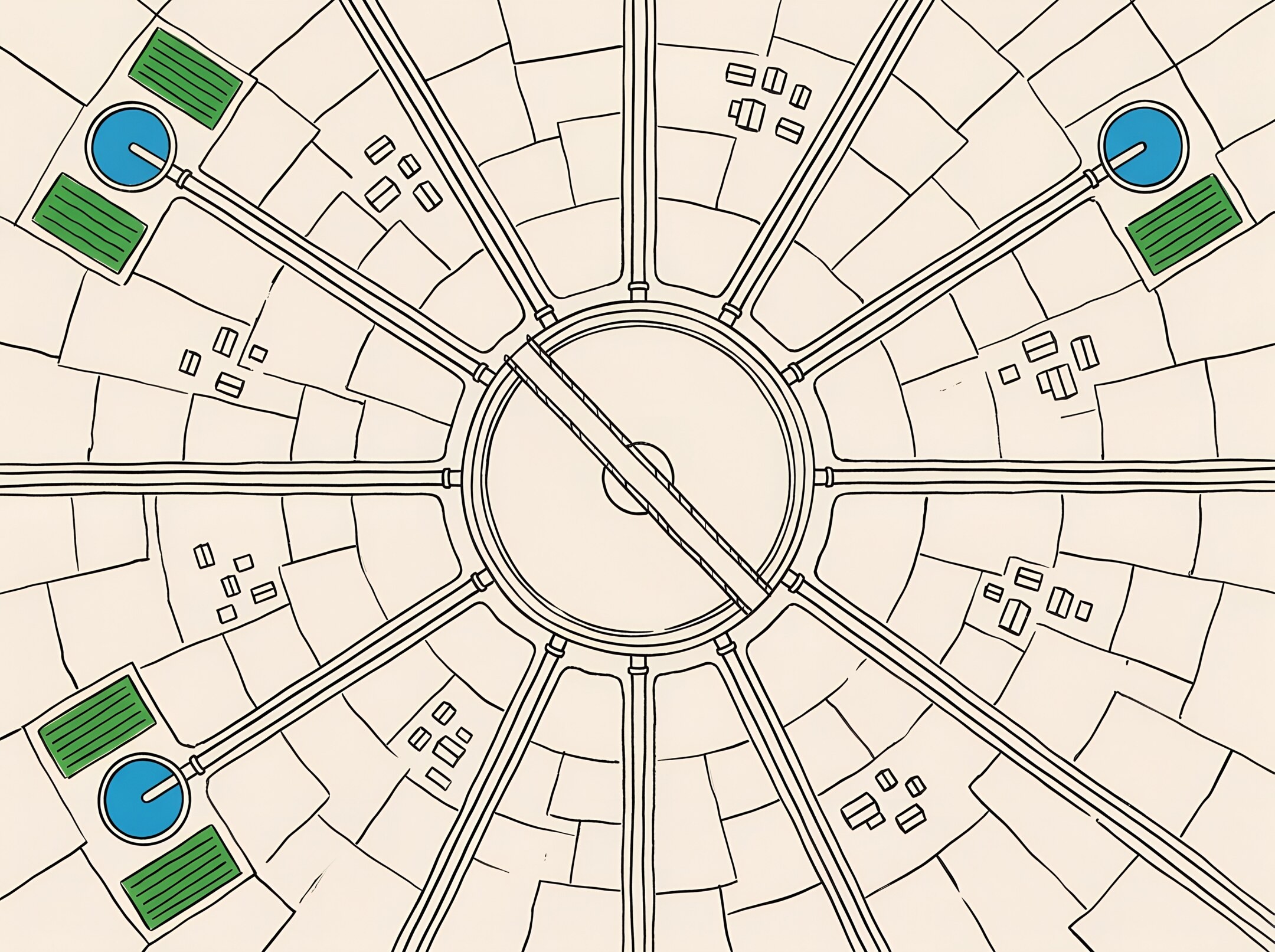

A study of 10,826 Chinese treatment plants finds that big centralised systems are reaching two limits at once, on easing water scarcity and on paying their way, and that a hybrid model could do the job for up to 37% less.
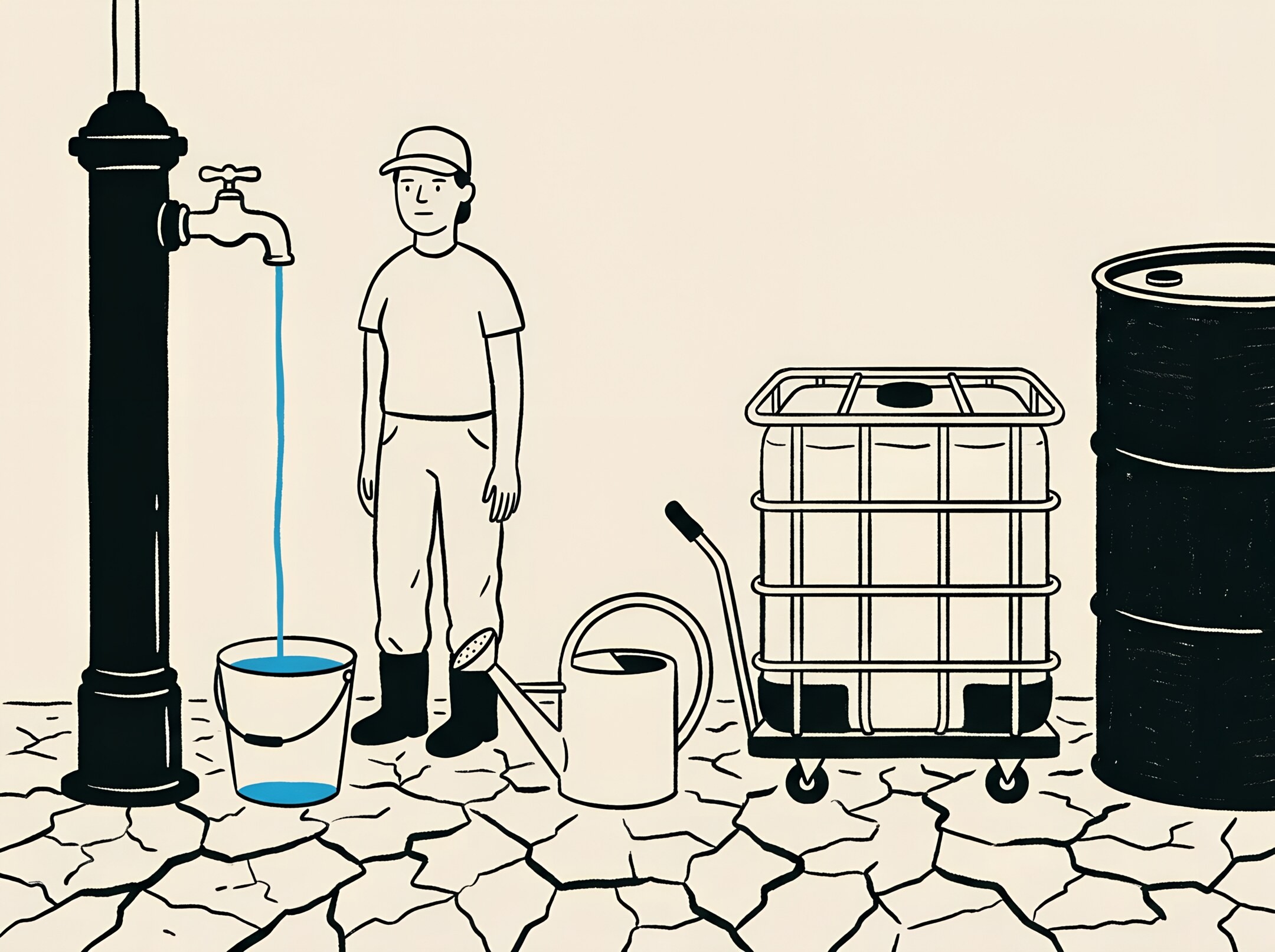
FAO has published draft principles on who may use water and on what terms, a quiet piece of international work that speaks directly to this year's fights over drought, wells and free irrigation.

A new report projects data centres' water footprint reaching 9.32 trillion litres by 2030, but the number is only meaningful once you know what it counts, and who is making the case.
An English coalition has costed what it would take to keep every drop of wastewater out of England's largest lake, £3.6–3.7 billion, and its modelling says nothing less ends harmful algal blooms.