Fifty Years of the Battery – and What Comes Next
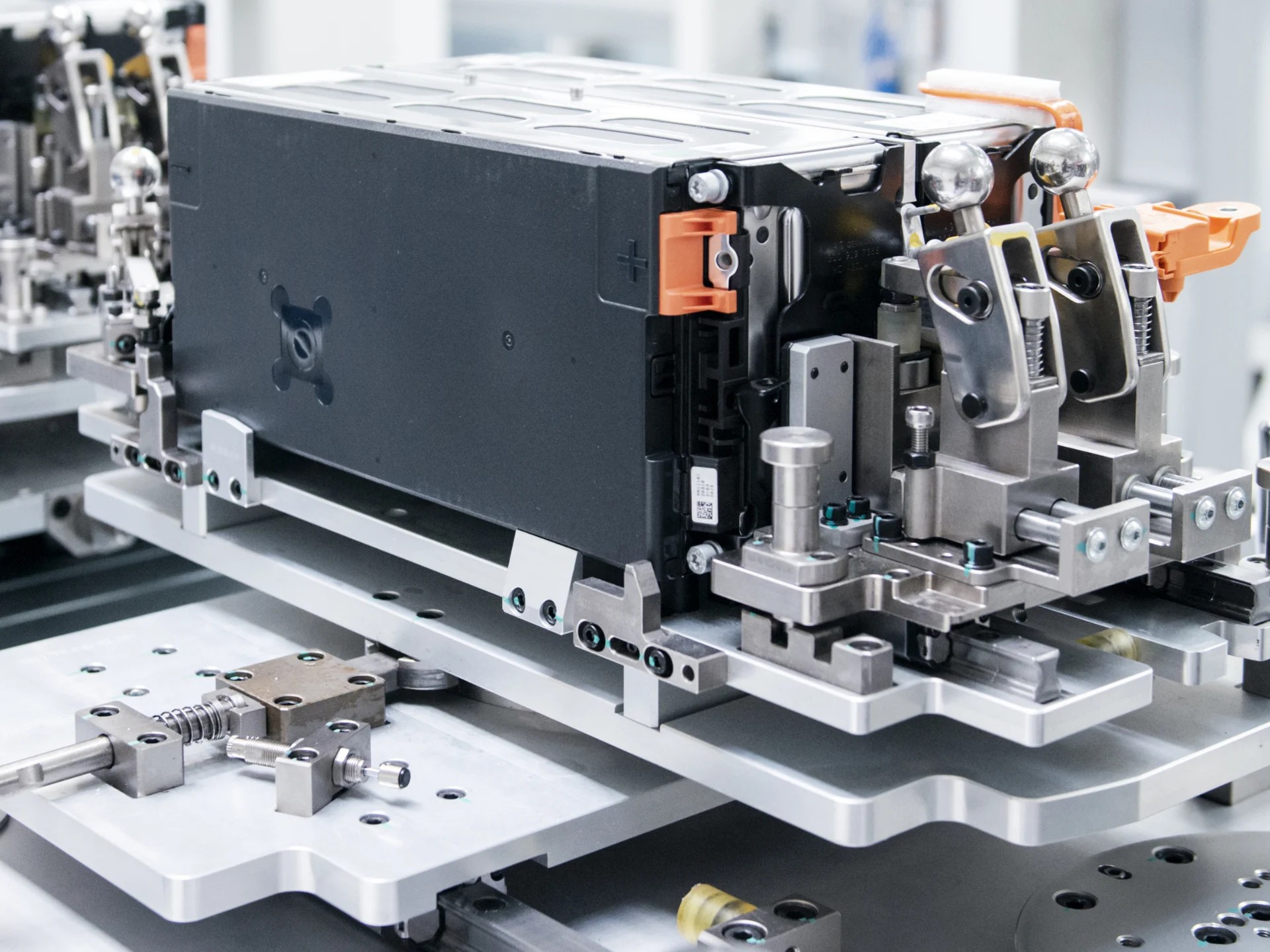
One of the most critical bottlenecks of the energy transition is the efficiency of energy storage. For now, humanity's only reliable answer to this question is the battery. Given its critical role, it is worth understanding how we got here, where we are now and what awaits us in the next decade.
The history of the battery in a nutshell
The modern era of battery technology began in the laboratories of the 1970s. Working at Exxon, M. Stanley Whittingham discovered that lithium ions could be moved back and forth between layers of titanium disulphide – creating the principle of the first rechargeable lithium-based battery. The concept was promising, but the lithium anode proved flammable and unstable (Reddy et al., 2020).
In 1980 John Goodenough at the University of Oxford developed a more stable cathode material: lithium cobalt oxide, which allowed higher voltage and safer operation. The real breakthrough came in 1985 from Akira Yoshino, who replaced the lithium metal anode with a carbon-based one – giving birth to the basic structure of the modern lithium-ion battery. In 1991 Sony launched the first lithium-ion battery, used first in camcorders and then in mobile phones. The three pioneers – Whittingham, Goodenough and Yoshino – were awarded the Nobel Prize in Chemistry in 2019 (U.S. Department of Energy, 2019).
The three decades that followed were a period of quantitative leaps.
Since commercial launch in 1991, the price of lithium-ion cells has fallen by almost 99%: from about $9,200/kWh then to close to $100/kWh today (Our World in Data, n.d.).
At the same time, energy density has more than tripled since the 1990s, and every doubling of global production has brought a 19% price reduction (RMI, 2024).
Lithium-ion and its limits
Today's battery market is dominated by lithium-ion technology, which is an umbrella term. Behind the different technologies lie different chemical compositions suited to different uses.
The most widespread variant is NMC (nickel manganese cobalt), used in electric cars because its high energy density allows long range. Alongside it, LFP (lithium iron phosphate) is gaining ground, offering better thermal stability and a much longer cycle life at a lower energy density. LFP has become dominant especially in energy storage and entry-level electric vehicles: Chinese production costs fell below $94/kWh by 2024, a 90% drop over the past decade.
According to BloombergNEF's 2025 survey, the global average battery pack price was around $108/kWh, while for electric vehicles it fell to close to $99/kWh.
For years the industry regarded $100/kWh as the price at which an electric vehicle becomes economically competitive with a conventional combustion engine – so $99/kWh marks a watershed.
But lithium-ion technology has structural limits that engineers cannot push beyond a certain point. The theoretical capacity of the graphite anode is a physical ceiling. The liquid electrolyte is flammable – thermal runaway remains one of the main safety risks. There is a trade-off between charging speed and battery life. On top of that, mining lithium, cobalt and nickel is geopolitically sensitive (China has bought up a decisive share of the world's mining reserves) and extremely damaging to the environment. Recycling battery materials is still technically challenging, too. These limits are driving research towards alternative technologies.
Alternative chemistries
In recent years several technologies have caught up with lithium-ion, each seeking its place in different applications.
Sodium-ion batteries replace lithium with sodium, a cheaper and abundant element. CATL's first-generation sodium-ion cells reach an energy density of 160 Wh/kg, below lithium-ion, but the technology's appeal lies in the price of the raw material and independence from lithium. It could be competitive mainly in stationary storage and shorter-range city vehicles.
Flow batteries work with tanks of liquid electrolyte – their capacity can be expanded almost without limit, making them particularly suitable for industrial-scale, multi-day energy storage. Lithium-air and lithium-sulphur systems have theoretical energy densities far above today's lithium-ion, but both are at an early stage of laboratory development. We will cover these technologies in more detail in a separate article – here we focus on the most promising future solution.
The great hope for the future: the solid-state battery
The basic idea of the solid-state battery (SSB) is simple: what if the liquid electrolyte were replaced with a solid material? In principle this single change would eliminate the fire risk and allow the use of a lithium metal anode – dramatically increasing energy density.
Why is the solid-state battery better in principle?
Removing the liquid electrolyte also removes the main causes of thermal runaway: no flammable liquid, no short circuits caused by dendrite growth, no pressure build-up.
Solid-state cells can store 50–80% more energy for the same weight, and their theoretical energy density can reach 500 Wh/kg – almost twice that of today's best lithium-ion cells.
Three types of electrolyte compete
Solid-state battery development is following three paths: sulphide-based versions have high ionic conductivity but raise manufacturing challenges and toxicity concerns; polymer-based ones are scalable but need higher temperatures and have stability problems; oxide-based ones offer excellent stability with a lithium metal anode but have high interfacial resistance and cost.
The biggest technological challenge: the interface
Unlike liquid electrolytes, solid materials do not "wet" the electrode surface evenly – only point contacts form, causing interfacial resistance and mechanical stress during charging and discharging. Lithium dendrite formation remains a problem in solid electrolytes too: tiny lithium protrusions can pierce the electrolyte and cause short circuits. These problems can be solved, but doing so requires new approaches in materials science and manufacturing technology.
Who will bring it to market, and when?
Without exception, the world's leading carmakers and battery manufacturers are developing solid-state batteries, but their timelines reflect cautious realism.
Toyota plans its first series-production solid-state vehicle for 2027–2028: the first generation is expected to offer a range of 1,000 km and a 10-minute charging time, about 20% more range than the planned lithium-ion version. Samsung SDI has set a mass production target of 2027, with an anode-free design and a volumetric energy density of 900 Wh/L. QuantumScape's QSE-5 B-sample has a measured energy density of 844 Wh/L and 301 Wh/kg. In 2025 Mercedes-Benz drove an EQS test vehicle fitted with a solid-state prototype 1,205 kilometres from Stuttgart to Malmö on a single charge, with the pack offering about 25% more usable energy than a lithium-ion battery of the same size.
China divides its development roadmap into three stages: 2024–2026 for verifying industrial maturity, 2026–2028 for demonstration applications and 2028–2030 for wider deployment. CATL's solid-state development team has grown to 1,200 people, and the energy density of its announced 20 Ah sample cell reaches 450 Wh/kg.
The solid-state battery works on different physical principles and requires different manufacturing technology from lithium-ion. That is why even the world's largest battery makers cannot simply "switch over" their existing production lines.
The Donut Lab case
In January 2026 at CES, a Finnish start-up, Donut Lab, announced that it had built the world's first solid-state battery ready for series production. The claims are extraordinary: an energy density of 400 Wh/kg, a 5-minute charging time and 100,000 charge cycles.
The industry reacted immediately, but with divided opinions. Svolt Energy's chairman and CEO, Yang Hongxin, publicly declared: "This battery does not exist anywhere in the world. All of its parameters are contradictory. Any technician with basic knowledge would identify it as a scam." Shirley Meng, a battery researcher at the University of Chicago, also expressed scepticism after visiting the CES stand.
Donut Lab did not back down. Finland's state-owned VTT Technical Research Centre carried out independent testing, and the results showed that the cell held 107% of its rated capacity at 100 °C for several hours – with no signs of fire or degradation. The company then published a battery pack test: an 18 kWh pack in a Verge TS Pro motorcycle sustained 100 kW of charging power for five minutes with air cooling.
Questions remain, however: the cell's exact chemistry has not been made public, independent confirmation of the weight-based energy density figure is still pending, and the transition from lab to industrial-scale production – a problem for all the world's major battery makers – has not yet been proven for Donut Lab either. The truth will be decided during 2026, when the first buyers take delivery of their Verge motorcycles.
From households to industry: the new energy storage market
Alongside the future promise of the solid-state battery, energy storage is already undergoing a revolutionary transformation today – based on proven lithium-ion technology.
Globally, the market for battery energy storage systems (BESS) is estimated at $10.16 billion in 2025 and is forecast to reach $86.87 billion by 2034, growing at 26.92% a year (Straits Research, n.d.).
The global battery energy storage (BESS) market
$ billion
| 2025 | 10.16 |
|---|---|
| 2034 (forecast) | 86.87 |
Two main forces are driving growth: the need to integrate renewable energy and the continuing fall in battery prices.
Home energy storage – a battery installed alongside rooftop solar – has become a true mass-market product over the past five years. The Tesla Powerwall is the most widespread brand: a 13.5 kWh unit with an integrated inverter and software that stores energy generated during the day for use at night. During power cuts the system acts as a backup power source. Besides Tesla, Huawei, LG and BYD are also gaining market share.
Industrial and grid-scale storage – grid-scale BESS – is growing even faster. Tesla deployed 46.7 GWh of energy storage capacity in 2025, up 48% on the previous year – the business already accounts for almost a quarter of the company's gross profit. LG Energy Solution has indicated that in 2026 stationary energy storage is expected to grow four times faster than electric vehicles.
These large, containerised battery systems – such as the Tesla Megapack – form the backbone of renewable integration: they absorb solar power during the day and release it to the grid at night; for wind farms they smooth out fluctuations during calm periods; at peak demand they prevent grid collapse. The explosive growth of AI data centres has opened up a new, unexpected source of demand: in 2025 Tesla delivered $430 million worth of Megapack batteries to the Memphis data centre of Elon Musk's xAI.
In sum, over the past fifty years battery technology has become one of the most important strategic sectors of global industry. The lithium-ion revolution laid the foundations: prices have fallen to a fraction, energy density has tripled, and the technology has spread into almost every part of modern life, from electronics and cars to energy.
The solid-state battery will not replace everything tomorrow – the authoritative roadmaps of Toyota, Samsung and CATL put the first mass production between 2027 and 2030 – but the direction is clear: safer, denser, longer-lasting energy storage is on its way. Donut Lab's announcement – whether a real breakthrough or a partial result – illustrates that by 2026 the race is no longer between laboratories but between production lines and markets.
The energy transition will not succeed when we have enough solar panels and wind turbines – but when we solve where and how to store that energy. The battery answers that question. And by all indications, it will keep giving better answers.
Over fifty years of battery technology, the price of lithium-ion batteries has fallen by almost 99% and their energy density has tripled, making them a cornerstone of electric mobility, consumer electronics and grid storage. The market's leading chemistries – NMC and LFP – compete in different applications, while the global average battery pack price fell to around $108/kWh in 2025. The clear candidate for the next generation is the solid-state battery: it uses a solid instead of a liquid electrolyte, which in principle eliminates fire risk and allows energy densities of up to 400–500 Wh/kg. Toyota, Samsung and CATL put the start of mass production between 2027 and 2030. Finland's Donut Lab announced in early 2026 that its solid-state battery is already in production – the industry is sceptical, but the first independent tests partly support the claims. Meanwhile the market for residential and industrial energy storage is growing by almost 27% a year.
Over the past fifty years battery technology has moved from the chemistry lab to become one of the most important strategic areas of global energy policy. Since the commercial launch of the lithium-ion battery – by Sony in 1991, building on the scientific foundations laid by Whittingham, Goodenough and Yoshino – its price has fallen by almost 99% and its energy density has tripled. The global average battery pack price came close to $108/kWh in 2025, and for electric vehicles it crossed the long-awaited psychological threshold of $100/kWh.
The current market is dominated by NMC and LFP chemistries. NMC dominates long-range electric vehicles, while LFP has advanced in energy storage and smaller vehicle applications – with Chinese production costs falling below $94/kWh in 2024. The great hope for the next generation is the solid-state battery, which replaces the liquid electrolyte with a solid material: in principle this eliminates the risk of thermal runaway, raises energy density to 400–500 Wh/kg and could push cycle life beyond 5,000 cycles. Toyota promises its first series-production solid-state vehicle for 2027–2028, and Samsung SDI and CATL also put the start of mass production between 2027 and 2030.
In January 2026 Finland's Donut Lab announced that its solid-state battery – already in production, with an energy density of 400 Wh/kg, a 5-minute charging time and a design life of 100,000 cycles – was running in Verge motorcycles. The industry's reaction was divided: experts from CATL and China's Svolt questioned the claims, while independent tests by Finland's VTT partly support the cell's performance parameters. Meanwhile the market for energy storage systems – driven by the growing need to integrate renewables – could grow from $10.16 billion in 2025 to $86.87 billion by 2034.


The IEA expects the first annual fall in renewable additions in 21 years, the biggest six-year expansion on record, and a grid that is now the main thing standing in the way.


A new report projects data centres' water footprint reaching 9.32 trillion litres by 2030, but the number is only meaningful once you know what it counts, and who is making the case.

From 4 November, companies that want to buy biomethane can post their demand on the European Commission's platform and producers can bid from January. Here is what to do now and what the scheme will not give you.

The Dutch Authority for Digital Infrastructure warns that the shared cloud back ends behind home batteries, inverters and heat pumps could threaten grid stability, a risk EU rules only partly address.