Europe's Managed Retreat
Managed retreat. No, this is not the military term for the losing side withdrawing in good order and "straightening the front line". In a figurative sense, though, it is something similar: if a building, or even a whole settlement, stands – or has come to stand – in the path of water, it may make sense to move out of it to protect what is valuable.
Sometimes managed retreat is the only reasonable way out of a dangerous situation – and an international study has revealed that it is not rare in Europe. When a river overflows, the most ancient human instinct is to defend; the other response is to withdraw: moving affected communities out of the danger zone, demolishing buildings and giving the floodplain back to the river.
A joint study by Kiel University and the Dutch research institute Deltares, published in Earth's Future in 2026, now paints an interesting picture. Wolff et al. (2026) show that, driven by climate change and growing flood risk, managed retreat is happening much more widely in Europe than previously assumed.
Managed retreat typically takes place with government or institutional support and aims to reduce vulnerability in the long term.
At first the concept sounds radical, since it is not just about demolishing a house but about giving up a home, a neighbourhood and local roots.
That is why it is politically sensitive territory: the amount of financial compensation for losses that cannot really be expressed in money, the degree to which the affected community is involved and the leading role of the authorities all influence whether such a project succeeds or ends in conflict.
The database
Wolff et al. (2026) collected European managed retreat cases and, based on a multilingual review of academic literature, grey literature and media reports, identified a total of 44 completed or planned projects in 11 European countries.
Cases range from relocating individual buildings, churches and factories to larger community relocations affecting 1,500 households. In total, at least 4,002 households have already retreated, and a further 4,700 are involved in planned projects.
Carolien Kraan of Deltares and Claudia Wolff and Fabia Bade of Kiel University searched academic literature, official reports and newspaper articles in several languages to uncover European cases of managed retreat. As a result, they mapped a considerably wider set of cases than previously identified, covering more than 8,700 households in 11 European countries, with one case going back more than 150 years.
The database is a milestone in itself: previous global surveys of managed retreat recorded only a handful of European cases. Reality is richer and more varied – and the methodology is unusual too: the researchers searched not only English-language literature but also Dutch, Danish, Polish, French and other sources.
The diversity of cases
The projects studied vary enormously in size and character. In most cases, managed retreat involved households. These were usually small-scale – the demolition of just a few homes – but there were also projects in which entire communities had to move, for example in Poland and France. In some cases only assets were moved or relocated. In Denmark, for instance, a lighthouse close to the coast and threatened by cliff collapse was pushed further inland on rails to protect it from coastal erosion.
This case – the Rubjerg Knude lighthouse – became a symbol: in 2019 it was moved about 80 metres inland while hundreds watched on site and millions followed online. Protecting built heritage, community attachment and pragmatic adaptation all came together in it.
The study also points out that in some cases managed retreat focused not only on the buildings affected but also on preserving cultural heritage. In the Dutch village of Oterdum, a memorial commemorates the demolished Reformed church, while the chapel of the Polish village of Nieboczowy was physically moved to a new site – from the Oder floodplain to higher, safer ground.
The five key factors
The researchers identified 5 factors that largely determine the process and success of managed retreat projects: the level and transparency of compensation, the timing of the project, how early and how deeply the affected community is involved, government responsibility and coordination, and the subsequent use of the land that is freed up.
Of the five, timing is particularly decisive: the moment managed retreat is launched – whether as an immediate post-disaster intervention or as part of a long-term adaptation plan – strongly influences public acceptance, political will and institutional readiness.
According to the results, projects saw the least conflict where compensation was transparent and adequate, the community was involved from an early stage and a trusted local leader – an authority or community figure – kept the dialogue going. By contrast, insufficient compensation, unclear responsibilities and top-down decision-making consistently led to conflict and delay.
The trap of reactive decisions
One of the study's most fundamental findings is that in Europe the vast majority of managed retreat decisions are made after a disaster, not to prevent one.
The database shows that a reactive approach dominates: an extreme event – a flood, coastal erosion, sea-level rise – is usually the political and social trigger that starts the retreat process. Anticipatory planning frameworks that treat managed retreat as a strategic option are relatively rare.
Disasters thus provide the political and social momentum for action, while anticipatory planning approaches that treat managed retreat as a strategic adaptation option remain relatively rare.
This is a question not only of efficiency but also of fairness. Someone forced to decide about giving up their home after a disaster negotiates from a far more vulnerable position than someone who does so prepared, as part of a planned process. A traumatised community is less able to stand up for its interests, and decision-makers are more inclined to rush the process.
When the sacrifice of a few protects many
River floodplain restoration projects in the Netherlands – including elements of the Room for the River programme – represent a distinctive approach: in some Belgian and Dutch cases, managed retreat aimed not only to protect those at risk but also to achieve wider floodplain restoration, which ultimately protected an entire city further upstream.
This approach – where relocating a few households protects a much larger community – is one of the most vivid examples of ecosystem-based adaptation. Giving the floodplain back to the river benefits not only the people who lived there but the water balance of the whole catchment.
In many European countries managed retreat is still largely taboo in public policy – the idea of giving up homes almost never comes up in a planned way. The European examples show, however, that communities where the decision is made under pressure after a disaster fare worse than those where local authorities, government and residents discuss the options in advance, openly and with enough time.
Wolff et al. (2026) both correct a misconception and open a debate. The misconception: that there are hardly any examples of managed retreat in Europe. The reality: 44 cases, 11 countries, more than 8,700 households. The debate: how to turn a tool that has so far been used almost exclusively in emergencies into a deliberate, forward-looking adaptation strategy.
“Managed retreat is not a one-size-fits-all solution. However, it should be part of the climate adaptation portfolio.”
Carolien Kraan adds: "Managed retreat can be a very effective form of climate adaptation. Usually, it's not the first measure to be considered. However, in some cases, it's the only option left." Because it touches the deepest part of people's lives – their homes – it has to be used with care, and that means learning what works and what does not when it is carried out in Europe.
European water policy will not be able to avoid this question in the coming decade. Floods are getting stronger, sea levels are rising, and in some areas traditional defence infrastructure is no longer sufficient or sustainable. Managed retreat is not a synonym for giving up – it is a synonym for foresight.
A 2026 study by Kiel University and Deltares found that managed retreat – government-supported relocation away from flood-prone areas – is far more widespread in Europe than previously assumed. The researchers identified 44 projects in 11 countries involving more than 8,700 households in total. Most initiatives were launched after a disaster rather than as part of anticipatory planning. Five factors largely determine success: transparent compensation, early involvement of the affected community, timing, clear government leadership and the subsequent use of the land. The authors urge that managed retreat be placed in a forward-looking planning framework as part of the wider climate adaptation toolbox.
Managed retreat means relocating buildings, or even entire neighbourhoods, away from hazardous floodplains – because of flooding, erosion or sea-level rise – and giving the land back to the river. It is not surrender but a long-term climate adaptation strategy.
According to a 2026 study by Kiel University and the Dutch institute Deltares (Wolff et al.), the phenomenon is far more common in Europe than expected: 44 completed or planned projects were identified in 11 countries, involving more than 8,700 households in total (at least 4,002 have already retreated, with a further 4,700 in planned projects). Cases range from moving a lighthouse (Denmark) to demolishing whole parts of villages.
The process is typically reactive: it starts after a disaster rather than before. Success depends on five key factors: transparent and fair compensation, community involvement, the right timing, government coordination and the use of the land that is freed up.
According to the study, planned, anticipatory adaptation is far more humane and effective than improvisation after a disaster. Managed retreat is no miracle cure, but it can be an important tool of climate adaptation.

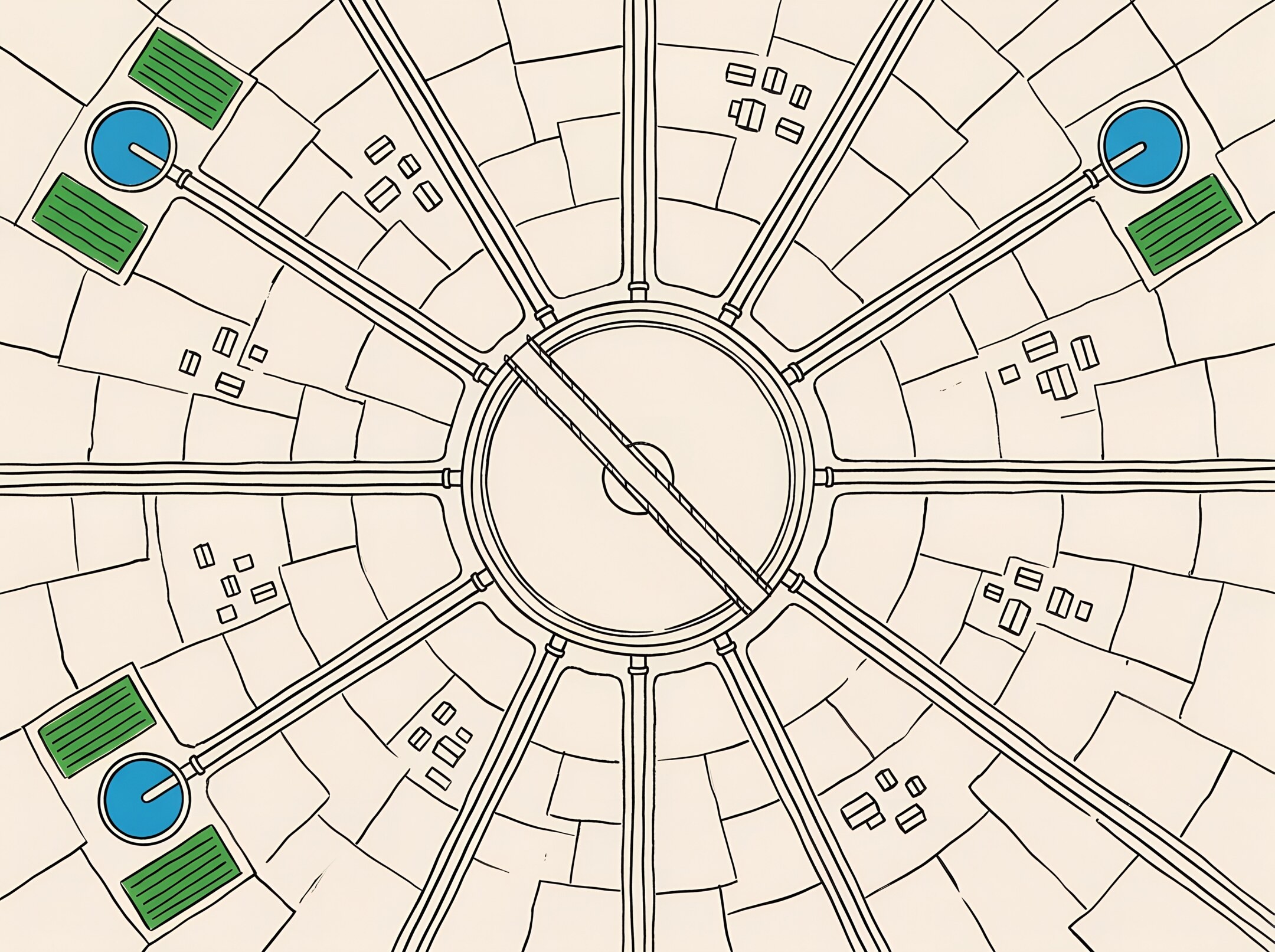

A study of 10,826 Chinese treatment plants finds that big centralised systems are reaching two limits at once, on easing water scarcity and on paying their way, and that a hybrid model could do the job for up to 37% less.
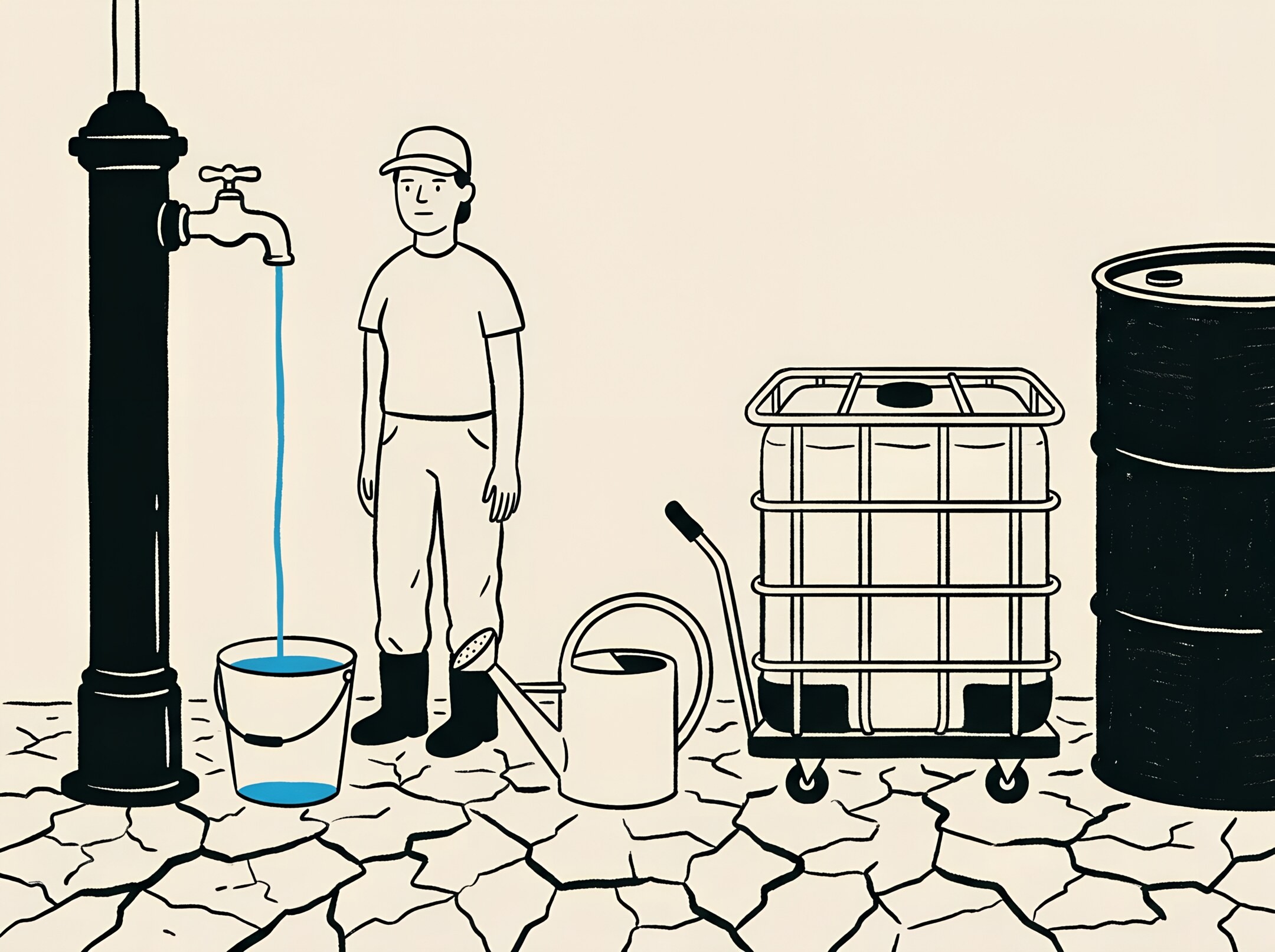
FAO has published draft principles on who may use water and on what terms, a quiet piece of international work that speaks directly to this year's fights over drought, wells and free irrigation.

A new report projects data centres' water footprint reaching 9.32 trillion litres by 2030, but the number is only meaningful once you know what it counts, and who is making the case.
An English coalition has costed what it would take to keep every drop of wastewater out of England's largest lake, £3.6–3.7 billion, and its modelling says nothing less ends harmful algal blooms.