Wastewater as a Data Carrier
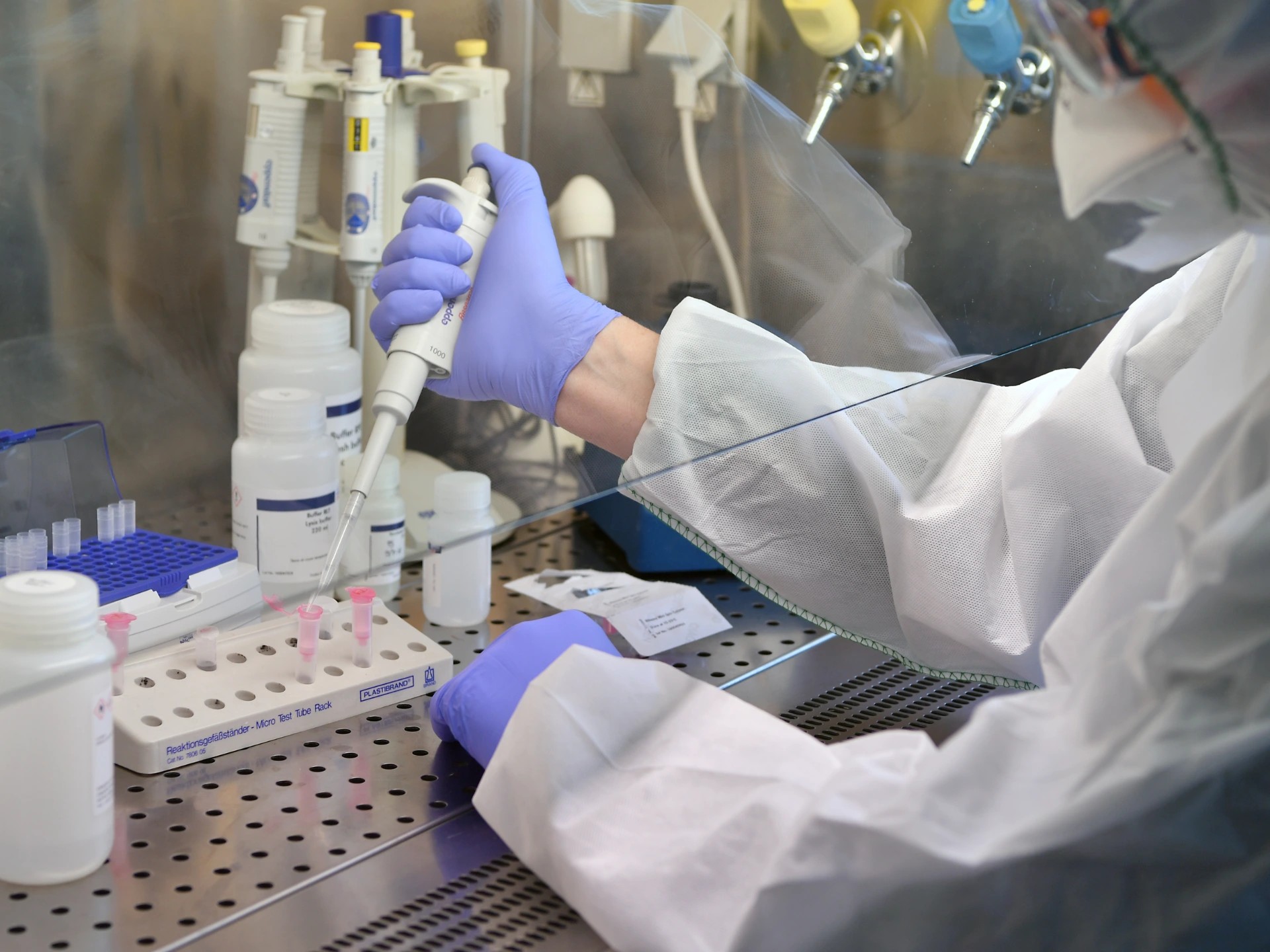
The Covid-19 pandemic was a turning point not only for medicine but also for science. While attention was on hospitals, a number of research groups were watching something else entirely: the sewer network. It turned out that the genetic material of the SARS-CoV-2 virus appeared in wastewater days before the first clinical cases were recorded – turning the sewer into an early warning system for epidemics. This approach is called wastewater-based epidemiology (WBE): by analysing the metabolic products and other compounds people release into the sewer network, it draws conclusions about the health and behaviour of an entire community.
The method is useful far beyond forecasting the coronavirus. Wastewater carries not only viruses but also pharmaceutical residues, drug metabolites, antibiotic-resistant genes, hormones, dietary biomarkers and industrial pollutants. This article shows how the sewer – one of the oldest pieces of public health infrastructure – is becoming one of the most modern sources of data.
Viruses and pathogens: extending epidemic surveillance
The roots of wastewater-based epidemiology go back to tracking poliovirus; Covid-19 simply brought the method a renaissance. The real novelty is that almost every pathogen excreted by the human gut or airways can be detected in wastewater – whether or not the person shows symptoms.
The study by Girón-Guzmán et al. (2024) in the Valencia region detected SARS-CoV-2, influenza A, norovirus, rotavirus, adenovirus and hepatitis E virus in the same wastewater samples. This matters because conventional clinical surveillance needs separate testing infrastructure, medical referrals and laboratory tests for every single pathogen.
A single wastewater sample can give a parallel picture of a community's entire burden of respiratory and gastrointestinal disease.
The Japanese study by Malla et al. (2025) measured SARS-CoV-2, influenza A and norovirus at five wastewater treatment plants at the same time, with weekly sampling. The result: changes in virus concentrations in wastewater predicted how clinical case numbers would develop. The implication for asymptomatic cases is especially notable: an infected person who never develops symptoms never enters clinical statistics – but wastewater still reflects their presence.
One of the most striking applications of the method is in hospitals. In a 2024–2025 study at a hospital in Northern California, genetic material from measles and H5N1 influenza viruses was detected in wastewater even though not a single case had been recorded at the institution.
This shows that WBE can detect presence even below the clinical threshold – for pathogens that pose a serious public health risk because they spread fast.
The silent map of antibiotic resistance
According to the World Health Organization, antibiotic resistance (AMR) is one of the greatest global threats to public health. Part of the problem is measurement: the spread of resistant bacteria is hard to track from conventional clinical data, because most infections are never analysed in a laboratory. This is where wastewater is especially valuable: bacteria and their genes, shed continuously from people's guts and skin, collect in the sewer network, where they can be sampled.
According to a 2026 summary by the EU-WISH initiative, the antibiotic resistance genes detected in influent samples at wastewater treatment plants closely reflect the local clinical AMR profile and show a statistically significant link with the type and quantity of antibiotics prescribed in the region. Where patients receive many broad-spectrum antibiotics, wastewater also contains more resistance genes – and this link gives direct feedback on the effects of prescribing habits.
It can also be used as a forecasting tool. In a Norwegian study, the resistance pattern of extended-spectrum beta-lactamase found in Escherichia coli strains at a wastewater treatment plant mirrored regional clinical cases almost exactly.
Wastewater-based AMR monitoring can thus be not just a surveillance tool but also an early warning system: signalling when a new resistant strain appears in the community – days before the first clinical diagnoses.
The EU's revised Urban Wastewater Treatment Directive (EU 2024/3019) responds to this by requiring AMR monitoring in Europe's larger cities. The joint EU-WISH and EU-JAMRAI 2 initiatives are developing a common methodology for implementing it. Monitoring antibiotic resistance through wastewater is therefore no longer a scientific vision but on its way to becoming a regulatory obligation.
Drug use: what the statistics don't show
Estimating drug use is one of the most widespread applications of WBE. The metabolites of the psychoactive substances people consume reach wastewater in urine, where they can be detected and quantified with chromatography. The result is a real-time, anonymised picture of a city's actual consumption – completely independent of questionnaire surveys distorted by self-reporting.
The annual wastewater analysis programme of the European Union Drugs Agency (EUDA, 2025) collected data from 115 European cities in 2025. The programme found traces of cocaine, MDMA, methamphetamine, cannabis and ketamine in almost every city studied, detectable in nearly every sample. The data also reveal patterns in space and time: in more than 75% of cases, cocaine metabolite concentrations are higher at weekends than on weekdays – reflecting recreational use.
The programme has direct value for public policy.
If the concentration of metabolites from an unknown psychoactive substance suddenly rises in a city, it can warn authorities and ambulance services days before the first clinical cases.
For this purpose, the method is no longer just a research tool: in some countries it has become an active part of integrated drug policy.

Tracking medicine use and mental health
Prescription and over-the-counter medicines also show up in wastewater. Painkillers, antidepressants, benzodiazepines, heart medicines, antibiotics and hormone preparations can all be detected through the metabolites excreted in urine. This information complements pharmacy sales data and health insurance statistics, especially where self-medication is common or patients find it hard to see a doctor.
The Australian study by Choi et al. (2019), based on samples from 22 wastewater treatment plants, found a close link between biomarker concentrations and the socio-demographic data of the catchment areas. Biomarkers of caffeine, citrus flavonoids and dietary fibre correlated positively with wealthier districts; by contrast, use of the painkiller tramadol, the heart medicine atenolol and pregabalin was significantly higher in lower-income districts.
A study from Greece is especially notable: during the 2010–2014 financial crisis, wastewater data showed rising concentrations of benzodiazepines and antidepressants alongside falling antibiotic use.
Here wastewater acted as a measure of community mental health and economic stress – providing data that no other source could have delivered so directly and objectively.
Lifestyle, diet and environmental exposure
The broadest application of wastewater-based epidemiology is population-level monitoring of lifestyle and diet. Metabolites of caffeine, nicotine and alcohol have long been measurable, but the method can do far more.
The study by Elliss et al. (2025) at the University of Bath brought this approach into a single comprehensive analytical framework: their method can measure 204 biochemical markers in wastewater at once. These cover food consumption, medicine load, stress hormones, markers of oxidative stress, lipid peroxidation markers and residues of personal care products.
The method makes it possible to follow a community's health and how it changes, continuously and anonymously – as a faster and less biased alternative to traditional surveys and clinical data.
Through biomarkers of dietary fibre, fruit sugar metabolism and B vitamins, the study by Choi et al. (2019) found links with eating habits and body mass index values. This opens a new perspective: wastewater could potentially signal a community's obesity risk, and some researchers believe even features of the gut microbiome's composition can be analysed from wastewater.
Micropollutants: what we haven't measured so far
Wastewater-based epidemiology is not limited to direct indicators of human health. More and more attention is going to substances that enter the sewer from industrial, agricultural or consumer sources and that degrade the quality of receiving waters – with knock-on effects on human health.
Pesticides, PFAS compounds (the so-called "forever chemicals"), flame retardants, endocrine disruptors and pharmaceutical residues can all be detected in wastewater. Much of this passes through conventional biological treatment stages and ends up in receiving surface waters, where it can accumulate in the ecosystem and find its way back into drinking water sources.
Directive 2024/3019 – the revised Urban Wastewater Treatment Directive – responds to this: for the first time at EU level, it introduces mandatory monitoring of pharmaceutical residues and makes a fourth treatment stage compulsory at wastewater treatment plants above 100,000 population equivalent. The directive entered into force on 1 January 2025, and the transposition deadline is 31 July 2027. Micropollutant monitoring therefore works both ways: it shows which substances the community is exposed to, and what effect these substances have on receiving waters.
The future of WBE
Wastewater-based epidemiology is today one of the cheapest, broadest and most objective sources of public health data. From a single sample – without a single intervention or doctor's visit – it can reveal a whole community's epidemic burden, drug use, medicine use, dietary habits, mental health trends and exposure to industrial pollutants.
The method has real limits: the data are anonymous, so no conclusions can be drawn about individuals; sample stability and standardising analytical methods are serious challenges; and the investment needed – sensors, laboratory capacity, data platforms – is not negligible. Data protection also needs attention, especially in smaller communities.
Even so, the trend is clear. The EU's Directive 2024/3019 requires monitoring of AMR and pharmaceutical residues; the EUDA's regular wastewater analysis programme supports policy-making; and the University of Bath and other research institutes are developing real-time, city-level health monitoring systems. The sewer, always designed to carry away dirty water, is increasingly becoming a channel for carrying information too – a silent but reliable witness to the health of a whole city.
Since the Covid-19 pandemic, wastewater-based epidemiology has become one of the most promising tools in public health. The substances that enter the sewer network can reveal, all at once, the presence of viruses and pathogens, the spread of antibiotic resistance genes, drug use patterns, medicine use and mental health trends, dietary habits and industrial micropollutants. A Spanish study by Girón-Guzmán et al. (2024) detected six different viruses at once, the EUDA (2025) collects drug data from 115 European cities, and a study by Elliss et al. (2025) measures 204 biochemical markers simultaneously. The EU's Directive 2024/3019 introduces mandatory monitoring of AMR and pharmaceutical residues. Wastewater can become a city-wide mirror of public health.
The Covid-19 pandemic made wastewater-based epidemiology (WBE) widely known, but the method can do much more. The substances entering the sewer network allow public health conclusions in six separate areas. For infectious diseases, wastewater signals days before clinical case numbers do. The study by Girón-Guzmán et al. (2024) detected six different viruses in the same sample, and research in Japan by Malla et al. (2025) found a predictive link between concentrations in wastewater and clinical case numbers. On antibiotic resistance, AMR Insights and EU-WISH report that wastewater closely reflects the regional resistance profile and prescribing habits; the EU's Directive 2024/3019 requires AMR monitoring from 2025. On drug use, the EUDA (2025) collects data from 115 European cities; in 75% of cases, cocaine metabolites are higher at weekends, reflecting recreational use. On medicine use and mental health, the study by Choi et al. (2019) showed that wastewater data reflect socio-demographic inequalities and the effect of economic stress on medicine use. To track lifestyle and diet, the study by Elliss et al. (2025) measured 204 biomarkers simultaneously. On micropollutants, Directive 2024/3019 requires a fourth treatment stage and mandatory monitoring of pharmaceutical residues at plants above 100,000 population equivalent.



A study of 10,826 Chinese treatment plants finds that big centralised systems are reaching two limits at once, on easing water scarcity and on paying their way, and that a hybrid model could do the job for up to 37% less.
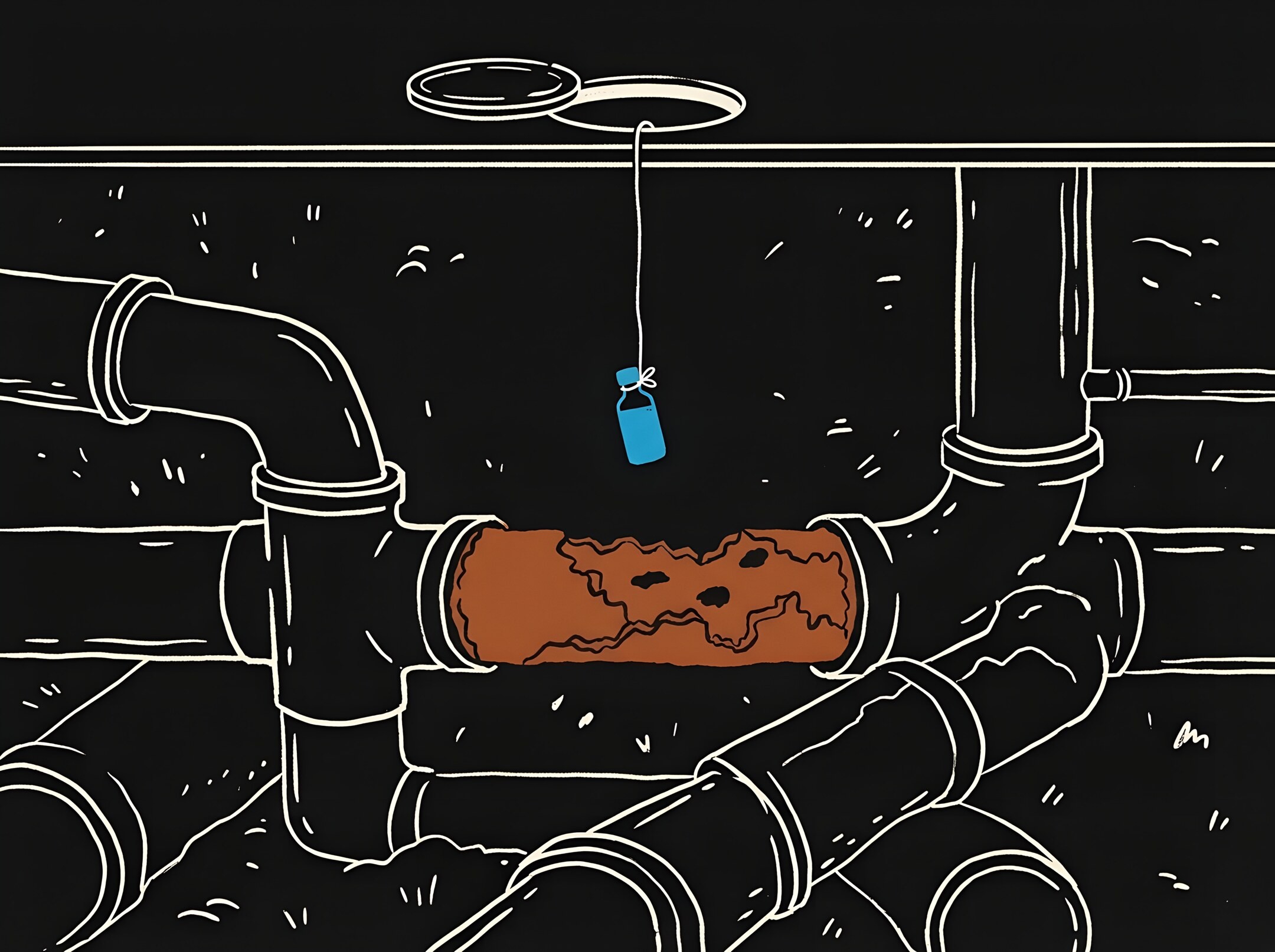
Japanese researchers combined bacterial DNA from wastewater with pipe data and machine learning to flag the sewer sections most prone to corrosion – across the whole network, before the camera goes in.

Twelve years of Philadelphia data show that after combined sewer overflows, dissolved oxygen in smaller streams stays low for days, while the big river barely notices.

An English coalition has costed what it would take to keep every drop of wastewater out of England's largest lake, £3.6–3.7 billion, and its modelling says nothing less ends harmful algal blooms.