Green Hydrogen Gets Greener
Hydrogen is the most abundant element in the universe and has long been seen as one of the most promising clean energy carriers – using it produces only water and heat, not carbon dioxide. The flaw is that about 95% of the hydrogen produced today still comes from fossil sources, mainly natural gas. Researchers at the University of Birmingham, however, have presented a new catalyst that could significantly reduce the temperature and cost requirements of hydrogen production, bringing the technology closer to economical industrial use (University of Birmingham, 2026).
Why is producing hydrogen expensive today?
Hydrogen hardly occurs in pure form on Earth; it is usually bound in water or hydrocarbons. The most widespread production method is steam reforming, which separates hydrogen from methane but also produces large amounts of carbon dioxide. The cleaner alternative is electrolysis, which uses electricity to split water into hydrogen and oxygen, but this process is currently more expensive and covers only 4% of global hydrogen demand.
There is also a third route: thermochemical water splitting, in which a catalyst splits water into hydrogen and oxygen. Its biggest obstacle so far has been the extremely high temperatures required – water splitting typically takes place at 700–1,000 °C, and regenerating the catalyst before a new cycle requires 1,300–1,500 °C. Such temperatures need expensive equipment and high energy input.
The new catalyst: perovskite at low temperature
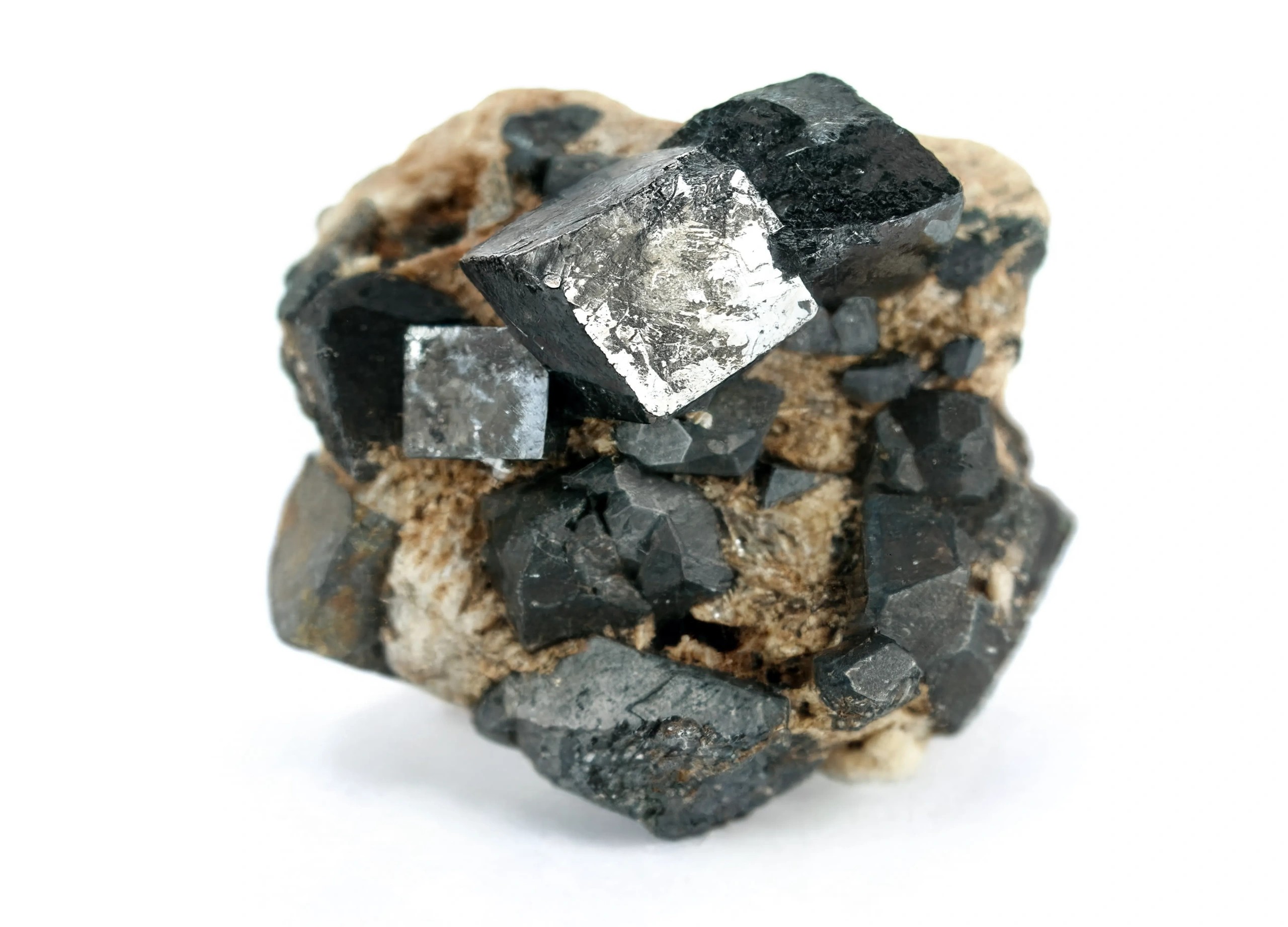
The research group led by Professor Yulong Ding at the University of Birmingham's School of Chemical Engineering tested a perovskite-structured catalyst made of an alloy of barium, niobium, calcium and iron, known in the literature as BNCF.
Perovskites are lattice-structured materials that can capture and release oxygen, which makes them suitable for splitting oxygen-containing compounds – such as water – into their components.
According to results published in the International Journal of Hydrogen Energy, the new catalyst produced significant amounts of hydrogen even at 150–500 °C, and it needed only 700–1,000 °C to regenerate – about 500 °C lower than usual in current processes (Chen et al., 2026). Of the variants tested, BNCF100 performed best: it retained its water-splitting capacity over 10 consecutive production cycles, while X-ray diffraction showed only barely detectable structural changes – pointing to the material's stability and long-term industrial usability.
An economic edge over green and blue hydrogen
The researchers also carried out a preliminary economic analysis, according to which hydrogen produced with the new perovskite catalyst could be cheaper than today's widespread green hydrogen (from water by electrolysis) or blue hydrogen (from methane with carbon capture). The cost advantage is especially significant where renewable energy is cheap – Australia, for example.
“The lower temperatures of the process could allow hydrogen production to be co-located with renewable energy generation facilities, and foundation industries such as steel, cement, glass and chemicals have abundant waste heat which could be used as the heat source for hydrogen production.”
Prospects for industrial use and commercialisation
The research was carried out in collaboration with the University of Science and Technology Beijing (USTB), and the University of Birmingham is already working on commercialising the technology in the UK and Europe. University of Birmingham Enterprise has filed a patent application for the use of BNCF catalysts in low-temperature water splitting and is looking for development partners to take the technology forward.
The method's biggest practical advantage is that, with hydrogen produced on site from waste heat, the serious infrastructure obstacle of transport and storage could disappear – meaning hydrogen could be used economically where high entry costs have so far made investment unattractive.
Summary
Researchers at the University of Birmingham have developed a BNCF perovskite catalyst that produces significant amounts of hydrogen at 150–500 °C and can be regenerated at 700–1,000 °C – about 500 °C lower than usual in current industrial processes. The result matters because high temperature requirements have been one of the biggest cost factors in thermochemical hydrogen production. According to the preliminary economic analysis, the technology could be cheaper than current green and blue hydrogen production, and by using industrial waste heat, hydrogen could be produced on site without transport. The researchers are already working on commercialisation, have filed a patent application and are looking for development partners to develop the technology further.
Researchers at the University of Birmingham have developed a perovskite-based catalyst that can split water into hydrogen at much lower temperatures than current technologies. Known as BNCF, the catalyst – an alloy of barium, niobium, calcium and iron – produced significant amounts of hydrogen at 150–500 °C and can be regenerated at 700–1,000 °C, about 500 °C lower than current industrial processes. The best-performing variant, BNCF100, remained stable over 10 production cycles. According to a preliminary economic analysis, the technology could make hydrogen cheaper than current green or blue hydrogen production, especially in regions with low energy prices. The research would allow hydrogen to be produced on site using waste heat from steelworks, cement plants and other industrial facilities. The university has filed a patent application and is now looking for development partners to commercialise the technology.
Hydrogen production today still relies largely on fossil sources: 95% of global output is made from natural gas by steam reforming, while electrolysis covers only 4%. Researchers at the University of Birmingham have now presented a catalyst that could significantly reduce the temperature and cost requirements of a third production route, thermochemical water splitting.
The group led by Professor Yulong Ding tested a perovskite-structured catalyst made of an alloy of barium, niobium, calcium and iron (BNCF). The results show that the catalyst produced significant amounts of hydrogen even at 150–500 °C, and 700–1,000 °C was enough to regenerate it – compared with 700–1,000 °C for water splitting and 1,300–1,500 °C for regeneration in current processes. The best-performing variant, BNCF100, retained its hydrogen-producing capacity over 10 production cycles without significant structural degradation.
According to a preliminary economic analysis, hydrogen produced with the new process could be cheaper than current green or blue hydrogen, especially in regions with low energy prices such as Australia. The practical significance is that, thanks to the lower heat requirement, hydrogen could be produced on site using industrial waste heat – from steelworks, cement plants or chemical facilities – eliminating today's transport and storage costs. The research was carried out in collaboration with the University of Science and Technology Beijing, and the university has already filed a patent application and is looking for development partners to commercialise the technology.


The IEA expects the first annual fall in renewable additions in 21 years, the biggest six-year expansion on record, and a grid that is now the main thing standing in the way.


A new report projects data centres' water footprint reaching 9.32 trillion litres by 2030, but the number is only meaningful once you know what it counts, and who is making the case.

From 4 November, companies that want to buy biomethane can post their demand on the European Commission's platform and producers can bid from January. Here is what to do now and what the scheme will not give you.

The Dutch Authority for Digital Infrastructure warns that the shared cloud back ends behind home batteries, inverters and heat pumps could threaten grid stability, a risk EU rules only partly address.