China's Water Industry Boom, Up Close
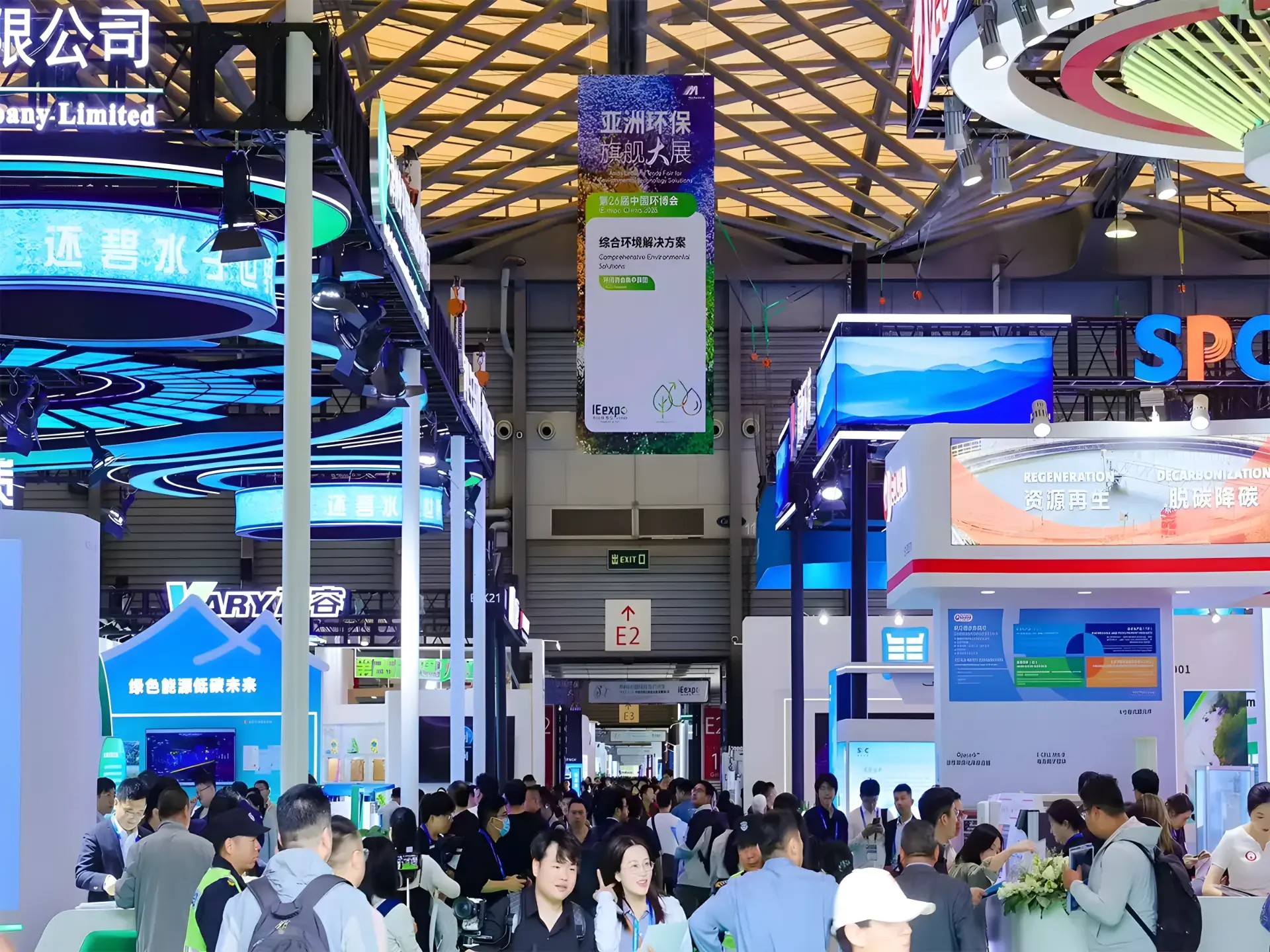
Zsolt Eszes, CEO of Water4All, visited IE expo 2026 in Shanghai – Asia's leading trade fair for environmental technologies covering water, waste, air and soil protection – with his colleagues. As head of a company that plays a major role in the Hungarian water utility sector, he was naturally most interested in equipment for water and wastewater treatment and biogas production – as were we.
Why did you attend the trade fair in Shanghai, and what were your impressions? Let's take it step by step: where do manufacturers and developers stand in these fields?
In recent decades, the decisive trade fairs and conferences where you could get a comprehensive view of the industry's innovations and trends were in Europe. More recently they have been joined by Asian expos – and these exhibitions now give the truly comprehensive picture of what is happening in our sector.
Why is that?
There is no need to talk about development in Asia in general, because it is well known. It is strikingly visible in the world of water, wastewater, energy and waste management too. Over the past few decades, leading manufacturers have grown up in China.
What were the immediate goals of your visit? Gaining knowledge or building business relationships?
Both. It is essential to get to know the Chinese companies that make these specialised products and equipment, to see their range up close, compare it with European manufacturers' products and assess the direction they are developing in. Of course we also held talks with newly met companies about possible partnerships.
Could one say that the focus of development has shifted to the Far East?
No, I would not say that at all. In Europe the level of development of the infrastructure that has been built is beyond doubt high. But we see what is happening in Asia, and there are certainly additional, higher-level or simply different directions that need to be seen. There are many innovations in this sector that are worth and justified following.
So in this field, too, the Chinese have reached the level where they have their own innovations besides copies?
Of course – we came across many such innovations. To our great surprise, some of them answer current problems in our field. They have ingenious solutions for cleaning UV lamps, for example. These details show that they don't just talk, they can actually deliver. Obviously the local conditions, state support, the business environment and the size of the market make this possible for them, so the development of the water industry there is simply incomparable.
China was famous for enormous pollution, and it enjoyed a competitive advantage precisely because it did not deal with it or spend on it. Is it true that this attitude has changed?
I think global economic competition determines everything in this respect, so China obviously wanted to turn its advantages to its own benefit, which is why it turned a blind eye to pollution. Today, however, it is making huge strides to solve its pollution problems – after all, people's health is at stake. It is a political decision, as it is everywhere in the world. Economic policymakers decide on the investments and pollution-reduction measures – whether for water, air or soil – that determine who can finance environmental facilities, to what extent and how, and how sustainable they can make them.
In wastewater treatment, removing microplastics is a hot topic because of changes to the EU framework. Did you come across solutions for this?
We did not see dedicated plastic removal technology, or perhaps we just did not stumble across it among the enormous number of exhibitors. As for micropollutants, what was clear was how extraordinarily membrane technologies have developed. A great many membrane manufacturers were there with different solutions, visibly specialising in the advantages of particular approaches.
The Achilles heel of membrane technology has been that it is too expensive. But when volumes grow, prices usually fall. Is that visible now that China has emerged as a market?
I think the growth in volume is shown by how many manufacturers were present. I am sure the number of facilities using membrane technology has jumped, and specialisation within membranes is increasing too. Based on what we heard about unit numbers, it is fair to say that the specific price of membrane technology is falling. Of course many other factors shape investment costs, but yes, the average price of the membranes themselves has fallen. At the same time, there are new membrane solutions that come at sky-high cost, even if they have undoubted advantages in operation or service life.
Which product or product group is the hot topic in Asia?
China also showed a huge range of the chemicals and additives needed for these technologies. But essentially we are talking about key process equipment – from screens through flotation units to aeration systems, blowers, secondary clarifier solutions and complete process solutions, all present on an equal footing at the exhibition. Membrane technology deserves a special mention because practically a whole hall was devoted to it, with at least 30 exhibitors.
Were European companies represented?
Yes, they were. In gas engines, Jenbacher was there together with a local Chinese company. Jenbacher is an Austrian gas engine manufacturer and MWM a German one – the latter has in fact been acquired by Caterpillar – but they still exhibited on a separate MWM stand and showed gas engines. There were also country pavilions: Denmark, Norway, Germany, the Netherlands, the United Kingdom and perhaps two more countries. At least six or seven countries whose technology companies and manufacturers set the pace in the water sector and are leaders on the European market were represented. So there was a presence.
Do you often go to China?
This was my first time.
What were your personal first impressions?
I was astonished by the spectacular development. My colleagues who had been there several times always spoke with great enthusiasm and emotion about the great process under way there. Well, now I have experienced it myself. The level of organisation in the way cities are run was a real culture shock for me. The basic kindness and positive attitude of the people also struck me. China fascinated me – there is no better word for it.
Interviewee:
Zsolt Eszes – Water4All
In our interview, Zsolt Eszes, CEO of Water4All, told us that he visited the IE Expo 2026 trade fair in Shanghai with his colleagues, where they were mainly interested in new developments and trends in water and wastewater treatment and biogas technology. He stressed that the explosive development of Asia, and especially China, is now decisive for the sector, with China's own innovations appearing alongside European standards. He highlighted the advance of membrane technologies, ingenious solutions for cleaning UV lamps, and a wide range of chemicals and complete equipment. In his view, Europe is still ahead in infrastructure, but Asian innovations are worth following. On his first trip to China, he was impressed by the country's organisation and the kindness of its people.
In our interview, Zsolt Eszes, CEO of Water4All, told us that he and his colleagues attended IE Expo 2026 in Shanghai, Asia's leading trade fair for water, waste, air and soil protection technologies. He and his team mainly studied innovative equipment for water and wastewater treatment and biogas production.
He stressed that while Europe's major trade fairs used to dominate the industry, Asian – mainly Chinese – expos now offer the most comprehensive picture of global developments. China's explosive rise is evident in the water, wastewater, energy and waste sectors too: significant domestic manufacturers and innovations have appeared alongside European standards.
According to Zsolt Eszes, the focus of development has not shifted entirely to the Far East, since Europe's infrastructure is still more advanced, but many Asian solutions are worth following. He highlighted ingenious Chinese technologies for cleaning UV lamps and the huge progress in membrane technologies. With the latter, prices are falling thanks to high volumes, although premium solutions remain expensive.
The exhibition was dominated by complete process equipment and a wide range of chemicals and additives, and an entire hall was devoted to membranes. European companies (including Jenbacher and MWM) were also present. On his first trip to China, Zsolt Eszes found the country's organisation, the way its cities work and the kindness of its people impressive. The visit was a success, and new business relationships have begun to develop.

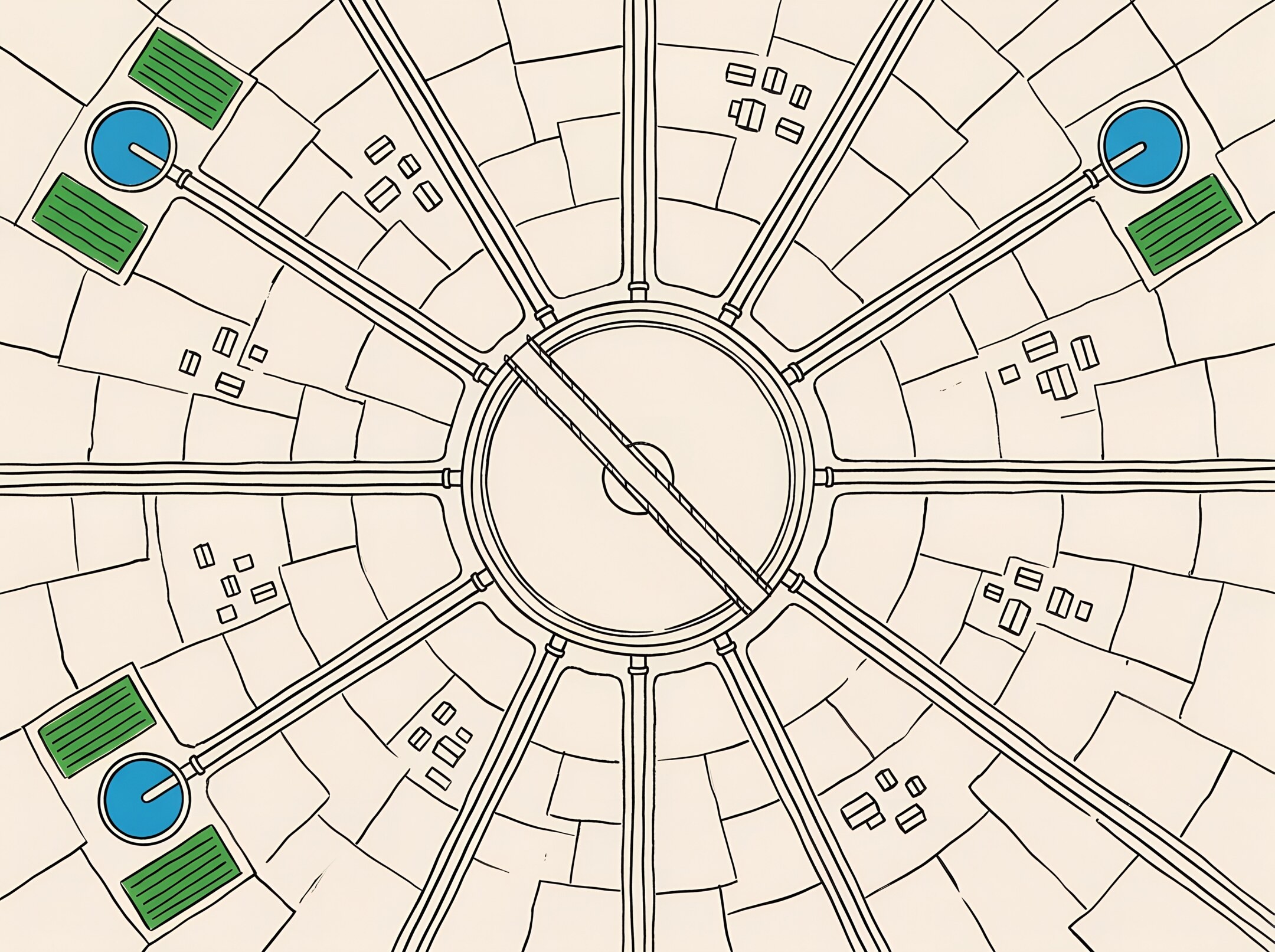

A study of 10,826 Chinese treatment plants finds that big centralised systems are reaching two limits at once, on easing water scarcity and on paying their way, and that a hybrid model could do the job for up to 37% less.
FAO has published draft principles on who may use water and on what terms, a quiet piece of international work that speaks directly to this year's fights over drought, wells and free irrigation.

A new report projects data centres' water footprint reaching 9.32 trillion litres by 2030, but the number is only meaningful once you know what it counts, and who is making the case.
An English coalition has costed what it would take to keep every drop of wastewater out of England's largest lake, £3.6–3.7 billion, and its modelling says nothing less ends harmful algal blooms.