Microplastics in Water Are Not Chemically Inert
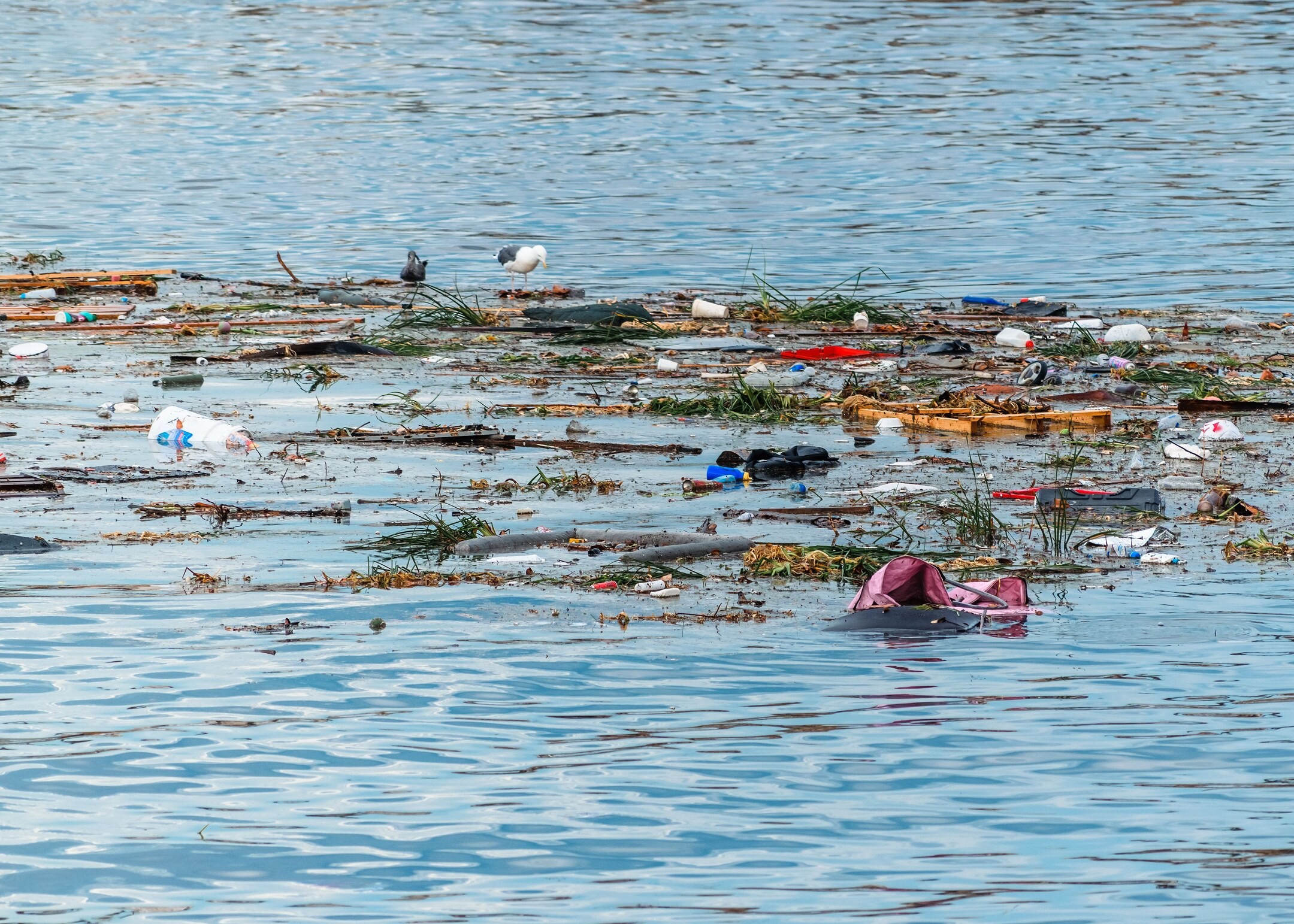
The usual explanation for why microplastics might be harmful has two parts: the pollutants that cling to them, and their size, which lets the smallest particles reach tissues. A study published on 14 October 2026 adds a third, more basic one. According to Qian et al. (2026), common microplastics are not chemically inert in water: at their surface they spontaneously generate hydroxyl radicals, one of the most reactive oxygen species there is.
A dye that faded in water only
The research team, from Columbia University, the University of California, Berkeley and Rutgers University, began with a simple observation. Polystyrene, a plastic with no reactive chemical groups and a reputation for durability, should not react with methyl orange, a dye easily broken down by reactive oxygen species. Yet when polystyrene microplastics were stirred in water containing the dye, nearly 90% of it degraded within 10 days. In methanol, ethanol and other solvents, the same plastic left the dye largely intact.
Spectroscopy and fluorescence imaging then showed what was happening. Hydroxyl radicals were forming continuously at the particle surface, at an estimated lower-bound rate of the order of 0.1–1 nM per minute. Coating the particles with a surfactant almost switched the reaction off, confirming that it takes place at the interface between plastic and water.
The plastic is not the only actor: water at the particle surface is part of the reaction.
The more water-repellent, the more reactive
The effect was not limited to polystyrene. All six commodity plastics the team tested – polypropylene (PP), polyethylene (PE), PVC, polystyrene (PS), PET and PMMA – generated radicals in water. The strength of the effect tracked how water-repellent each plastic is, measured by its water contact angle (Pearson correlation 0.93). Polyolefins such as PE and PP were the most active, while PET and PMMA, which carry more water-attracting chemical groups, were the least.
Ab initio calculations and molecular simulations explained the pattern. At hydrophobic plastic surfaces, some hydroxide ions in the water are only partly surrounded by water molecules, and the interface carries a negative charge. Together, these make it easier for hydroxide ions to give up an electron and become hydroxyl radicals.
What it does to proteins and cells
The researchers then tested whether this surface chemistry affects biological material. Charged biomolecules, including proteins and DNA fragments, gathered on the particle surfaces, more strongly on hydrophobic polypropylene than on PMMA. Lysozyme, a common test protein, aggregated at the polystyrene surface. Adding caffeine, which scavenges radicals, suppressed the aggregation, which points to the radicals as the cause.
In a test with mouse red blood cells, contact with polystyrene particles left some cells fragmented, and the degree of red blood cell damage across the six plastics followed their surface activity.
“These are textbook examples of the kinds of molecules that can damage animal and human tissue.”
A mechanism, not a verdict
The limits matter. The experiments used commercial plastic powders in laboratory solutions, computer simulations and isolated mouse blood cells. They show a plausible mechanism, not proven damage to human health, and the study does not measure how much of this chemistry happens inside the body. The authors note that the effect persists beyond pristine particles and simple solutions, but that its size depends on surface shape, chemistry and the surrounding environment.
The question matters for the water sector because exposure is not hypothetical. A 2024 study by the same Columbia group counted an average of around 240,000 plastic particles per litre of bottled water, about 90% of them nanoplastics (Qian et al., 2024). In the EU, the Commission has already set a common methodology for measuring microplastics in drinking water, in Delegated Decision (EU) 2024/1441. Measurement shows how many particles are present; this study raises the question of what those particles do.
The study also points to a design question. If the reactivity comes from how water behaves at a hydrophobic surface, then surface–water interactions could become a design variable for safer plastics. Whether that, or tighter limits on exposure, comes first will depend on what the next round of research, including the team's planned animal studies, shows about effects in living organisms.
Plastics are widely assumed to be chemically inert, and the harm caused by microplastics has mostly been explained by the pollutants they carry and by their size. A study by Qian et al., published on 14 October 2026 by researchers at Columbia University, UC Berkeley and Rutgers, proposes a different mechanism. In laboratory experiments, all six common plastics tested – polypropylene, polyethylene, PVC, polystyrene, PET and PMMA – spontaneously generated hydroxyl radicals at their surface in water, and the more water-repellent the plastic, the stronger the effect. Calculations showed why: hydroxide ions oxidise more easily at hydrophobic plastic–water interfaces. In further tests, the particles attracted biomolecules, caused protein aggregation and damaged mouse red blood cells. The findings describe a mechanism, not proven harm to people, but they challenge the idea that plastic particles are passive.
Plastics owe much of their success to being regarded as chemically inert, and the potential harm of microplastics has mostly been explained by the pollutants that stick to them and by their size. A study by Qian et al., published on 14 October 2026 by researchers at Columbia University, the University of California, Berkeley and Rutgers University, suggests a third explanation: the particles are chemically active in water.
The team found that polystyrene microplastics stirred in water containing a dye broke down nearly 90% of it within 10 days, while the same mixture in other solvents showed no comparable effect. Spectroscopy and fluorescence imaging confirmed that hydroxyl radicals, a highly reactive oxygen species, form at the particle surface. All six commodity plastics tested – polypropylene, polyethylene, PVC, polystyrene, PET and PMMA – produced them, and the more water-repellent the plastic, the stronger the effect, with polyolefins most active. Ab initio calculations explained why: at hydrophobic plastic–water interfaces, hydroxide ions lose electrons more easily.
The researchers then showed that charged biomolecules accumulate on the particles, that a protein aggregated at the polystyrene surface (an effect blocked by a radical scavenger), and that microplastics damaged mouse red blood cells in proportion to their surface activity.
The results come from laboratory experiments and simulations, not from human exposure studies. They describe a possible mechanism, not proven harm. But they matter for drinking water, where a 2024 study by the same group counted around 240,000 plastic particles per litre of bottled water.



A study of 10,826 Chinese treatment plants finds that big centralised systems are reaching two limits at once, on easing water scarcity and on paying their way, and that a hybrid model could do the job for up to 37% less.
FAO has published draft principles on who may use water and on what terms, a quiet piece of international work that speaks directly to this year's fights over drought, wells and free irrigation.

A new report projects data centres' water footprint reaching 9.32 trillion litres by 2030, but the number is only meaningful once you know what it counts, and who is making the case.

An English coalition has costed what it would take to keep every drop of wastewater out of England's largest lake, £3.6–3.7 billion, and its modelling says nothing less ends harmful algal blooms.