Filtering Microplastics With Ferrofluid?
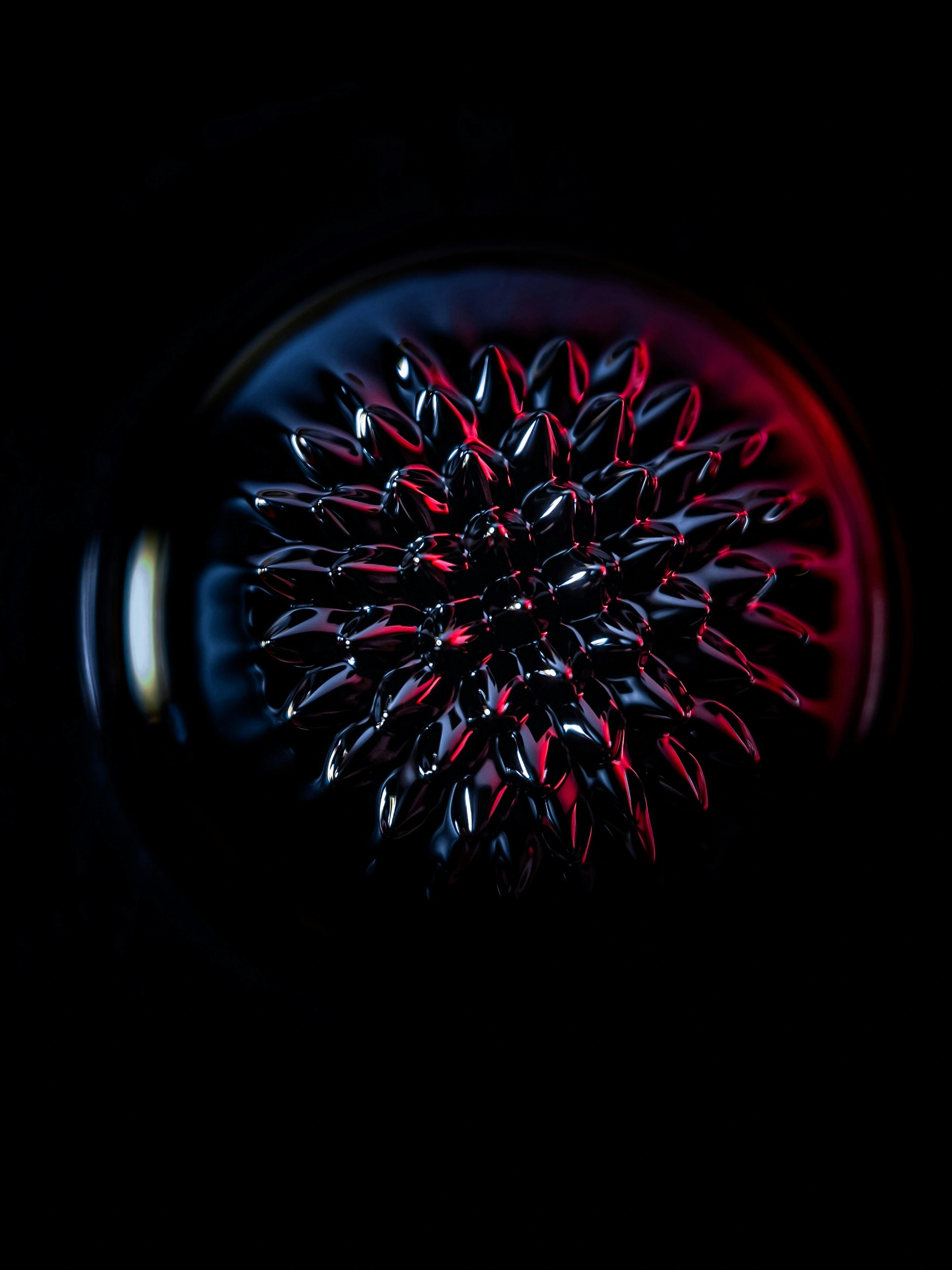
While armies of researchers and development engineers work to improve water treatment, could a high school student in a garage lab in Virginia find a much cheaper way of filtering microplastics and PFAS out of drinking water? Unlikely – but possible.
Virginia high school student Mia Heller has used ferrofluid – a magnetic liquid – to develop a home water filter that removes 95.52% of microplastics, while 87% of the magnetic oil can be recovered and reused.
Ferrofluids have been mentioned as an experimental alternative to expensive membrane technologies for removing microplastics from drinking water. Mia Heller's work supports exactly this assumption – at household scale, with a prototype she built herself.
Annoyance as a motivator
Warrenton, Virginia, 2023. Heller reads in the local paper that PFAS and microplastic contamination of tap water in her area has reached worrying levels, but the authorities have no plans to provide public funding for filtration. On hearing the news, her parents install an expensive membrane filter – whose membranes then have to be replaced regularly, forcing yet another significant expense on the user.
“It inspired me to design a filter without the use of membranes, to decrease the costs and maintenance needs associated with water filtration.”
The solution: ferrofluid
The student's starting point was that a magnetic liquid, ferrofluid, binds selectively to microplastic particles while separating from the water flowing through. A magnet then pulls the contaminated oil out of the system, after which the oil can be recovered and fed back into the filtration loop.
The prototype consists of three units, is about the size of a bag of flour and filters about 1 litre of water at a time.
Actual experimentation began in summer 2025 – in the family's garage and kitchen. The first version worked but was not self-sustaining: the ferrofluid had to be returned to the system by hand. That did not solve the maintenance problem; it merely moved it.
Heller kept experimenting; the main obstacle for her was technical: ferrofluid is denser than water and tends to clog if the units are not arranged in the right order. The extraction magnet and the fluid recovery cycle had to be matched to each other – over five iterations.
The final result: the fifth prototype achieved 95.52% microplastic removal efficiency and 87.15% ferrofluid recovery. She measured this with a turbidity meter of her own design, which calculates the amount of particles suspended in the liquid by weight.
The figures are impressive, given that conventional drinking water treatment systems remove 70–90% of microplastics – although more expensive membrane systems can exceed 99%. Heller's device sits between the two – but without membranes, and with a closed fluid loop.
She reached the finals of the 2025 Regeneron International Science and Engineering Fair (ISEF) with the invention, where the Patent and Trademark Office Society awarded her a $500 special prize for the innovative, low-cost approach.
A solution, or just moving the problem?
Matthew J. Campen, a toxicologist at the University of New Mexico who himself studies the effects of microplastics on human health, speaks highly of the project but also raises questions:
"She is doing something that has to be done," he said. But it also matters where the filtered microplastics concentrated in the ferrofluid end up: the system must not leave behind another pollutant residue that then has to be dealt with as well.
So one question is how the pollutants are extracted from the magnetic oil. Without a good answer, the process could create a bigger problem than it solves.
The other open question is scalability. Heller herself admits: "Because ferrofluid is currently expensive to produce at a large scale, I see this as a system for individual home use" – an under-sink filter rather than a plant-scale application. Campen asks precisely whether a household unit is the optimal application, or whether it would be worth integrating it straight into a water treatment plant, where volumes are on a different scale altogether.
No answer yet
Mia Heller's prototype is still far from the market – and she knows it. But the direction she is taking is exactly what microplastic filtration needs: a membrane-free, self-sustaining, low-maintenance system. The efficiency figure – 95.52% – is remarkable under home conditions after five iterations. Whether ferrofluid will really become part of the water treatment arsenal, or remain a high school competition entry, depends on whether convincing answers can be given to the questions raised by the toxicologist – pollutant residue, scalability and cost. Until then, the same water flows from the tap as yesterday.
“We have to know that the way she extracts these microplastics captures them in a way that we can then discard them or destroy them in a way that gets rid of them completely.”
Mia Heller, an 18-year-old high school student from Virginia, has developed a household water filter prototype that removes microplastics from drinking water using ferrofluid, without membranes. Working as a closed loop, the system filters with a striking 95.52% efficiency, while 87.15% of the ferrofluid used can be recovered and fed back into the loop. The idea grew out of direct personal experience – contamination of her own household's water – and led to a working prototype. The invention won a special award at the 2025 Regeneron ISEF finals. Toxicologists point out, however, that the fate of the filtered contamination and of the ferrofluid residue is still unclear, scalability is unresolved, and ferrofluid is currently very expensive to produce. The next step is independent laboratory verification.
A Virginia teenager, Mia Heller, has come up with a promising household solution for filtering microplastics. Starting from a garage lab, the 18-year-old student developed a water filter prototype that uses ferrofluid to bind particles suspended in water and then recovers and reuses the fluid in a closed magnetic cycle – without changing membranes. Using a turbidity meter of her own design, she showed that the device filters microplastics with 95.52% efficiency and recovers 87.15% of the ferrofluid.
The project began when Heller's parents installed an expensive membrane filter at home after learning that local tap water was contaminated with PFAS and microplastics – the regular membrane replacements gave her the idea for a maintenance-free alternative. After five prototype iterations, the system filters 1 litre of water per batch and is about the size of a bag of flour. It reached the finals of the 2025 Regeneron ISEF competition and won a $500 special award for its innovative approach.
Toxicologists, however, do not brush aside the open questions. According to Matthew J. Campen (University of New Mexico), the system must show that the ferrofluid residue containing the filtered contamination does not leave behind a new problem. Scalability is also in question: Heller herself is thinking of household use, as ferrofluid is currently expensive to produce in large quantities. The next step is independent laboratory verification – until then, the technology is promising but unproven.



A study of 10,826 Chinese treatment plants finds that big centralised systems are reaching two limits at once, on easing water scarcity and on paying their way, and that a hybrid model could do the job for up to 37% less.
FAO has published draft principles on who may use water and on what terms, a quiet piece of international work that speaks directly to this year's fights over drought, wells and free irrigation.

A new report projects data centres' water footprint reaching 9.32 trillion litres by 2030, but the number is only meaningful once you know what it counts, and who is making the case.

An English coalition has costed what it would take to keep every drop of wastewater out of England's largest lake, £3.6–3.7 billion, and its modelling says nothing less ends harmful algal blooms.