A Natural Coagulant Against Microplastics – Moringa Seeds May Outperform Chemicals
Brazilian and British researchers have shown that a saline extract made from the seeds of the tropical plant Moringa oleifera removes 98.5% of microplastic particles from drinking water – matching, and in alkaline conditions exceeding, the performance of aluminium sulphate, traditionally used in water treatment.
Removing microplastics from drinking water, and from treated wastewater before discharge, has become a public expectation of water utilities – even if few utilities can meet it yet. Since the EU has also set the introduction of quaternary treatment at wastewater treatment plants above 150,000 PE (and above 10,000 PE in at-risk areas) as a near-term goal to remove micropollutants and pharmaceutical residues, there is little doubt that this will be the sector's next big campaign. Alongside existing and available chemical technologies, an alternative contender has appeared – and that is the subject of this article.
Researchers at the Institute of Science and Technology of São Paulo State University (ICT-UNESP), working with colleagues at the University of Birmingham, examined whether a natural extract from moringa seeds can effectively bind and remove PVC microplastics from drinking water. The study was published in January 2026 in ACS Omega, a journal of the American Chemical Society (Batista et al., 2026).
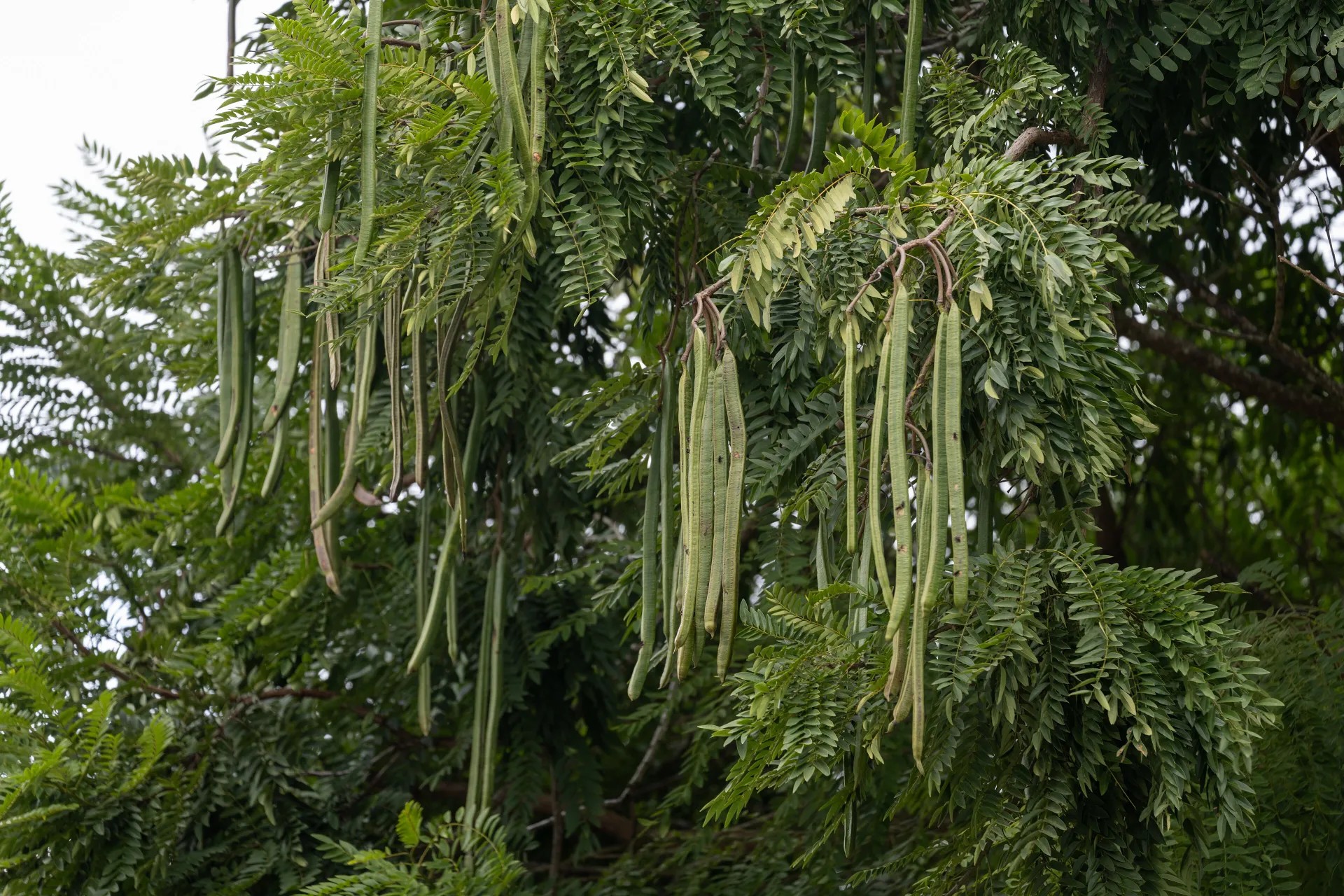
Moringa oleifera, the drumstick tree, has been known for centuries in Asia and Africa. It is extremely nutritious and is widely used as food and as a medicinal plant.
Its seeds were already used to purify water by ancient civilisations – the Egyptians, Greeks and Romans all knew of this property, which modern science has now confirmed.
Coagulation, the natural way
The natural proteins in moringa seeds contain positively charged molecules that neutralise the negatively charged microplastic particles floating in the water. The particles clump together into larger flocs, which can easily be removed by sand filtration or settling.
It is the same coagulation–flocculation principle on which conventional water treatment is based – but without chemicals.
In the experiments, the moringa saline extract achieved 98.5% removal efficiency and aluminium sulphate 98.7% – so the difference is negligible in practice. "We showed that the saline extract from the seeds performs similarly to aluminum sulfate," says lead author Gabrielle Batista; in more alkaline water, the plant extract "performed even better than the chemical product." Its drawback is that it somewhat increases the amount of dissolved organic matter in the treated water – no problem in small communities and household-scale systems, but large urban water works may need an additional treatment step.
Particularly promising for developing regions and small communities
Moringa is a fast-growing, drought-tolerant tropical tree, and its seeds are a renewable, biodegradable raw material. According to Professor Adriano Gonçalves dos Reis, who led the research, "on a small scale, such as on rural properties and in small communities, the method could be used cost-effectively and efficiently" – an immediately usable, low-cost alternative in African and Asian communities where chemical water treatment infrastructure is missing or too expensive. He also points to "increasing regulatory scrutiny and health concerns regarding the use of aluminum- and iron-based coagulants". The method does not, however, replace the full technological chain of large-scale water treatment: the fate of the filtered microplastics and the method's effectiveness against nanoscale particles still need further study.
The renaissance of natural coagulants
Moringa is not the only natural coagulant being rediscovered by water treatment research. The mucilaginous polysaccharides of okra (Abelmoschus esculentus) and fenugreek (Trigonella foenum-graecum) also effectively bind suspended pollutants. PVC, however, is a particularly critical case: it appears both as contamination inside drinking water pipes and as a wear product of the pipe network, and its mutagenic and carcinogenic effects are scientifically established. That is precisely why the UNESP researchers chose PVC as their test material.
A saline extract made from the seeds of Moringa oleifera (the drumstick tree) effectively removes PVC microplastics from drinking water, according to joint Brazilian–British research published in ACS Omega in 2026. In laboratory conditions the plant extract achieved 98.5% removal efficiency, compared with 98.7% for aluminium sulphate; in alkaline conditions moringa even outperformed the chemical. The coagulation principle is the same: seed proteins neutralise the negative charge typical of microplastics and flocculate the particles, which can then be held back by filtration. The method is particularly promising for small communities and developing regions, where infrastructure for conventional chemical water treatment is lacking or unaffordable.
Microplastic pollution has become one of the most pressing challenges for drinking water safety: the particles can already be detected in treated tap water, and their long-term health effects – including suspected endocrine-disrupting, inflammatory and carcinogenic effects – are the subject of intensive research.
In 2026, researchers at São Paulo State University (UNESP) and the University of Birmingham published a study in ACS Omega comparing the microplastic removal capacity of a saline extract of Moringa oleifera seeds with aluminium sulphate, the chemical commonly used in water treatment plants. In the experiment, PVC microplastics were added to low-turbidity water, which was then treated by in-line filtration (coagulation and sand filtration). The moringa extract removed 98.5% of the particles and aluminium sulphate 98.7% – a negligible difference in practice. In more alkaline water the plant extract outperformed the chemical.
The mechanism relies on positively charged molecules in the seed proteins: they neutralise the negative surface charge typical of microplastics, which triggers flocculation. The larger particles formed can be retained by filtration or settling. Compared with aluminium sulphate, a drawback is that it somewhat increases dissolved organic matter in the treated water – manageable in smaller systems, but requiring an additional step in large urban ones.
Moringa is a fast-growing, drought-tolerant tropical tree; its seeds are a renewable, biodegradable raw material. The method is a particularly attractive alternative for small communities and developing regions where aluminium-based chemicals are hard to obtain. Open questions remain about its suitability for removing nanoscale particles and about handling the pollutants filtered out. Answering them is the task of the next research phase.



A study of 10,826 Chinese treatment plants finds that big centralised systems are reaching two limits at once, on easing water scarcity and on paying their way, and that a hybrid model could do the job for up to 37% less.
FAO has published draft principles on who may use water and on what terms, a quiet piece of international work that speaks directly to this year's fights over drought, wells and free irrigation.

A new report projects data centres' water footprint reaching 9.32 trillion litres by 2030, but the number is only meaningful once you know what it counts, and who is making the case.

An English coalition has costed what it would take to keep every drop of wastewater out of England's largest lake, £3.6–3.7 billion, and its modelling says nothing less ends harmful algal blooms.