What Festivals Leave Behind in the Water

Every summer, Europe's waterfronts turn into festival venues. Britain's Glastonbury takes place along the Whitelake river, Romania's UNTOLD and Electric Castle near rivers and lakes, Portugal's Boom Festival on the shore of a lagoon, and Hungary's Balaton Sound and EFOTT on the shores of Lake Balaton and Lake Velence, welcoming tens and sometimes hundreds of thousands of visitors. Proximity to water is no accident: it cools people down, creates atmosphere and is logistically convenient – yet lakes and rivers are among the most sensitive ecological systems, where the effects of sudden, massive human presence remain measurable in the long term. In recent years several studies have tried to map exactly what happens to the water, and the species living in it, after a large event.
Hidden pollution: what a festival leaves in the water
The most detailed study was carried out by researchers at Bangor University on the Whitelake river, which flows past the Glastonbury Festival. They took samples at four points before, during and after the 2019 event, and the results showed a clear pattern: MDMA concentrations rose to four times the baseline in the week after the festival, suggesting that substances deposited at the site keep leaching out of the soil and runoff for an extended period. Cocaine and MDMA were detectable at all four sampling points, and significantly higher concentrations were measured in the runoff stretch during the festival than at the control points.
High drug concentrations are not an abstract risk: they can cause muscle wasting, hyperactivity and damage to the gills and hormonal system in fish living in the river – especially in the already threatened eel population.
A Hungarian research team found a similar phenomenon, though with far less media attention. Researchers from the Balaton Limnological Research Institute and the University of Pécs examined the water of Lake Balaton between 2017 and 2019 at points near the Balaton Sound site and at more distant control points, before and after the festival. They found that a significant share of the illicit drugs detected retained their pharmacological activity in the water (Maasz et al., 2021) – so the phenomenon is not peculiar to Britain; it appears wherever large crowds meet open water.
Not just chemistry
Chemical pollution is the easiest to measure, but far from the only impact. Waterside festivals burden the local ecosystem through several channels at once. Noise can disturb the nesting of waterbirds and the behaviour of fish during and after the event. Mass foot and vehicle traffic tramples riverbank vegetation, which would otherwise act as a natural filter cleaning runoff. Waste – even with organised collection – often ends up in the water as microplastics and other pollutants. In addition, a camp of tens of thousands of people uses as much water each day as a small town, which can cause local water shortages in dry summer months.
This multi-channel burden explains why it is not enough to narrow the question to a single metric such as drug contamination: the state of a waterfront is determined by chemical, biological and physical effects together, which often occur at the same time and reinforce each other.
When a festival builds its own treatment plant – good international examples
Not every waterside festival ignores these risks. Portugal's Boom Festival, on the shore of the Idanha-a-Nova lagoon, has built its own biological water treatment system: the first plant has operated since 2010 and cleans nearly 7 million litres of water a year, which is later used for irrigation. The system is complemented by a 40-kilometre underground pipe network designed to keep the load from the public water network from reaching the lagoon directly.
Romania's UNTOLD and Electric Castle festivals approach the problem from another angle: with digital water management solutions – sensors and automated control – they aim to reduce water use and the burden on site, focusing mainly on resource use rather than pollution (Giurgea et al., 2023).
Together, the Portuguese treatment model and the Romanian smart water system show that the problem can be managed if organisers plan for it deliberately.
The problem of missing data
The biggest difficulty, however, is not technology but the lack of data. For most waterside festivals – worldwide – there is simply no regular, scientific water quality monitoring. The Glastonbury and Balaton Sound cases are exceptions: university research teams carried out the measurements on their own initiative, not on behalf of the organisers.
The gap is clear at many smaller lakes that host large events every year. A small lake with limited water exchange can potentially react more sensitively to a similar load than a large one. Yet for most such venues there is no public, scientific study of the events' impact on water quality.
Some festivals have started publishing voluntary ESG reports and running campaigns with nature conservation organisations to protect natural waters – important steps, but no substitute for actually measuring the water.
The question of indifference
The problem with waterside festivals is not that they exist – it is that at most venues nobody measures how big a footprint they leave. Where studies were carried out, the picture is clear: in both the Whitelake river and Lake Balaton, persistent, pharmacologically active contamination appeared after the events. Where organisers planned deliberately – as in Portugal or Romania – the impact can be mitigated, and a festival can even become a tool for improving water quality. So the question is not whether festivals can be held near water, but whether organisers and authorities are willing to pay the same attention to the water as to the stage technology – before we are left relying on guesswork again after next summer.
Every summer, millions of people attend waterside festivals across Europe – from Glastonbury in the UK to Romania's UNTOLD, Portugal's Boom Festival and Hungary's Balaton Sound. The choice of location is no accident: being close to water cools people down and creates atmosphere, yet lakes and rivers are particularly sensitive to the side effects of such events. According to research by Bangor University, MDMA concentrations in the Whitelake river near Glastonbury quadrupled in the week after the festival, which could threaten the critically endangered European eel. A Hungarian research team found similar, though less severe, contamination around Balaton Sound. The article shows the channels through which events burden waters, the working solutions some festivals have developed, and why at most sites there is no scientific study of the real impact.
Waterside festivals – from Glastonbury to Balaton Sound – attract millions of visitors every year, while lakes and rivers are among the most sensitive ecological systems. Researchers at Bangor University examined the water of the Whitelake river before, during and after Glastonbury 2019: MDMA concentrations rose fourfold in the week after the festival, and cocaine and MDMA were detectable at all four sampling points. High concentrations can cause muscle wasting, hyperactivity and gill damage in the critically endangered European eel living in the river. Joint research by the Balaton Limnological Research Institute and the University of Pécs found a similar pattern around Balaton Sound in Hungary between 2017 and 2019: a significant share of the illicit drugs detected retained their pharmacological activity in the water.
Contamination, however, is only one part of the problem – noise, trampling, waste and increased water consumption also burden wildlife. There are working solutions too: Portugal's Boom Festival has built its own biological water treatment system that cleans 7 million litres of water a year for reuse, while Romania's UNTOLD and Electric Castle use digital water management tools to reduce the burden. Yet the biggest problem is the lack of data: for most waterside festivals there is simply no scientific water quality study – only scattered exceptions such as the Balaton case.



A study of 10,826 Chinese treatment plants finds that big centralised systems are reaching two limits at once, on easing water scarcity and on paying their way, and that a hybrid model could do the job for up to 37% less.
FAO has published draft principles on who may use water and on what terms, a quiet piece of international work that speaks directly to this year's fights over drought, wells and free irrigation.

A new report projects data centres' water footprint reaching 9.32 trillion litres by 2030, but the number is only meaningful once you know what it counts, and who is making the case.
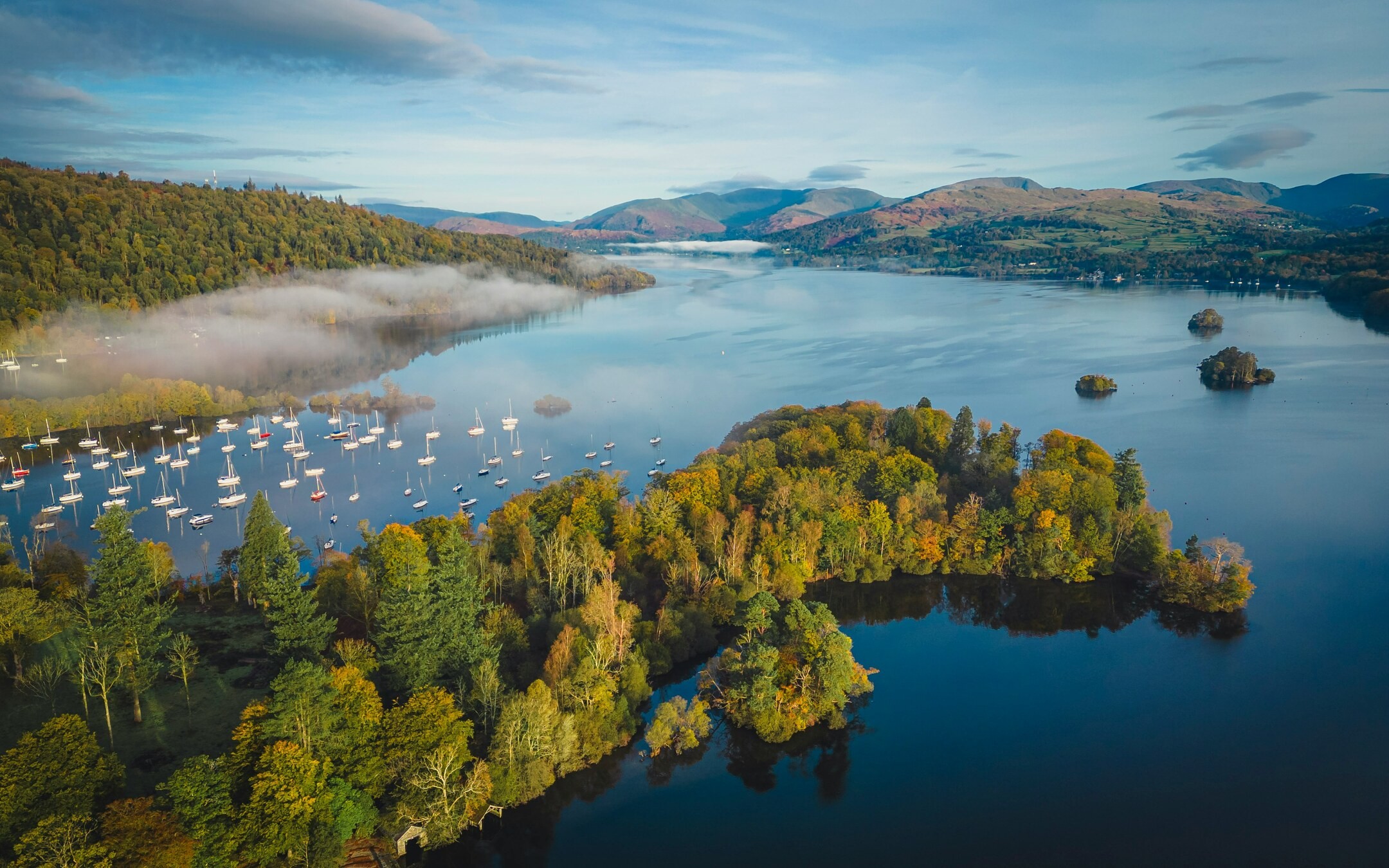
An English coalition has costed what it would take to keep every drop of wastewater out of England's largest lake, £3.6–3.7 billion, and its modelling says nothing less ends harmful algal blooms.