Explaining the Spring Drought
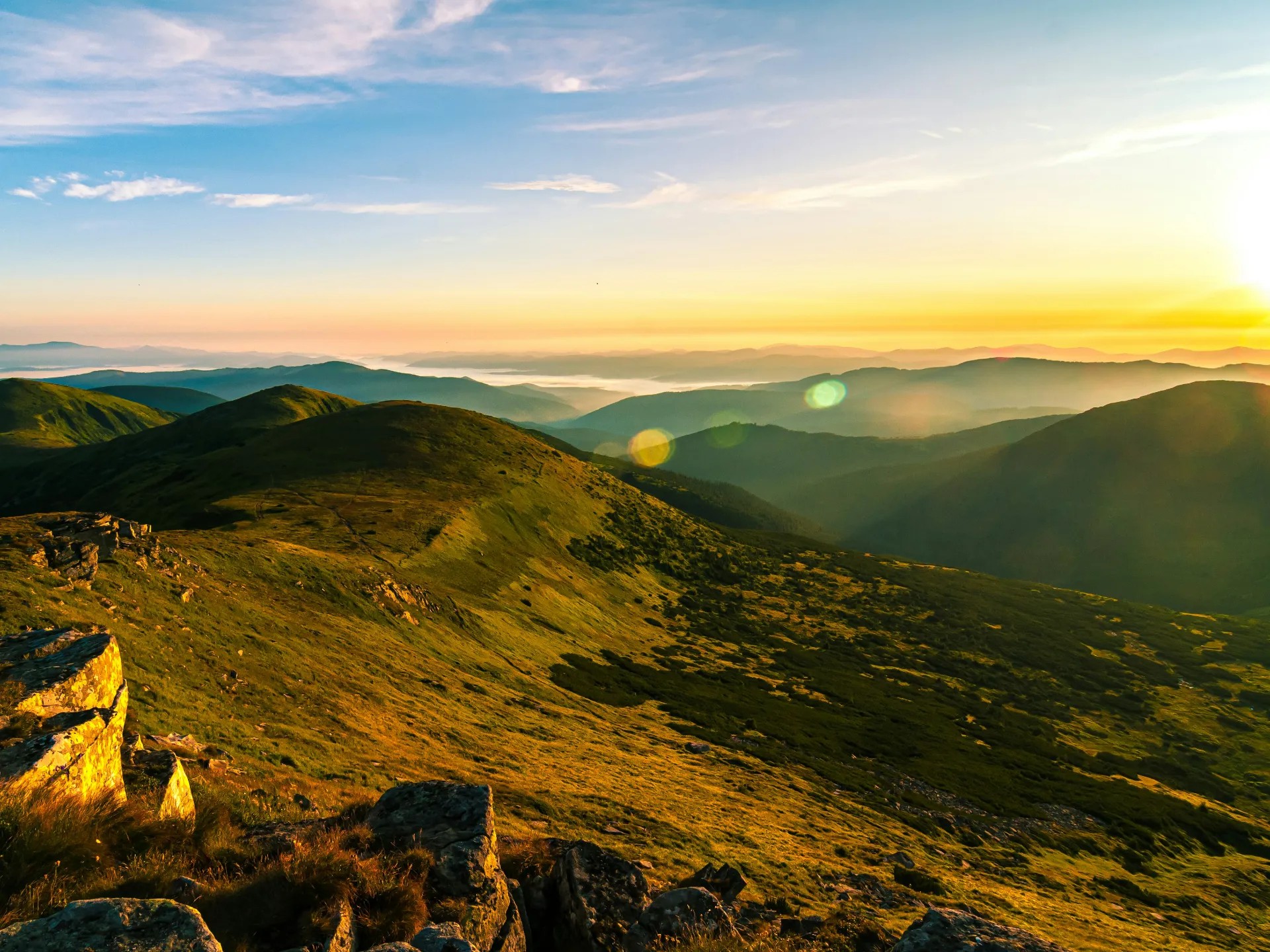
In early April, the ferry crossing on the Tisza at Szolnok, in Hungary, is almost no longer needed. The river is so shallow that sandbanks break the surface and the roots of the willows along the bank hang in the air. This is not the muddy calm after a flood – it is the kind of drought the landscape seems to be slowly getting used to. According to the Hungarian Meteorological Service, all three winter months ended well below average: December brought half the usual rainfall, January two-thirds and February again only half (HungaroMet, n.d.). According to an analysis by the Climate Policy Institute, groundwater levels in the Carpathian Basin are already 85–90 cm below average (Klímapolitikai Intézet, 2025). In parts of the Great Hungarian Plain, the top metre of soil lacks 80–85 mm of moisture. In three of the four years between 2021 and 2024, drought hit at least 70% of Hungary's territory. In the previous twenty years, that happened only seven times.
Something has changed, and we have a good idea what. The question is: to what extent are we humans responsible?
The anticyclone that will not move
The direct cause of the lack of spring rain is no mystery to meteorologists. Normally, cyclones arriving from the Atlantic carry moisture into the heart of Central Europe; but when a persistent high-pressure system settles over the North Sea, it steers these cyclones northwards. Scandinavia gets plenty of rain, while the Carpathian Basin stays dry. The phenomenon is called atmospheric blocking, and it is not new in itself: it has long been a common concept in meteorology.
What is new is how long it lasts, and how often it recurs.
A study published in npj Climate and Atmospheric Science, a Nature journal (Ionita et al., 2020), showed that between 2007 and 2020 almost every April brought such blocking high pressure to Central Europe. The result: average spring rainfall fell by around 50% across much of the region. Not a run of bad luck, but a recurring system fault.
Why does the wind meander?
Looking behind the blocking reveals a deeper process. The Arctic is warming two to three times faster than the global average – partly because melting ice reflects ever less sunlight and absorbs ever more heat. This narrows the temperature difference between the polar region and the temperate zone. And it is precisely this difference that drives the upper-level air currents – the jet stream – that flow eastwards over Europe, carrying rain-bearing cyclones with them.
When the driving force weakens, the jet stream slows down and begins to meander. It forms loops in which stuck situations develop more easily. A blocking high is exactly such a stuck configuration.
Researchers at the Leibniz Institute showed in Climate of the Past (2021) that the atmospheric pattern of the medieval drought series of 1302–1307 bears a striking resemblance to the European anomaly of 2018 (Leibniz Institute for Tropospheric Research, 2021). In both cases, a change in the temperature gradient between the polar and temperate zones played a role. The difference: the medieval event was part of a natural climatic transition, while today's process is accelerated and deepened by human activity.
The quiet slowdown of the Gulf Stream
The Gulf Stream, much talked about in public debate, is in fact a visible part of a larger system, the Atlantic Meridional Overturning Circulation – AMOC for short. This oceanic conveyor belt carries warm water from the equator to the North Atlantic and fundamentally influences Europe's climate: not only temperature but also the distribution of rainfall. If the AMOC weakens, the ocean brings less moisture over Europe.
And it is weakening. A study published in Communications Earth & Environment in 2026 showed that the Gulf Stream shifted significantly northwards between 1993 and 2024 – an indirect but reliable sign of the AMOC's current slowdown (van Westen & Dijkstra, 2026). A model study published in Hydrology and Earth System Sciences in 2025 suggests that an AMOC collapse under a medium-emission scenario would bring persistent drought to southern and central Europe (van Westen et al., 2025).
According to the IPCC summary, reduced rainfall at mid-latitudes is one of the most likely consequences of a weakening AMOC – precisely the region in which the Carpathian Basin lies.
An important caveat: according to the scientific consensus, the AMOC will not collapse overnight. The effect is slow, on a timescale of decades. But the change is already noticeable, and the trend is strengthening.
It has happened before – but not quite like this
The European drought of 1540 is one of the most frequently cited extremes in the climatological literature. According to the Old World Drought Atlas published by Cook et al. (2015) in Science Advances, it was the most severe dry period on the continent in the past five hundred years. The Zurich reformer Heinrich Bullinger recorded that it did not rain for a single full day from the end of February to the end of September. The situation was dramatic in the Carpathian Basin too – carts crossed the Tisza on its sandbanks, and famine broke out in Transylvania as a result of the drought.
On its own, this case might suggest that today's droughts are part of natural fluctuations and nothing extraordinary. But that is not the case. The megadrought of 1540 was an extreme of a natural climate system, without human emissions. In its analysis of the 2022 drought, the European Environment Agency found that human-induced warming was responsible for more than 30% of the drought's intensity – through increased evaporation (EEA, 2024). Under the same atmospheric conditions, a drought would be deeper today than fifty years ago, because the soil is warmer, evaporation is higher and recharge is slower.
The difference lies not in the basic mechanisms of the weather system but in the fact that human activity keeps raising the starting point.
A negative water balance
Because of its structure, the Carpathian Basin is particularly exposed to the consequences. The basin's lowland countries depend heavily on rivers flowing in from the surrounding mountains, and inflows have declined over recent decades, while evaporation has increased markedly compared with thirty years ago.
The role of the Carpathians is crucial here. Traditionally the mountains slowly and steadily replenish the basin's rivers and groundwater – snowmelt and rain soaking into forested slopes restore each year what the plains use up. The UN's 2025 World Water Development Report documents that in the Carpathians snowmelt is coming ever earlier, summer river flows are falling, and short, heavy downpours bring floods where steady recharge is needed (UN-Water, 2025).
On top of that, the legacy of 19th-century river regulation weighs on the system.
Natural floodplains were cut off from rivers, low-lying areas were drained, and the whole of water management was optimised for draining water away. Today exactly the opposite is needed, as more persistent drought calls for retaining water.
The weather is not the only culprit
The lack of spring rain in Central Europe is thus the result of several mutually reinforcing processes: changed atmospheric circulation driven by Arctic warming, the slowing Gulf Stream, increasing evaporation and the Carpathians' weakening role in replenishing water together produce what the ferryman at Szolnok sees on the shallow Tisza.
The lesson of historical parallels is not that we can relax because it has happened before and will pass. Quite the opposite: similar droughts occurred without human emissions – but human activity makes them deeper and more persistent today. Agriculture, drinking water sources and river ecology all feel it. Low river levels, persistently falling groundwater and the progressive drying of the lowlands across the region all reflect the same trend.
The question is less and less when the next dry spring will come. It is more and more how water can be retained and stored in such a system – and when we will start taking that seriously.
Behind the lack of spring rain in Central Europe and the Carpathian Basin lie intertwined processes. The Arctic is warming two to three times faster than the global average, which weakens the polar vortex and makes upper-level air currents more meandering and slower. This favours so-called atmospheric blocking: persistent high-pressure systems cut the region off from Atlantic rainfall. Meanwhile the Gulf Stream – or more precisely the Atlantic Meridional Overturning Circulation – is slowing, which also reduces rainfall at mid-latitudes. Human emissions amplify the process: greenhouse gases increase evaporation and make warming persistent. In the Carpathian Basin, groundwater levels are now 85–90 cm below average, and droughts that used to be rare have become the norm.
The spring drought in Central Europe's Carpathian Basin is not a whim of the weather but a systemic phenomenon driven by atmospheric, oceanic and human factors. Faster Arctic warming narrows the temperature difference between the polar region and the temperate zone, weakening the polar vortex and slowing upper-level air currents. This leads to persistent high-pressure blocking: cyclones arriving from the Atlantic are steered northwards, and the region stays dry. A study published in npj Climate and Atmospheric Science in 2020 showed that between 2007 and 2020 almost every April brought such blocking to Central Europe, with average spring rainfall falling by around 50%.
Meanwhile the Atlantic Meridional Overturning Circulation – of which the Gulf Stream is part – is measurably slowing. According to the IPCC and a 2026 study in the Nature Portfolio, this reduces rainfall at mid-latitudes and leads to persistent drought in southern and central Europe. Human activity amplifies the process: global warming caused by greenhouse gases is responsible for more than 30% of drought intensity through increased evaporation.
The Carpathian Basin is particularly vulnerable. Groundwater levels are 85–90 cm below average, and in parts of the Great Hungarian Plain the top metre of soil lacks 80–85 mm of moisture. The Carpathians' role in replenishing water is weakening, snowmelt is coming earlier, and the legacy of 19th-century river regulation has left a system optimised for draining water rather than retaining it. The solution points back in that direction: water retention, nature-based water replenishment and tackling the causes – not just the symptoms.

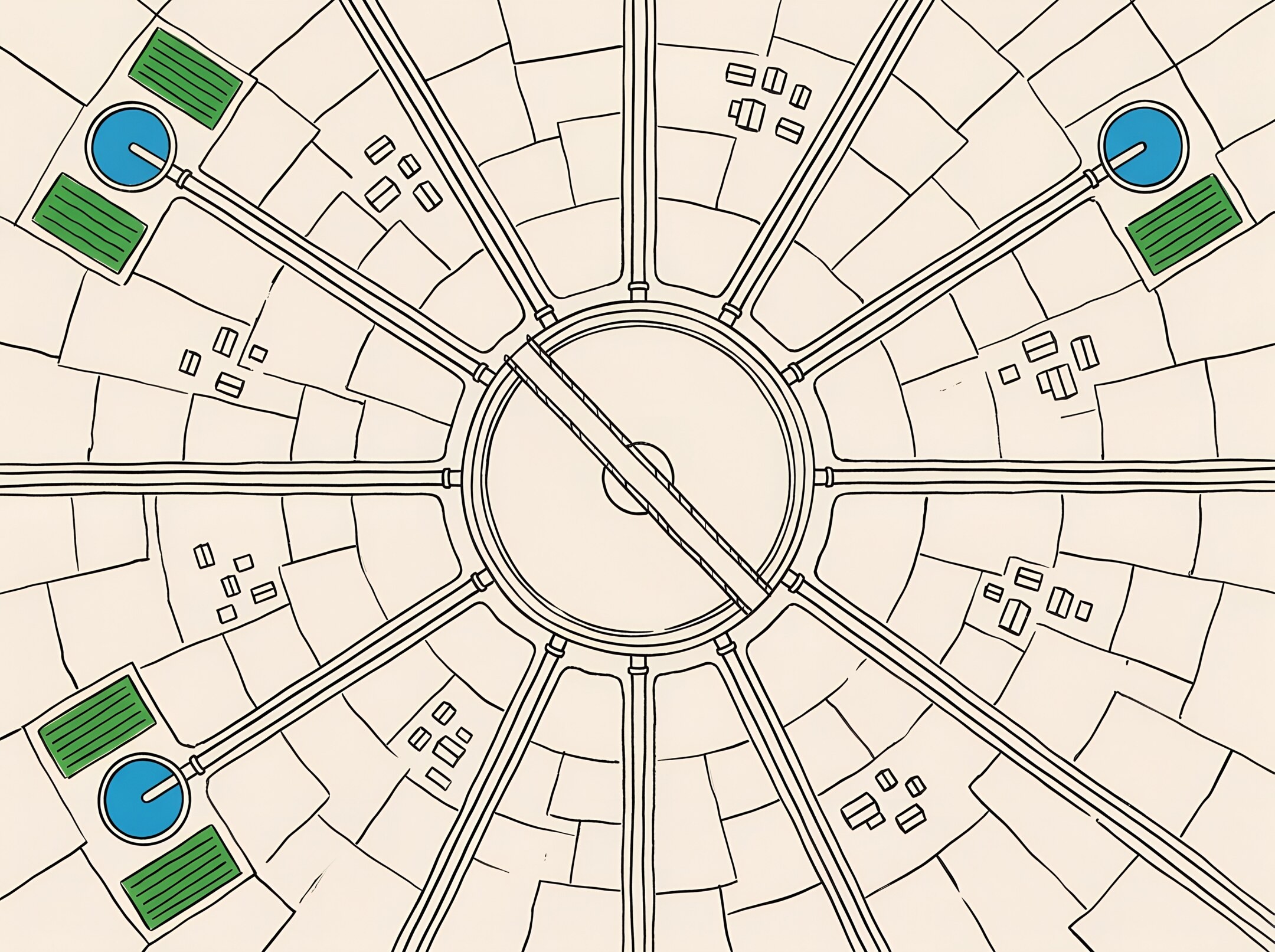

A study of 10,826 Chinese treatment plants finds that big centralised systems are reaching two limits at once, on easing water scarcity and on paying their way, and that a hybrid model could do the job for up to 37% less.
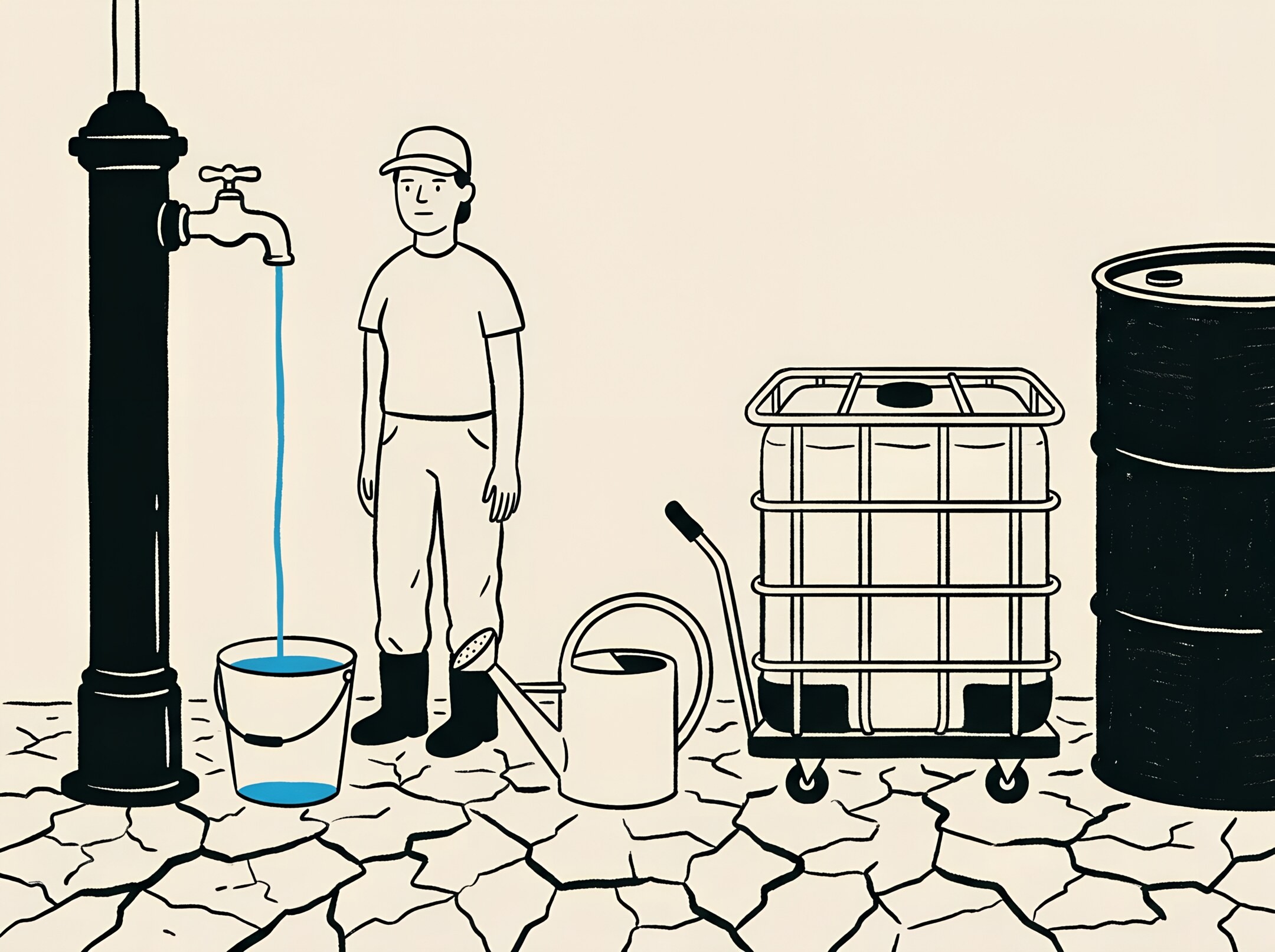
FAO has published draft principles on who may use water and on what terms, a quiet piece of international work that speaks directly to this year's fights over drought, wells and free irrigation.

A new report projects data centres' water footprint reaching 9.32 trillion litres by 2030, but the number is only meaningful once you know what it counts, and who is making the case.
An English coalition has costed what it would take to keep every drop of wastewater out of England's largest lake, £3.6–3.7 billion, and its modelling says nothing less ends harmful algal blooms.