The Drying Continent
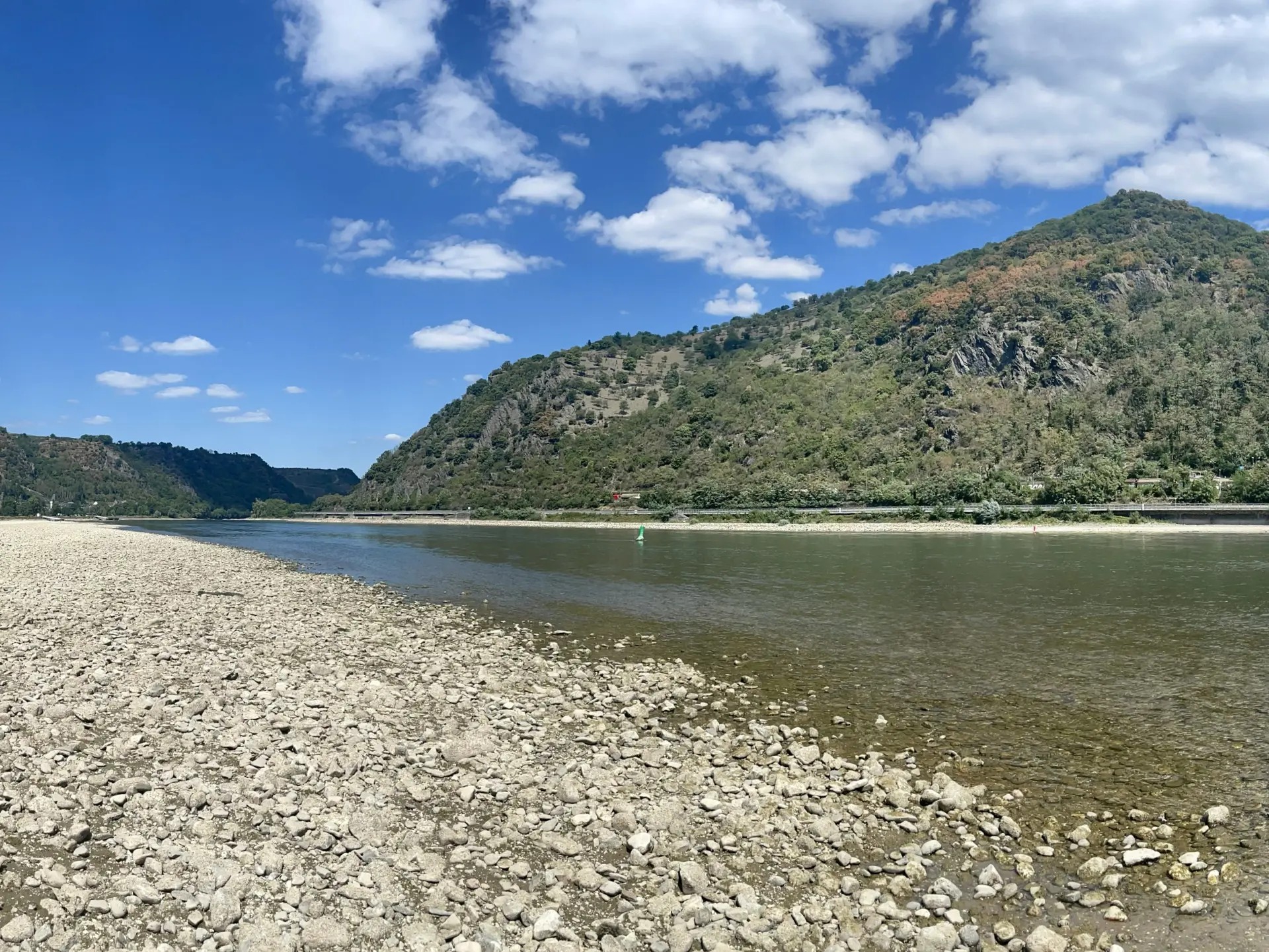
Europe's groundwater reserves have been falling steadily since 2018. In Central Europe one drought alert follows another, drinking water shortages have become a daily reality in places, and the Mediterranean region has often had to restrict water supply. One ecological consequence of the shortage is that only 37% of the continent's surface waters were in good ecological status according to the EEA's 2021 data, while water stress affects 30% of Europe's territory every year. In 2025 the EU adopted its water resilience strategy – but is it a fast and effective enough response?
Two decades ago, drought in Central Europe was still seen as a summer anomaly; today it has become a structural crisis. Groundwater levels no longer recover over winter, droughts recur every year and rivers are hitting record lows. Southern member states already have water allocation restrictions in place; in Romania, the drinking water supply of entire regions is at stake, while in Hungary and Poland experts are worried by groundwater reserves that remain persistently below average.
Satellites don't lie
The figures from satellite gravity measurements are alarming. The GRACE-FO satellite system, operated under the EU's G3P project, continuously measures changes in the Earth's water reserves, and the picture is clear: Europe's groundwater reserves have stayed low since 2018. By the end of 2025 Germany had accumulated a water deficit of nearly 25 billion tonnes compared with the average measured since the turn of the millennium – after a temporary improvement in 2024, rainfall in 2025 again showed a –18% shortfall, and with increased evaporation, water reserves fell further (GFZ Helmholtz Centre for Geosciences, 2026).
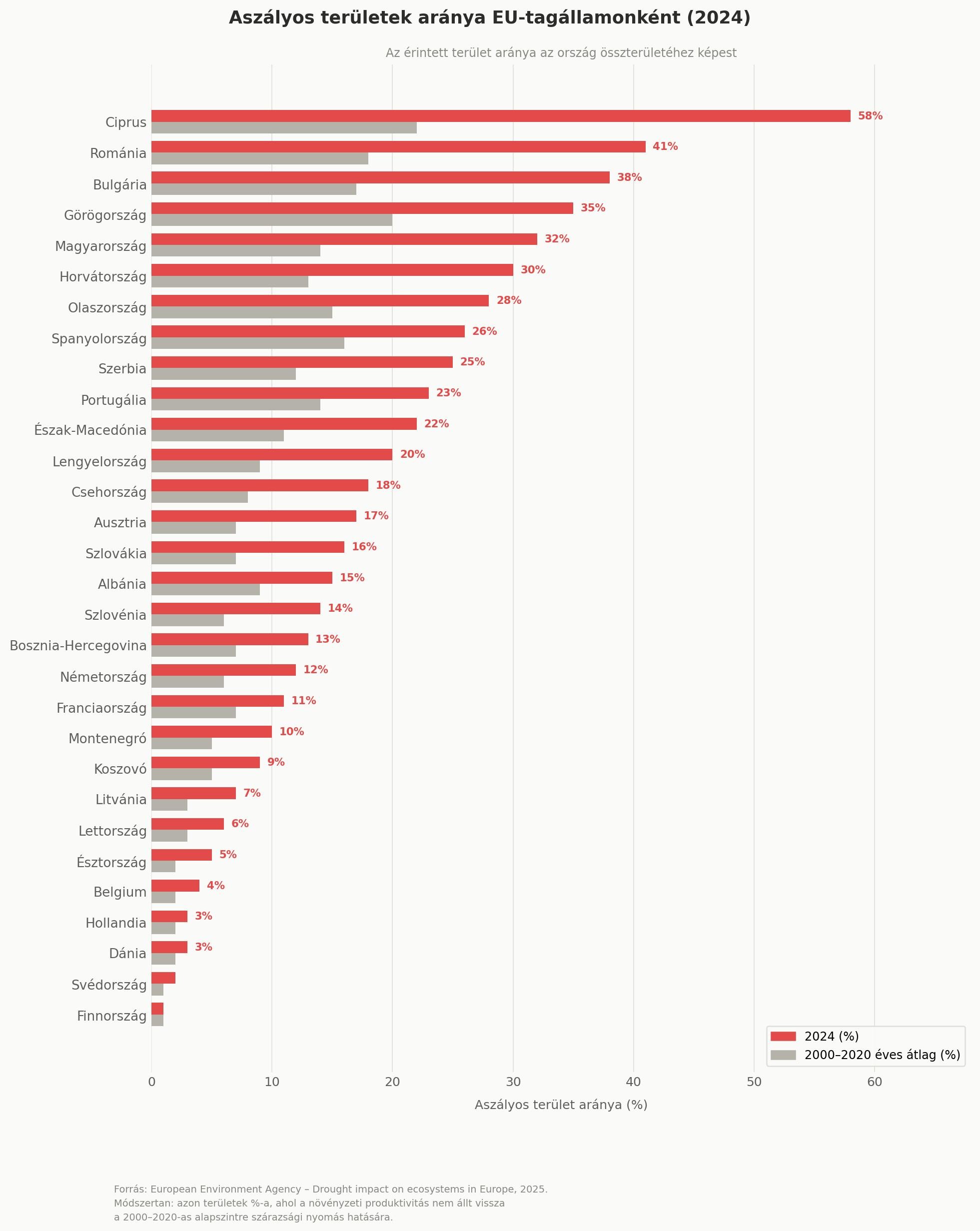
This is not a local phenomenon. According to the European Environment Agency (EEA), in May 2025 nearly 39% of the territory of the EEA's 38 member and cooperating countries was under drought conditions (EEA, 2025b). Every year, water stress affects 30% of Europe's territory and 34% of its population, and the share has been worsening since the mid-2010s (EEA, 2025a). According to the EEA's summary, only 37% of Europe's surface waters were in good or high ecological status in 2021 (EEA, 2024).
Central Europe: the quiet drain
In Central Europe the water crisis is less visible than in the Mediterranean, but it is no less severe in how long it lasts. Between December 2024 and April 2025, the European Drought Observatory (EDO) issued green-level drought alerts for Austria, Belgium, Czechia, Germany, Denmark, France, Luxembourg, the Netherlands, Poland and Sweden – showing anomalies typical of mild to severe drought, lasting four months.
IGRAC's 2024 global groundwater report specifically identifies Hungary and northern Poland among the Central and Eastern European areas with persistently below-average groundwater levels (IGRAC, 2025). The report stresses that the decline is caused not only by drought but also by human overuse, since groundwater levels have fallen in some regions even without significant drought. Hungary is in a particularly vulnerable position. According to an analysis by the Green Policy Center, the flow of rivers entering the country has fallen by 15%, evaporation has doubled compared with 30 years ago, and groundwater has dropped by more than four Lake Balatons' worth of water over the past half-decade (Green Policy Center, 2025). In three of the four years between 2021 and 2024, drought hit at least 70% of the country – in the previous twenty years this happened only seven times.
Central Europe's water crisis is not spectacular – there are no dried-up riverbeds on the evening news, no cracked mud on the screen. But the water table below ground is sinking, slowly and irreversibly.
In the Mediterranean, water scarcity is no longer considered drought but the new normal. According to the latest water exploitation index (WEI+), Cyprus is by far in the most critical position among EU member states (EEA, 2025a).
Five causes common everywhere
Based on analyses by the EEA and the JRC, five mutually reinforcing factors lie behind the persistent water deficit, and all of them are present in both Central and Southern Europe.
- The first and most decisive is climate change: rainfall is decreasing, evaporation is increasing, snow cover – a natural reservoir – is retreating, and the growing season is getting longer. In the Carpathian Basin, 80% of the effects of climate change play out through water systems.
- The second factor is agricultural overuse. According to the EEA's state of water report (EEA, 2024), agriculture puts the greatest pressure on both surface water and groundwater, and the load of nutrients and pesticides causes oxygen depletion and ecological degradation. In the EU, agriculture accounts for 28% of water abstraction on average, but in some member states the share is much higher.
- The third factor is the legacy of water management: the river regulation, floodplain drainage and fast drainage systems of past decades were optimised for draining water away rather than holding it back – just when longer dry spells call for retention.
- The fourth factor is the infrastructure gap. 18% of the EU's groundwater bodies are under abstraction pressure, and 27% are at risk of failing to reach good quantitative status by 2027 (EEA, 2024).
- The fifth factor is regulatory fragmentation: water stress and drought policy goals have not been properly integrated into other policy areas, institutional frameworks and capacities are insufficient, and crisis management still comes before risk management.
Consequences: three sectors, one crisis
The consequences of the persistent water deficit are most severe in three areas.
In agriculture, droughts cause close to €9 billion of economic damage in Europe every year. The extreme year of 2018 alone caused €2 billion of agricultural damage in France, €1.4 billion in the Netherlands and €770 million in Germany. In Hungary, at least 3% of GDP was lost in the 2022 drought.
In the energy sector, low river levels reduce hydropower output and also restrict nuclear power plants that depend on cooling water. In spring 2025, total output from the EU's hydropower plants was nearly 18% lower than a year earlier – which had a noticeable effect on European electricity prices.
In drinking water supply the picture is mixed: security of supply has been maintained for now, but at an ever higher cost and through ever more extraordinary technical measures. Nearly two thirds of the EU's drinking water comes from groundwater, and a quarter from groundwater also used for irrigation – both directly vulnerable to persistent drought.
The EU's response
In June 2025 the European Commission adopted the water resilience strategy – the first comprehensive EU framework for water action in decades (European Commission, 2025). The strategy aims to cut water use by 10% by 2030, to align water management with energy, food and climate policy, and to spread nature-based solutions such as sponge cities and groundwater recharge zones. The Commission estimates that modernising the EU's water systems would require €78 billion of investment a year, of which €23 billion is currently unfunded. The European Investment Bank has set aside €15 billion for water resilience projects in 2025–2027 (WAREG, 2025).
The strategy provides for a separate "sponge capacity" framework to increase water retention, and encourages soil cover in agriculture, agroecological approaches and precision irrigation. For now, however, the strategy contains no binding quantitative targets, and its implementation depends on the quality of member states' plans.
The water crisis is already here
Europe is in a water crisis. Data from satellites, drought monitoring systems and groundwater wells all point the same way: in the central, eastern and southern parts of the continent water reserves are steadily declining, droughts are becoming the norm, and infrastructure is struggling more and more to cope with extremes. The EU's water resilience strategy points in the right direction, but current commitments cover only a fraction of the €78 billion annual investment need. The continent's waters will not wait – and groundwater does not refill itself from one year to the next.
Europe's water resources have been declining steadily since 2018. According to EEA data, water stress affects 30% of the continent's territory and 34% of its population every year; in May 2025 the share temporarily rose to 39%. In Central Europe, groundwater levels in Hungary and northern Poland remain persistently below average, and ten Central European countries received drought alerts over the winter and spring of 2024–2025. In Romania, water use doubles in severe drought years and groundwater has dropped by 10 metres in some areas. In the Mediterranean, Cyprus abstracts 71% of its freshwater resources every year, Sardinia's reservoirs are less than half full and Catalonia has declared a drought emergency. In June 2025 the EU adopted a water resilience strategy that targets a 10% cut in water use by 2030 and would require €78 billion of investment a year – a large part of which is currently unfunded.
Europe's water resources have been in structural decline since 2018: data from the GRACE-FO satellite system show that groundwater levels have not recovered since the Central European droughts of 2018–2019. According to the latest EEA data, water stress affects 30% of the continent's territory and 34% of its population every year; in May 2025 the share rose to 39%. Only 37% of Europe's surface waters were in good ecological status in 2021. In Central Europe the water deficit is quiet but persistent: according to IGRAC's global report, groundwater levels in Hungary and northern Poland remain below average – partly because of the climate, partly because of human overuse. In Hungary, the flow of incoming rivers has fallen by 15% and evaporation has doubled. The drought alert of winter and spring 2024–2025 covered ten Central European countries. In Eastern Europe, Romania is worst hit: droughts recur every year in the north-east, groundwater has dropped by 10 metres in places, and water use doubles in severe drought years. In the Mediterranean, Cyprus abstracts 71% of its freshwater resources every year, Sardinia's reservoirs have fallen below 50%, Catalonia has declared a drought emergency, and 130,000 households in Italy's Abruzzo region face daily supply cuts. Droughts cause close to €9 billion of economic damage in Europe every year – in agriculture, energy and public water supply alike. In June 2025 the EU adopted its water resilience strategy: a 10% cut in water use by 2030, nature-based solutions and €15 billion of EIB funding until 2027 – but against an annual need of €78 billion, this covers only part of the gap.

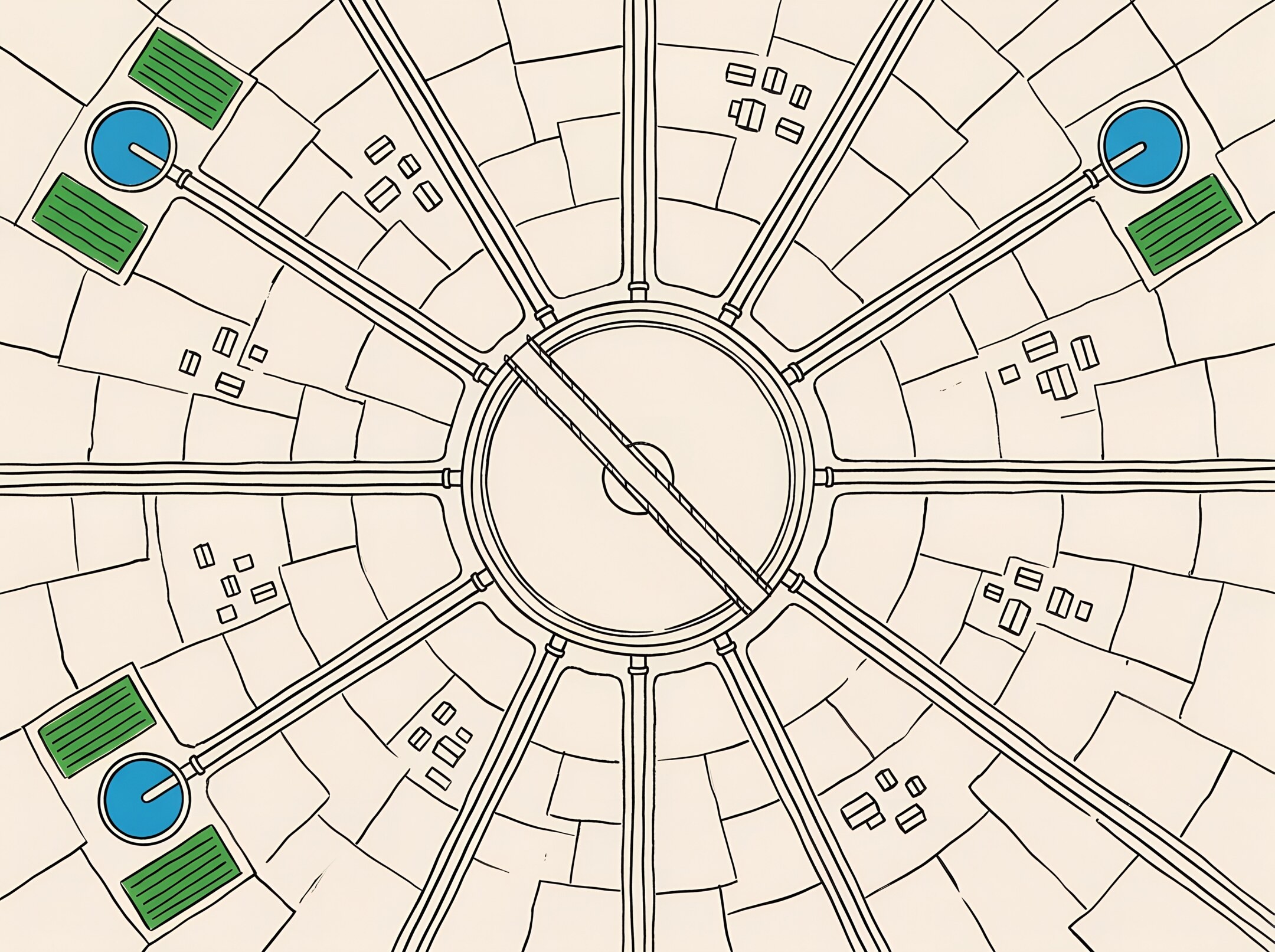

A study of 10,826 Chinese treatment plants finds that big centralised systems are reaching two limits at once, on easing water scarcity and on paying their way, and that a hybrid model could do the job for up to 37% less.
FAO has published draft principles on who may use water and on what terms, a quiet piece of international work that speaks directly to this year's fights over drought, wells and free irrigation.

A new report projects data centres' water footprint reaching 9.32 trillion litres by 2030, but the number is only meaningful once you know what it counts, and who is making the case.
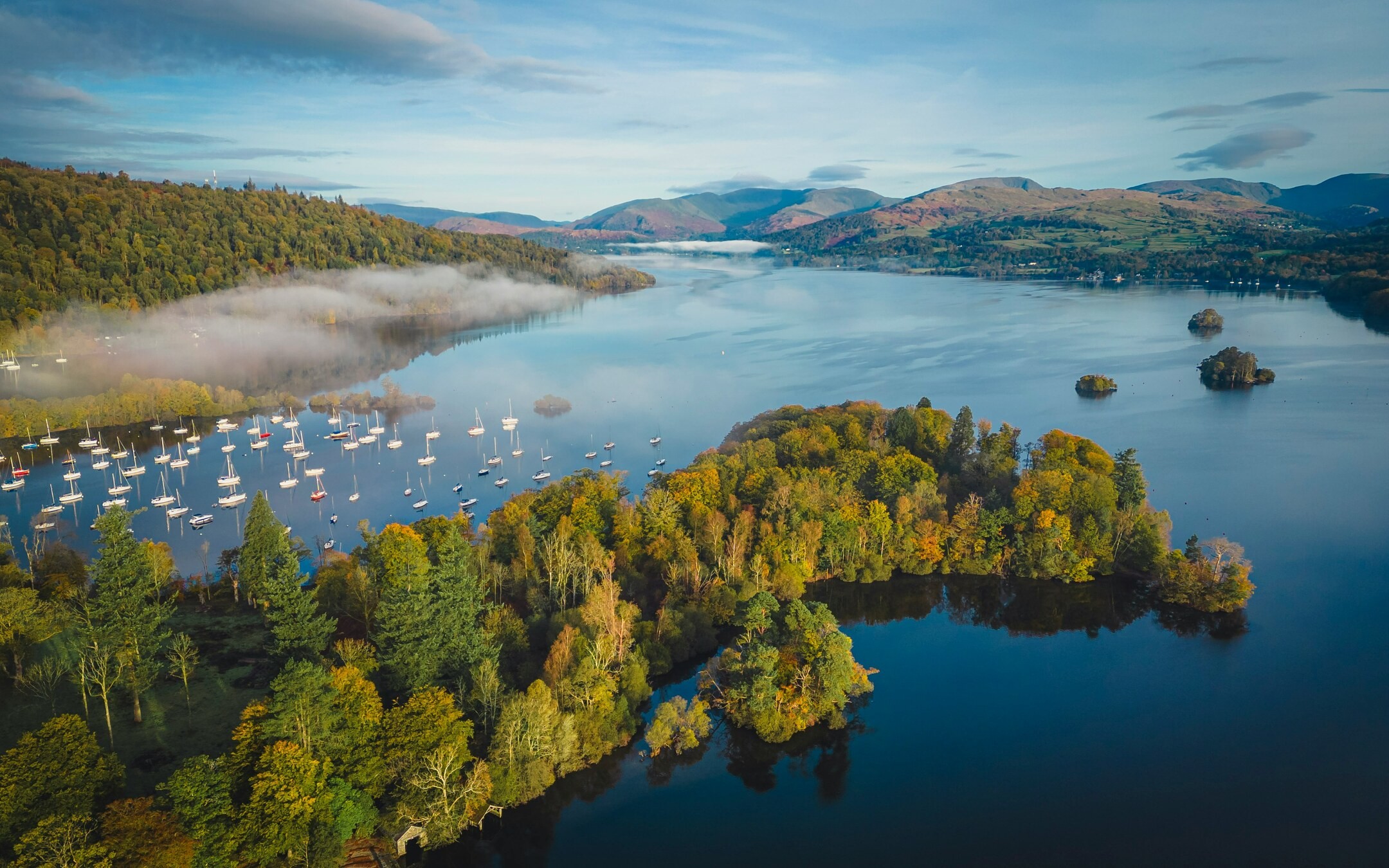
An English coalition has costed what it would take to keep every drop of wastewater out of England's largest lake, £3.6–3.7 billion, and its modelling says nothing less ends harmful algal blooms.