Fertiliser From Human Excreta, With No Yield Penalty
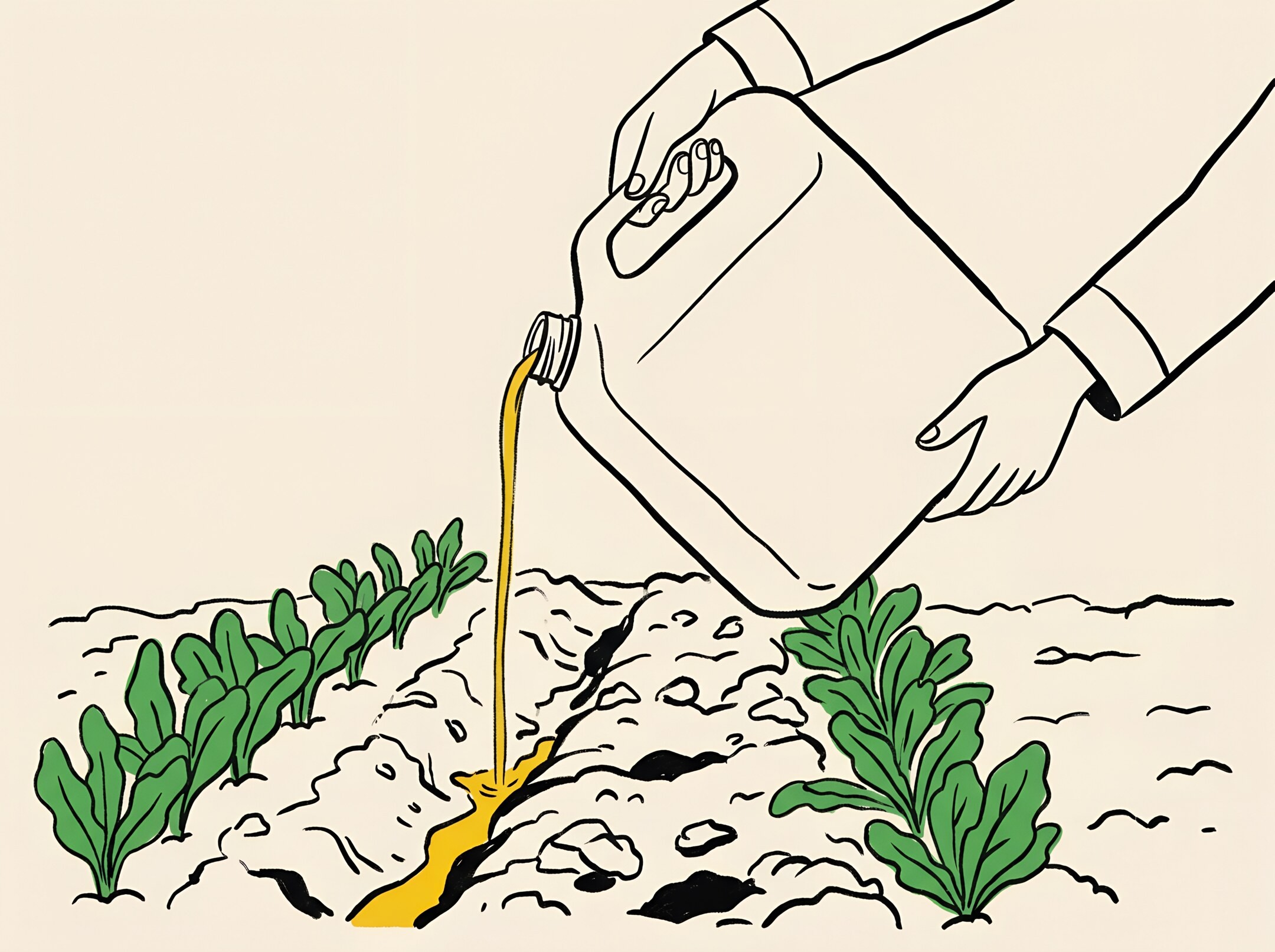
The debate on recovering nutrients from wastewater has so far centred on treatment-plant routes: struvite precipitated from digester return streams and phosphorus extracted from sludge ash. There is another route. If urine and faeces are separated at source, at the toilet, both can be turned directly into fertiliser. Many small trials have tested the idea, but pooled evidence has been scarce.
A peer-reviewed meta-analysis published on 30 September brings that evidence together, and its headline is clear. Fertilisers from resource-oriented sanitation do not lose out to mineral fertiliser on yield (Schröder et al., 2026).
455 datasets, 13 products
The researchers, from the Berlin-based NetSan network, Agroscope in Switzerland, ISOE in Frankfurt, IGZ in Großbeeren and the University of Girona, started from a literature database of more than 12,600 publications. They added a fresh literature search and unpublished, real-world data gathered through professional networks. In the end, 201 sources from 32 countries made the cut: 178 studies and 23 unpublished sources. In all, 455 datasets on product composition and agronomic performance were analysed. The yield meta-analysis rests on 134 datasets from 68 publications, covering 31 crops.


A national Swiss campaign has run every PFAS method in the Commission's guidelines side by side, and none of them can name most of the organic fluorine in wastewater.
Europe is about to make wastewater monitoring for antimicrobial resistance routine, while researchers warn that the numbers it produces can't yet say how many people are affected or what risk they face.

Prague's draft law transposing the recast EU wastewater directive puts the investment bill at up to CZK 176 billion and gives a detailed view of what the rules mean for a central European member state.
A Stanford model shows that if neighbouring wastewater plants plan their nutrient removal upgrades together, capital and operating costs can fall by almost half.