Most Wastewater Organofluorine Escapes Targeted PFAS Tests
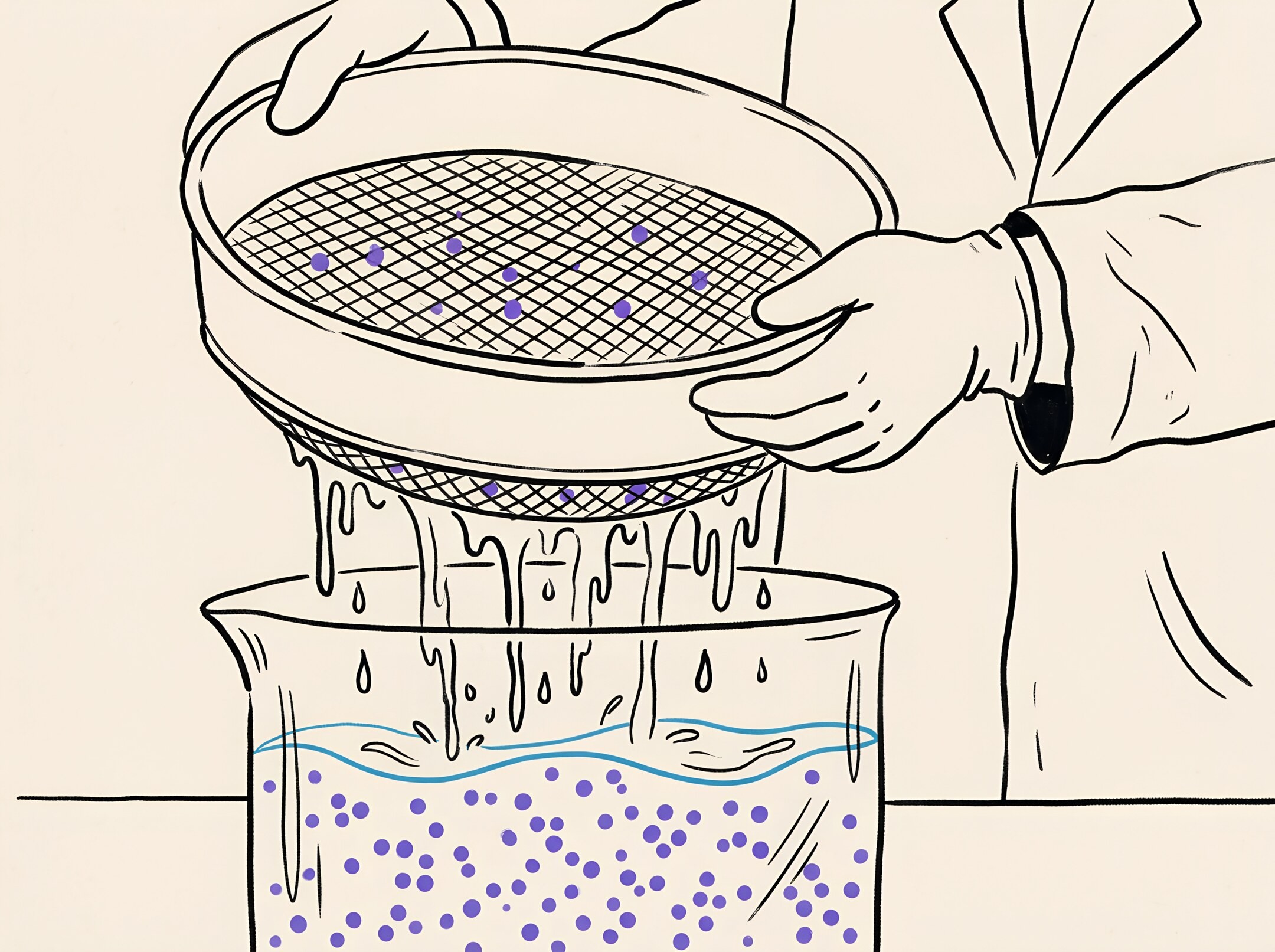
Every large treatment plant in Europe will soon have to measure PFAS in its wastewater. How it should do so has not yet been decided. Under the recast Urban Wastewater Treatment Directive (EU 2024/3019), the Commission must adopt an implementing act by 2 January 2027 setting out a methodology for measuring 'PFAS Total' and 'Sum of PFAS' in urban wastewater.
Switzerland has meanwhile run a national trial. Researchers at Eawag, the Swiss Federal Institute of Aquatic Science and Technology, and Germany's Federal Institute for Materials Research and Testing (BAM) sampled 21 treatment plants in 13 cantons, serving about 2.3 million people, or 25% of the population (Chow et al., 2026). Samples were taken between October 2023 and May 2024 and analysed with the same methods the Commission recommends for drinking water. The result is clear: none of the methods can identify most of the organic fluorine. The paper is still a journal pre-proof, so its figures may change in the final version.
Four methods, four different pictures
The Commission's 2024 technical guidelines on PFAS analysis in drinking water (European Commission, 2024) state that no single analytical method can at present cover every possible substance in so large a class. For 'PFAS Total' they recommend three proxy methods, none of them standardised or harmonised.


Europe is about to make wastewater monitoring for antimicrobial resistance routine, while researchers warn that the numbers it produces can't yet say how many people are affected or what risk they face.

A meta-analysis of 455 datasets finds that fertilisers made from separated urine and faeces perform as well as mineral fertiliser, so the open questions are now quality assurance and regulation.

Prague's draft law transposing the recast EU wastewater directive puts the investment bill at up to CZK 176 billion and gives a detailed view of what the rules mean for a central European member state.

A Stanford model shows that if neighbouring wastewater plants plan their nutrient removal upgrades together, capital and operating costs can fall by almost half.