What Flexible Biogas Power Is Really Worth
For decades most biogas plants produced baseload power: steadily, day and night, at a fixed feed-in tariff. On Germany's power exchange, that model pays less and less. Solar pushes prices down during the day, often below zero, while in the evenings and on dark, windless days gas-fired plants set the price. Plants that produce at those times earn more.
How much more? Monthly market data from the Bavarian State Research Center for Agriculture (LfL) provide the answer. Martin Strobl, an analyst at the institute, also explained at an industry web seminar what it takes for a plant to actually capture the extra revenue.
How the LfL calculates
The LfL works from quarter-hourly generation, consumption and wholesale price data published by the Federal Network Agency (Bundesnetzagentur). For each operating mode, it calculates the average price a plant would have achieved by producing only in certain hours of the day (LfL, 2026a). The benchmark is the official monthly market value for electricity from biomass, published by Germany's transmission system operators. That is the baseload price: the average of every quarter-hour in the month.


A model update in the United States quadrupled the tax credit for dairy-farm biomethane overnight, because the US credit pays for carbon intensity, while the European Union mostly measures the same performance as a pass or a fail.

A clause buried in a gas tariff order makes oxygen a design parameter for Spanish biomethane plants, and shows how differently Europe handles a problem it hasn't yet agreed on.

Calculations by the DVGW research centre in Karlsruhe show that if small biogas plants reach the gas grid through a shared upgrading unit and injection point, investment falls by up to 55% and the biomethane injected rises by 16% compared with connecting plants one by one.
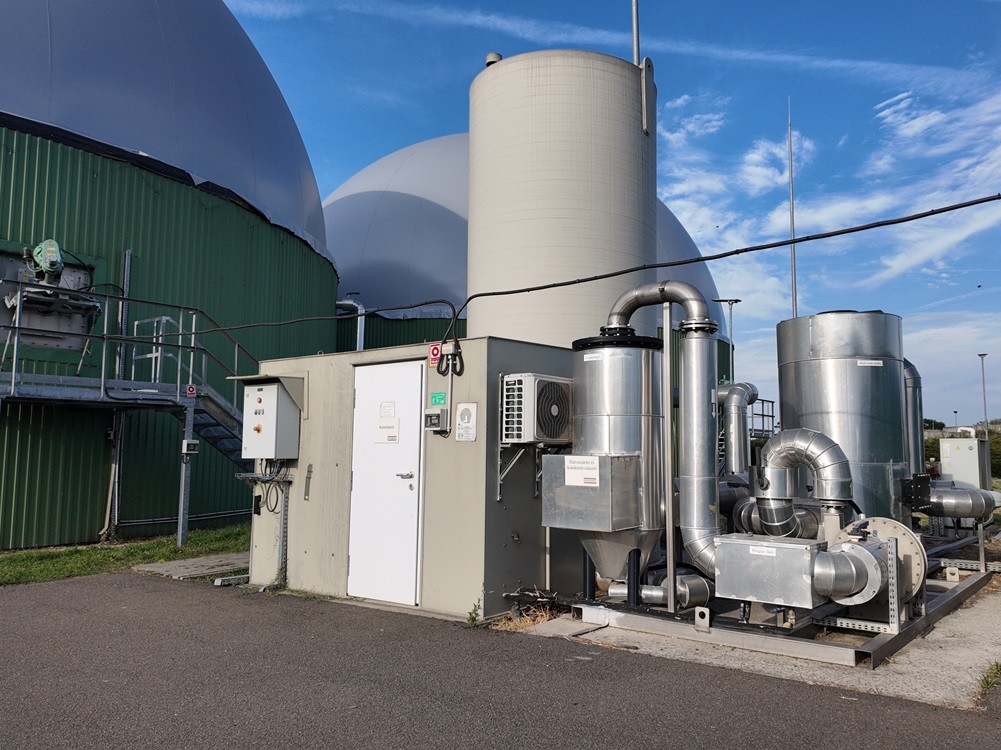
Dosing iron into the digester is one of a biogas plant's main defences against hydrogen sulphide, but iron chloride, iron hydroxide and iron oxide behave very differently – and reactivity matters more than the price per kilo.